A Practitioner’s Integration Journey with Daniel Hague
Available in:
EN
Daniel Hague is a Doctor of Physical Therapy and Dual Board-Certified Orthopedic and Sports Clinical Specialist. His clinical work focuses on integrating objective assessment, high-performance training principles and evidence-based rehabilitation to guide patients from injury through full return to sport. He has worked across outpatient sports medicine, professional athletics and tactical populations, bringing a data-informed, performance-centered approach to every environment he works in.
What made you want to add objective measurement technology into your workflow?
I entered the performance and sports medicine space as a clinician with a strong foundation in sports physical therapy and a growing interest in expanding my knowledge of objective measurement technologies such as ForceDecks. This background supported a smooth transition into technology-assisted assessment, despite my limited experience with measurement systems.
When it came to clinical evaluation and on-field decision-making, I felt confident and comfortable with my process. However, incorporating technology into day-to-day patient management was something I had never done before. VALD systems offered a practical bridge, providing objective, scalable data that matched my comfort level, ultimately strengthening my clinical reasoning.
VALD systems offered a practical bridge, providing objective and scalable data based on my comfort level, ultimately strengthening my clinical reasoning.
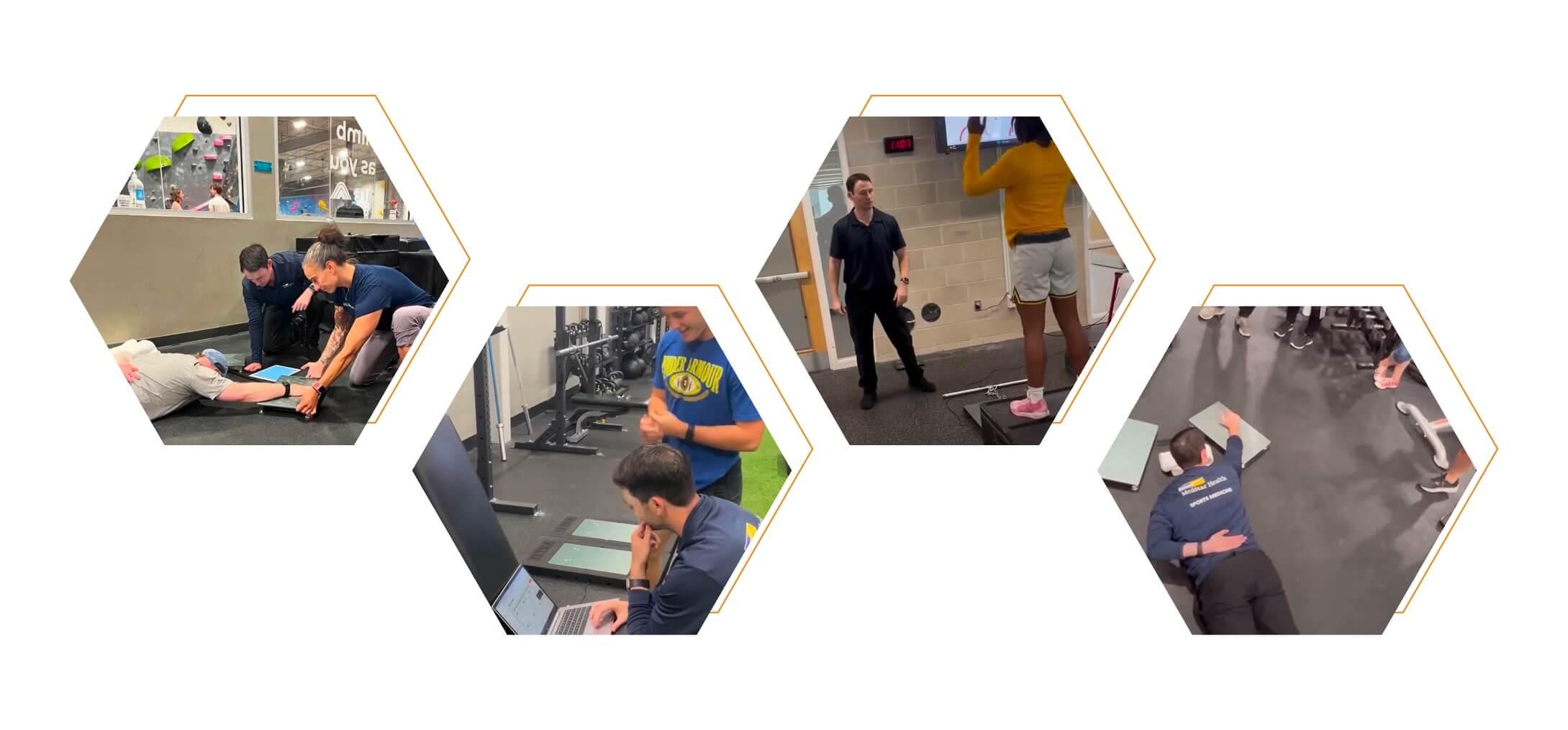
Daniel using ForceDecks in-clinic during his residency at MedStar Health.
As with many practitioners stepping into performance technology, I was motivated to objectively measure the qualities I was already observing intuitively. I wanted clearer insight into patient readiness, fatigue and return-to-play capacity – areas where objective data could add precision, consistency and confidence to the decisions I needed to make.
What improved your confidence with the technology?
Implementing new technology always comes with a learning curve, but VALD’s educational ecosystem made for an easy on-ramp. The Practitioner’s Series was instrumental in helping me connect theory to applied practice. Whenever questions came up, I was able to find VALD Resources that had a quick, straightforward answer I could rely on.

The process of going from numbers on a screen to having actual literacy was the most impactful part of my journey. I spent time working through VALD Academy modules, revisiting key concepts like impulse and ratio metrics, which helped bridge the gap between data collection and actionable information.
…working through VALD Academy modules…helped bridge the gap between data collection and actionable information.
Beyond integrating technology with the patients I saw, I began testing myself – intentionally adjusting and shifting my execution strategy to see how performance changed.
Experimenting with setup and execution showed me how small adjustments like changing my countermovement depth can influence assessment outcomes, and how effective cueing ensures reliable, repeatable outcomes with patients.
Once I understood how certain metrics were calculated and how patient responses shaped those outputs, the data became far more meaningful. That clarity made me more confident in using assessment results to guide load progressions, communicate with patients and collaborate effectively with other practitioners when designing shared treatment plans.
Once I understood how certain metrics were calculated and how patient responses shaped those outputs, the data became far more meaningful.
ForceDecks has helped create greater synergy and understanding across different departments in my work at MedStar Health. With a clearer understanding of what the data represents and how to apply it, testing has become more intentional, communication is more precise and collaboration is more effective.
What did you learn during your ForceDecks integration journey?
At first, I wasn’t sure what to look for or how to use the data. I remember staring at countermovement jump (CMJ) metrics and asking myself: “What can I get from this data and how can I apply it to my patients?”
Initially, the range of possible applications – readiness, asymmetry, performance deficits and more – felt overwhelming. However, once I centered my approach on the purpose of each test, selecting metrics that aligned with the specific qualities being assessed became far more intuitive. With that clarity, turning results into meaningful insights became much easier.
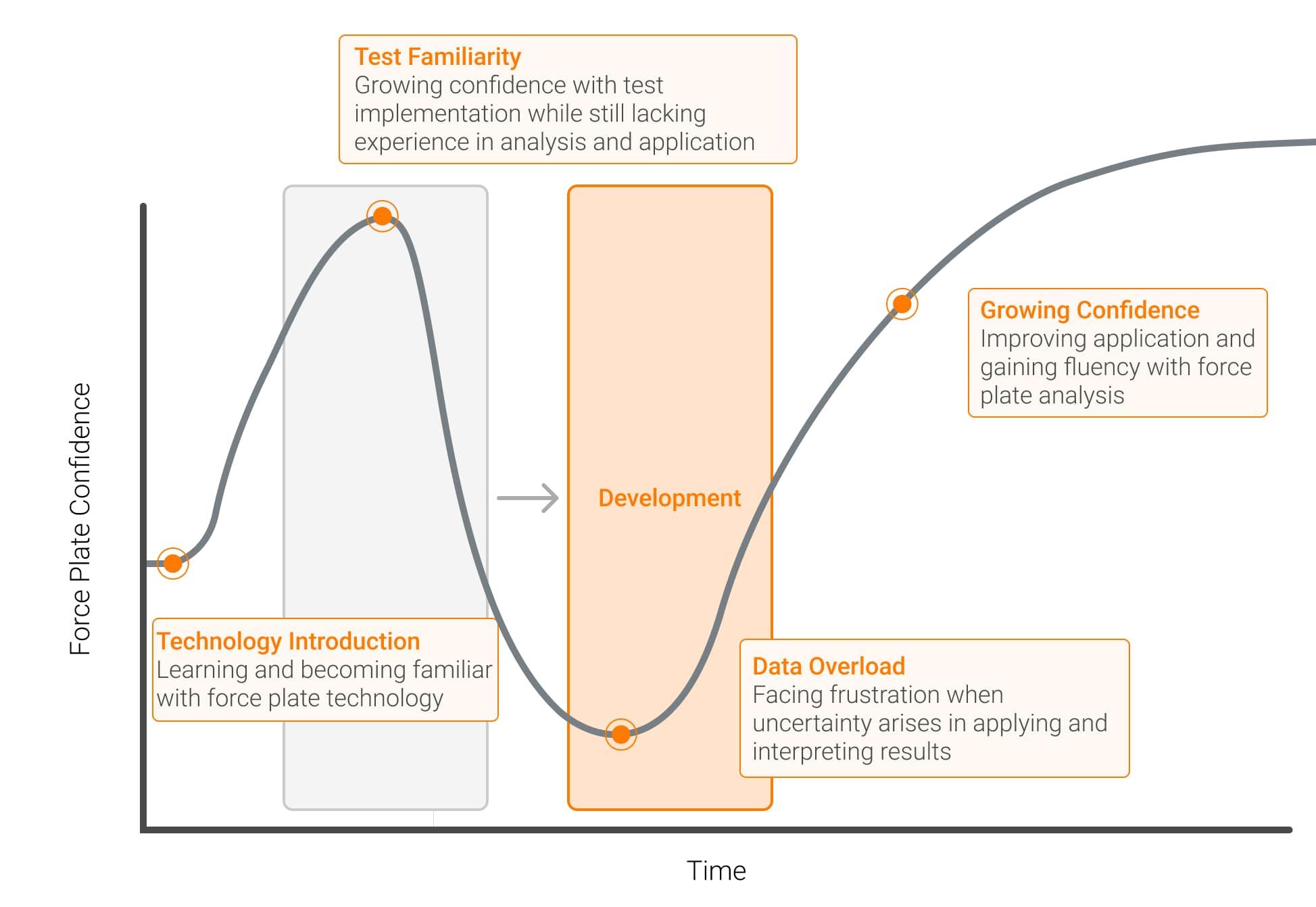
The typical learning journey for practitioners using force plates, as seen in the Practitioner’s Intermediate Guide to Force Plates.
Like most skills, the real challenge was building fluency – being able to reason through assessments rather than memorizing every button or metric. Early confidence came from simple familiarity with the tests: setting up the system, guiding the patient and capturing a clean, reliable trial.
Like most skills, the real challenge was building fluency…rather than memorizing every button or metric.
That foundational confidence made it easier to refine the details that truly impact data quality. Over time, I perfected the basics:
- Proper testing setup
- High-effort instruction
- Standardized execution
- Adequate assessment timing and rest intervals
In time, I developed a coach’s eye to detect shifts in steady phases and alterations in technique that could alter data quality. True mastery came later, when I could interpret those numbers in context.
What impact did the technology have on your professional development?
I went from a complete novice in using technology to giving presentations that feature assessment tools in the health and performance space – all within 18 months. A quick learning curve not only made it easy to adopt in my own practice but also has added a new branch to my professional career.
I went from a complete novice in using technology to giving presentations that feature assessment tools in the health and performance space – all within 18 months.
It has also elevated my professional credibility. The technology gave me a sharper lens for evaluating readiness and risk, which in turn increased others’ confidence in my interventions. Since integrating more data-driven solutions, I’ve been trusted to help develop performance testing protocols across our network.
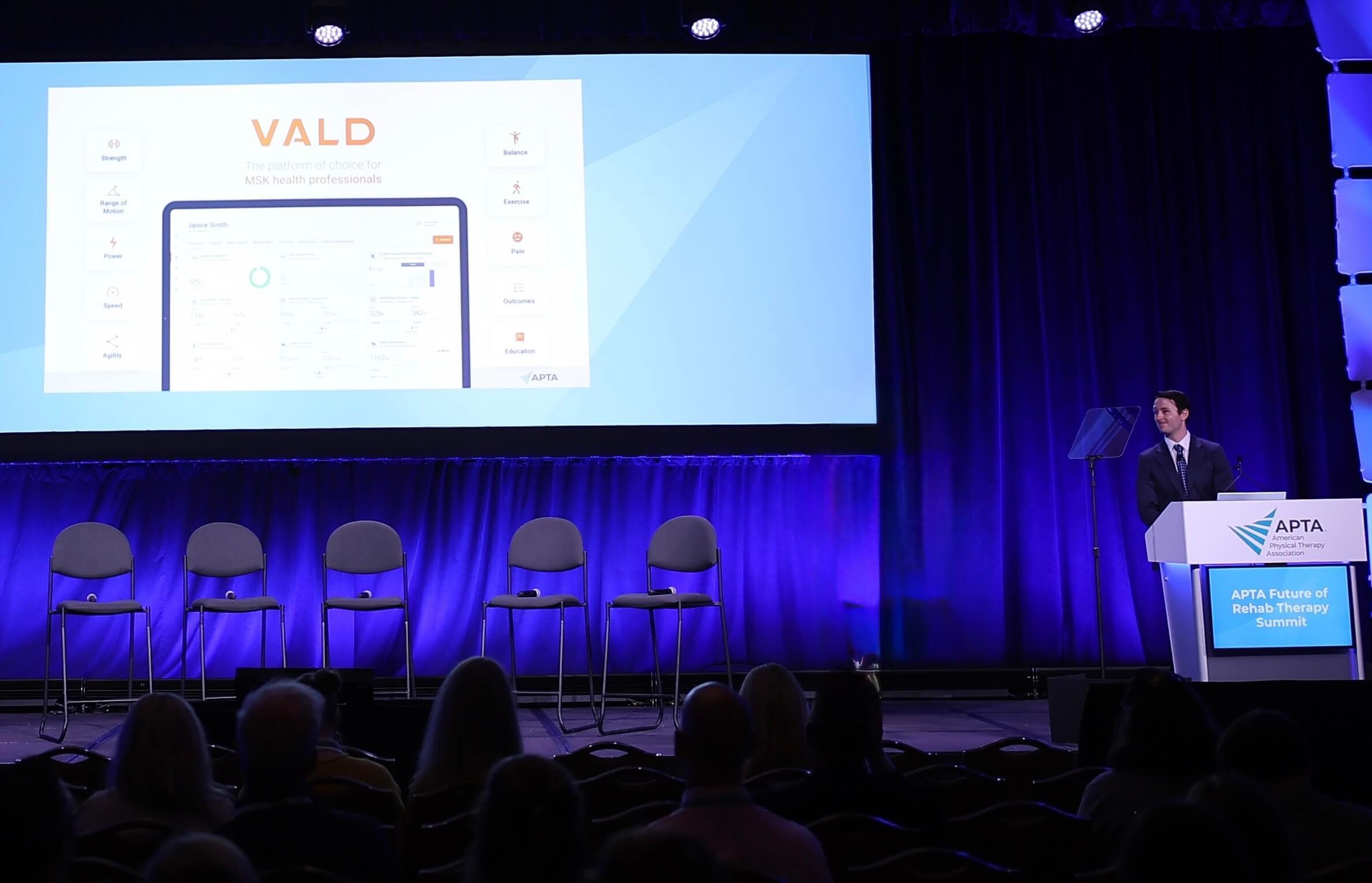
Daniel presenting at the 2025 APTA Future of Rehab Therapy Summit.
These systems allow practitioners to connect clinical decisions to objective data.
These systems allow practitioners to connect clinical decisions to objective data. Instead of saying, “the patient looks ready,” it can be demonstrated through force-time data. It reinforced what many in sports rehabilitation already believe: that performance and rehabilitation are not separate – they’re heavily intertwined.
What advice do you have for practitioners who are new to objective measurement technology?
When integrating any new technology into your practice, it’s crucial to educate yourself so that you understand the data you are collecting and how you will use those insights to guide subsequent training decisions.
A great starting point is VALD’s educational resources – including Practitioner’s Guides, articles, webinars, podcasts and VALD Academy. Build a foundation there, then test yourself on every protocol you plan to use in your workflow.
Mistakes are expected and valuable. Each test, even the imperfect ones, helps refine both interpretation and confidence in the process.
Learning the systems means developing a clear understanding of what each metric represents and when it’s most relevant. With experience, practitioners naturally learn which measures provide the best insight for their patients.
If you would like to learn more about integrating VALD systems, such as ForceDecks, to enhance clinical confidence and support data-informed decision-making, get in touch with our team.
