Benchmarking for Rehabilitation Providers
Available in:
EN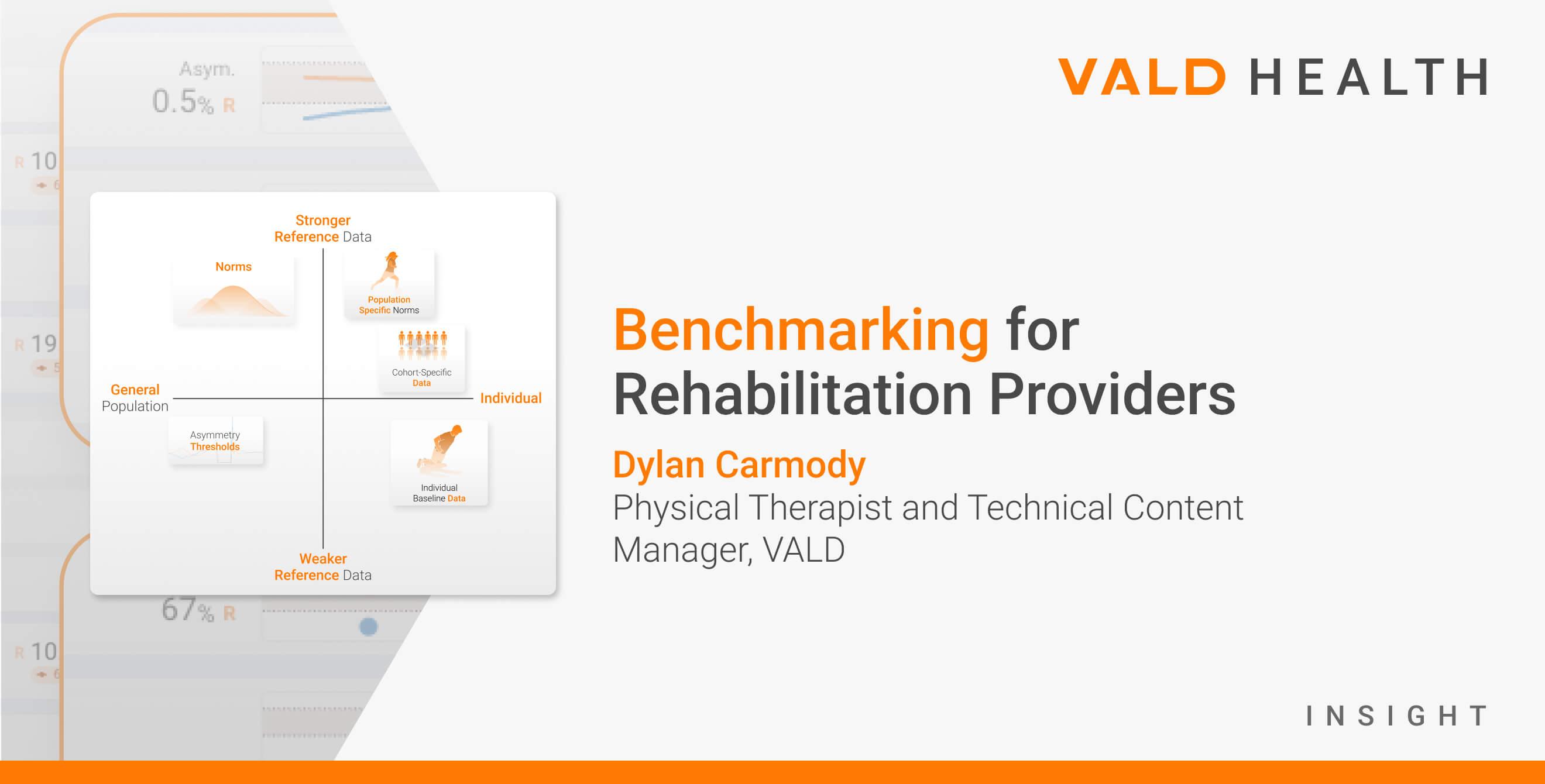

Many of the important decisions rehabilitation providers make are informed by two components: a reliable measurement and an appropriate benchmark.
Benchmarks are known reference standards established from various data sources, such as normative data, preseason screening, research-derived thresholds or commonly used clinical cutoffs (e.g., 10% asymmetry). Without consistent data collection or a valid reference standard, objective data only provides a snapshot of an individual’s current outputs, without context for their performance quality.
A lack of quality comparison may lead practitioners to make well-intended but misinformed decisions. Therefore, practitioners are often best suited to approach decisions with key reference standards in mind.
Benchmarking Options
Benchmarks are often defined by the sample that was used for comparison. For instance, comparing an injured limb to the contralateral limb quantifies asymmetry, while comparing an individual to a broader population creates a normative percentile rank. In rehabilitation and return-to-sport environments, practitioners are tasked with selecting the comparison that best matches the clinical or performance question being asked.
…practitioners are tasked with selecting the comparison that best matches the clinical or performance question being asked.
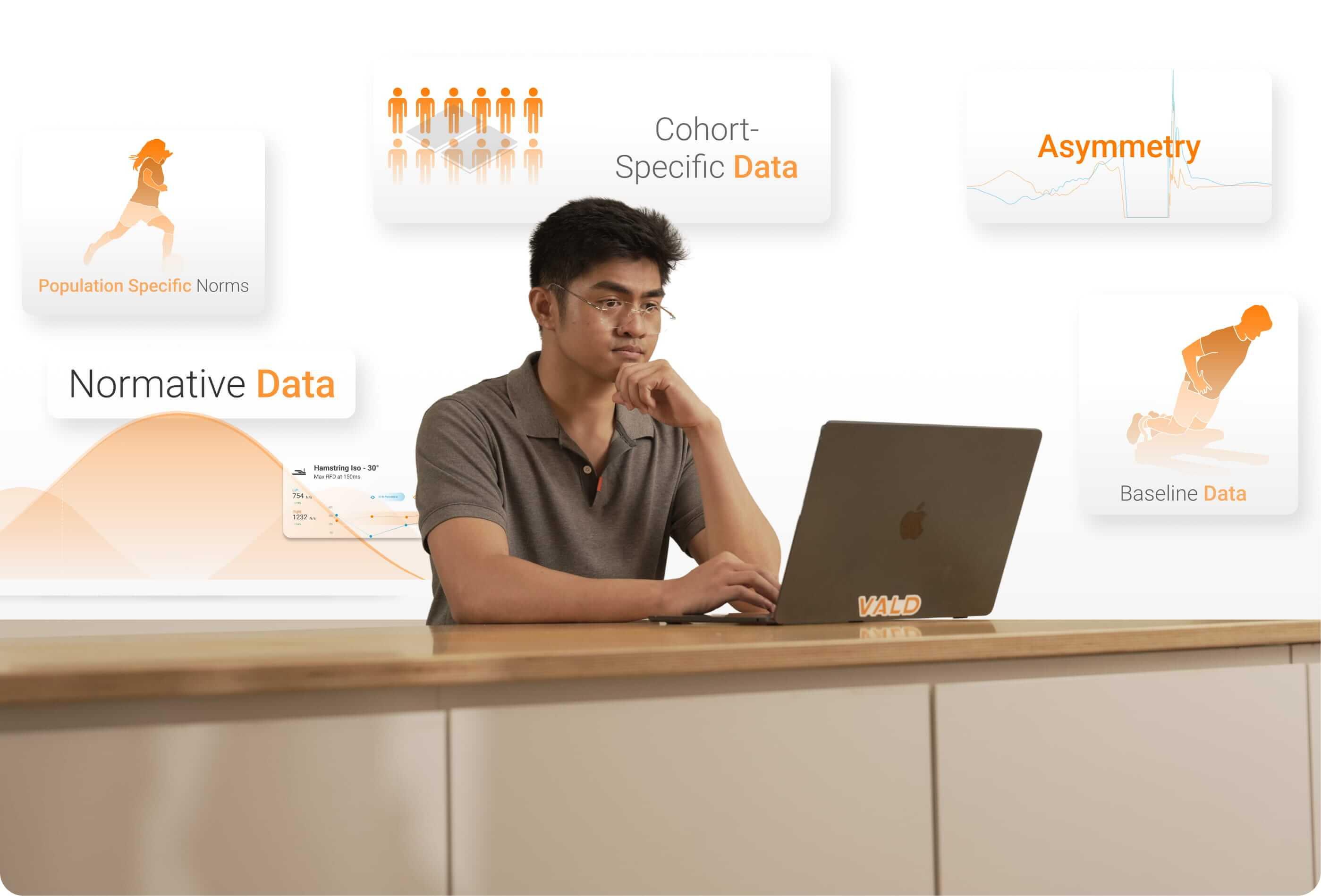
The table below summarizes some of the most common benchmarking approaches used in rehabilitation.
| Comparison | Example | Reference Group |
| Asymmetry | Knee extension peak force asymmetry | Contralateral limb |
| Pre-Injury Baseline Data | Preseason team profiling | The individual |
| Normative Data | VALD Norms | Vast majority of all VALD users |
| Cohort Population Data | Team average jump height | Sports team participation |
| Population-Specific Normative Data | 2025/26 Premier League Report | Professional athlete normative data |
Benchmarking is only as valuable as the quality of the data being compared. Before interpreting objective data, practitioners should ensure testing is reliable, standardized and performed using validated systems such as ForceDecks, ForceFrame and the suite of VALD systems.
Selecting the appropriate benchmark is equally important, as each comparison option uses a different reference population and therefore provides different information to support clinical decision-making.
…each comparison option uses a different reference population…[providing] different information to support clinical decision-making.
Asymmetry
Asymmetry is one of the most widely used benchmarking approaches in rehabilitation due to its ease of use and logical basis. Because asymmetry can be calculated using multiple equations, both the calculation method and comparison standard should remain consistent throughout rehabilitation to ensure meaningful change is detected.
| Limb Values | Asymmetry Type | Formula | Result |
|
Right: 500N
Left: 400N | VALD asymmetry calculation | ((Right – left) / higher value) × 100 | 20% asymmetry |
| Limb symmetry index | (Minimum / maximum) × 100 | 80% symmetry | |
| Symmetry index | ((Maximum − minimum) / (maximum + minimum)) × 100 | 11.11% asymmetry |
Similarly, thresholds should be determined for each test throughout rehabilitation, as different equations and cutoff values can produce substantially different results.
Current evidence demonstrates that applying a universal 10% asymmetry (or 90% symmetry) threshold results in markedly different passing rates across strength, endurance and dynamic performance tests at the time of return to sport (Wright et al., 2025). This reinforces the need to interpret asymmetry within the context of the test being performed.
However, asymmetry comparisons should not be the only reference standard for practitioners making return-to-sport decisions. Following significant injury or surgery, the uninvolved limb may also decline due to detraining, bilateral neuromuscular adaptations or reduced loading (Moran et al., 2022).
For example, evidence following anterior cruciate ligament (ACL) reconstruction shows that contralateral knee extensor strength can decline between 6 and 12 months after surgery, suggesting that between-limb symmetry may improve despite persistent reductions in absolute capacity.
…the uninvolved limb may also decline due to detraining…suggesting that between-limb symmetry may improve despite persistent reductions in absolute capacity.
Asymmetry is best used as a mid-stage rehabilitation target to avoid excessive unilateral compensations when progressing to higher-level rehabilitation tasks. However, asymmetry thresholds alone are often insufficient to determine complete return-to-sport readiness or rehabilitation discharge.
Pre-Injury Screening
Pre-injury baseline screening is often conducted in a manner similar to combine testing, in which entire teams complete a standardized testing battery before the season begins. This establishes an objective performance benchmark that can later be used to compare post-injury performance against the individual’s historical baseline (De Michelis Mendonça, 2022).
For practitioners interested in learning how to efficiently conduct group testing events such as combines, explore our Practitioner’s Guide to Group Testing.
Although it is beneficial for determining future training interventions, pre-injury data should not be considered the definitive benchmark for rehabilitation recovery. Physical capacity changes over time through training, detraining and changes in competition demands, meaning historical values may no longer represent the individual’s current potential. Depending on the athlete and sport, preseason testing (a common form of pre-injury screening) may capture individuals who are deconditioned or not yet at peak physical capacity, limiting its value as a rehabilitation or return-to-sport benchmark.
…preseason testing may capture individuals who are deconditioned or not yet at peak physical capacity, limiting its value…
Equally important, the physical characteristics present before the injury may have contributed to the injury itself. Although preseason screening results are not predictive of injury (Bahr, 2016), retrospective analyses have shown that reduced physical performance is observed in individuals who subsequently experience injury (Lee & O’Neill, 2024). Therefore, individuals returning from injury are likely to require a surplus of strength, power and physical capacity to help buffer against elevated reinjury risk (Fulton et al., 2014; Hägglund et al., 2006).
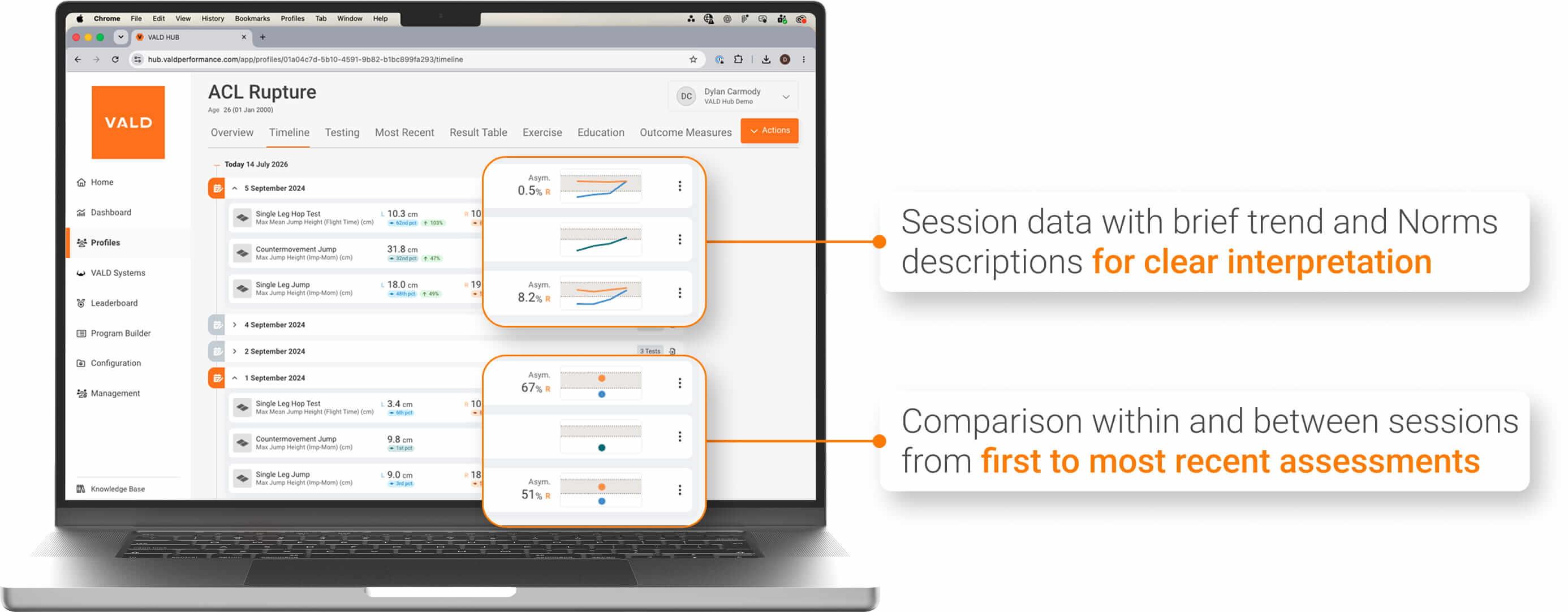
Historical testing features, such as Timeline View in VALD Hub, allow practitioners to compare pre- and post-injury performance over time, helping determine whether returning to pre-injury capacity represents an appropriate rehabilitation benchmark or whether further exploration is required.
Generalized Normative Data
Normative data compares an individual’s performance against a broader reference population, providing context beyond the contralateral limb or historical testing. For example, VALD Norms has millions of assessments captured across validated systems, allowing practitioners to compare individuals against age- and sex-matched peers.
This data ultimately helps determine where individuals sit within the expected distribution of performance rather than relying on binary pass-or-fail thresholds.
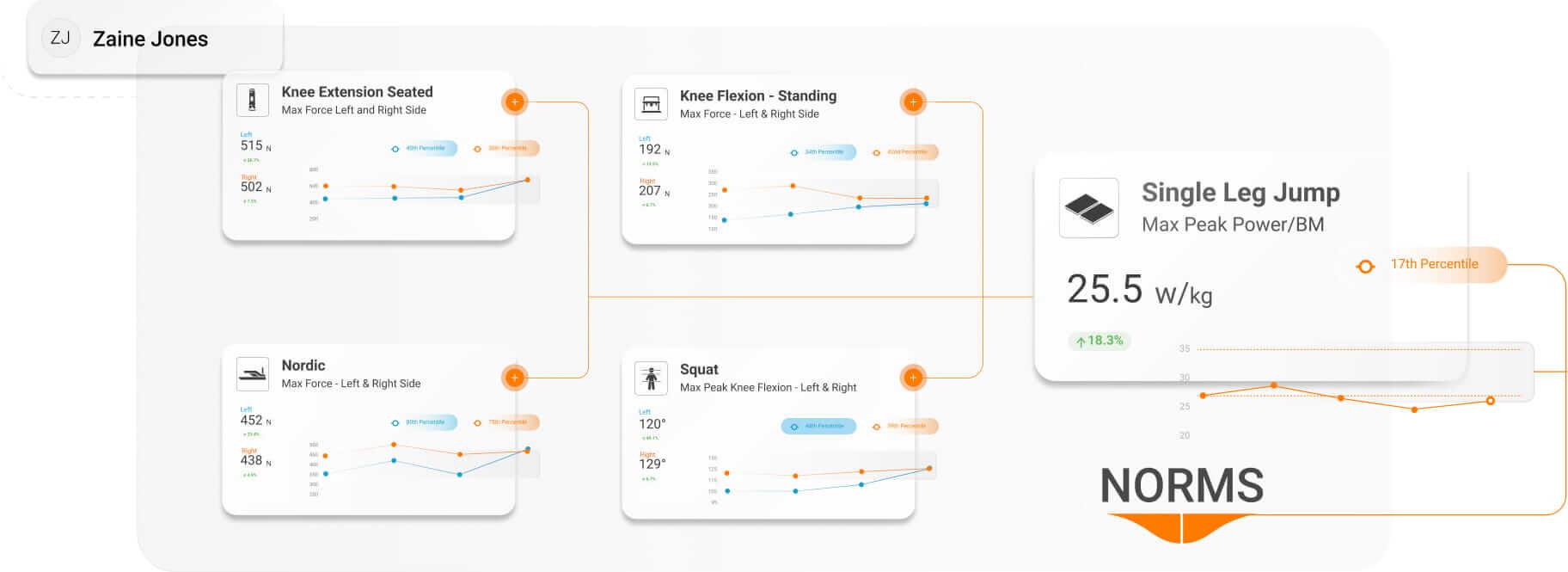
For many rehabilitation and performance settings, particularly when no pre-injury testing or sport-specific reference data exists, normative data provides a practical and objective benchmark for decision-making.
More individualized comparisons, such as healthy teammates or sport-specific cohorts, may offer additional context when available. However, these datasets are rare outside elite sporting environments, making large-scale normative databases such as VALD Norms one of the most practical benchmarking tools for many healthcare practitioners.
Population-Specific Normative Data
Population-specific normative data reports, such as the Premier League, Women’s Super League or Basketball Reports in VALD Hub, represent one of the most advanced forms of external benchmarking by collating and analyzing physical performance data across the world’s most competitive sports leagues.
Unlike resources such as Norms, normative data reports often extend beyond reference values or percentiles alone. By combining descriptive statistics with data visualizations and positional or subgroup comparisons, they provide practitioners with greater context for interpreting performance.
This allows objective testing to identify the physical characteristics an individual requires not only to safely return to sports participation but also to perform and withstand the demands of their sport at the highest level.
[Normative data] allows objective testing to identify the physical characteristics [required]…to perform and withstand the demands of their sport at the highest level.
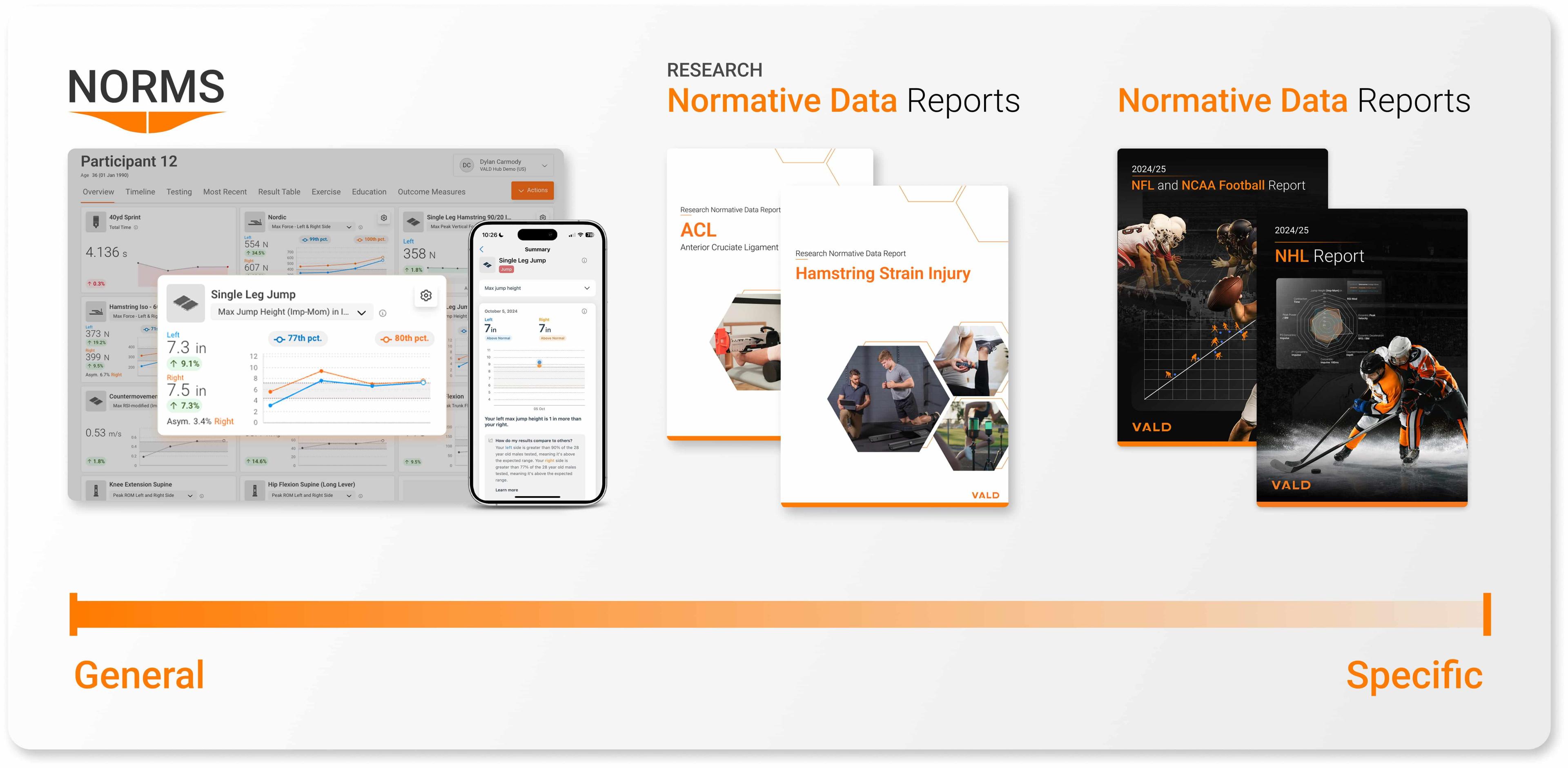
For practitioners working in high-performance sport or rehabilitating athletes, population-specific normative reports often provide the most relevant external benchmark available. When combined with individual benchmarks such as asymmetry, pre-injury testing and longitudinal monitoring, they help create a more complete understanding of performance and support more informed clinical and performance decision-making.
Using the Right Benchmarks in Rehabilitation
Objective testing only becomes meaningful when interpreted against an appropriate benchmark. Whether the comparison is with the contralateral limb, the individual’s own historical performance, a large normative dataset or an elite sporting population, each benchmark answers a different question and provides different information.
Rather than relying on a single comparison or threshold, practitioners should select the benchmark that best aligns with the clinical or performance decision being made. In many cases, the strongest decisions are supported by comparing the required specificity of the application with the strength of the reference data to determine which reference is most appropriate for the comparison.
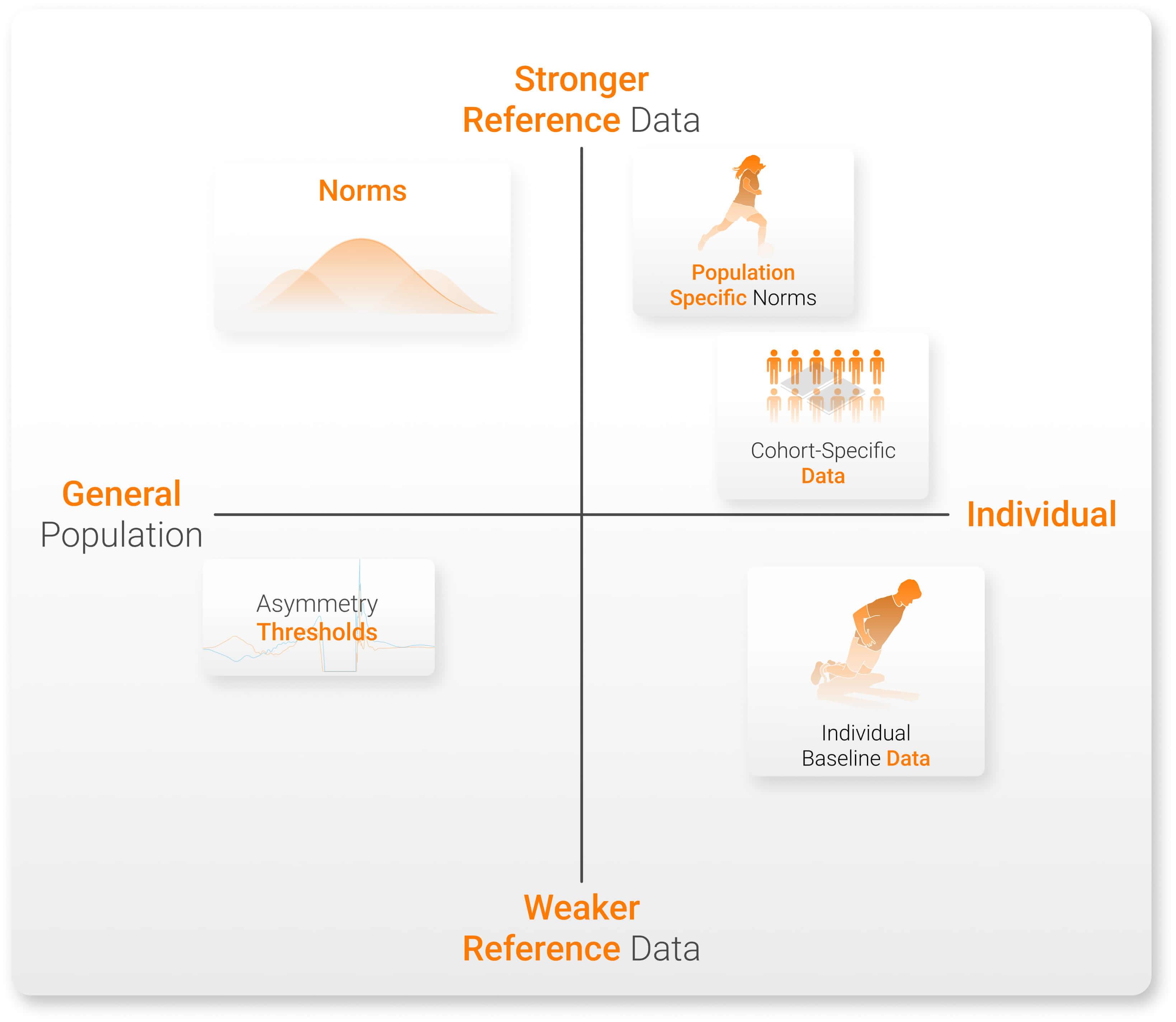
Comparison of reference datasets based on population specificity and dataset strength.
Ultimately, benchmarking is best understood as a probabilistic “bet.” Practitioners appraise how an individual compares with reference standards and use that comparison to determine an individual’s readiness to tolerate their activity.
Therefore, having multiple comparisons, such as an asymmetry percentage, comparison to pre-injury data and a percentile ranking from a normative dataset, ultimately improves a practitioner’s confidence that they are making the most informed decision possible.
If you would like to learn more about how VALD’s human measurement technology can help your organization collect reliable data, select appropriate benchmarks and make more data-informed rehabilitation decisions, get in touch.
References
- Bahr, R. (2016). Why screening tests to predict injury do not work-and probably never will…: A critical review. British Journal of Sports Medicine, 50(13), 776–780. https://doi.org/10.1136/bjsports-2016-096256
- De Michelis Mendonça, L. (2022). To do or not to do? - The value of the preseason assessment in sport injury prevention. International Journal of Sports Physical Therapy, 17(2), 111–113. https://doi.org/10.26603/001c.31871
- Fulton, J., Wright, K., Kelly, M., Zebrosky, B., Zanis, M., Drvol, C., & Butler, R. (2014). Injury risk is altered by previous injury: A systematic review of the literature and presentation of causative neuromuscular factors. International Journal of Sports Physical Therapy, 9(5), 583–595. https://pmc.ncbi.nlm.nih.gov/articles/PMC4196323/
- Hägglund, M., Waldén, M., & Ekstrand, J. (2006). Previous injury as a risk factor for injury in elite football: A prospective study over two consecutive seasons. British Journal of Sports Medicine, 40(9), 767–772. https://doi.org/10.1136/bjsm.2006.026609
- Lee, M., & O’Neill, S. (2024). S630 FO60 – Plantarflexion weakness exists before calf muscle or Achilles tendon injuries in professional rugby union players. British Journal of Sports Medicine, 8, A32. https://doi.org/10.1136/bjsports-2024-IOC.54
- Moran, T. E., Ignozzi, A. J., Burnett, Z., Bodkin, S., Hart, J. M., & Werner, B. C. (2022). Deficits in contralateral limb strength can overestimate limb symmetry index after anterior cruciate ligament reconstruction. Arthroscopy, sports medicine, and rehabilitation, 4(5), e1713–e1719. https://doi.org/10.1016/j.asmr.2022.06.018
- Wright, A., Reid, D., & Potts, G. (2025). Return to sport (RTS) tests and criteria following an anterior cruciate ligament (ACL) reconstruction (ACLR): A scoping review. The Knee, 57, 179–199. https://doi.org/10.1016/j.knee.2025.08.010
