Closing the Gap in Lateral Ankle Sprain Rehabilitation
Available in:
EN
Morgan Williams is a Data Scientist at VALD, Adjunct Associate Professor at Griffith University and an external affiliate member of the Australian Centre for Precision Health and Technology (PRECISE).


Morgan Williams is a Data Scientist at VALD, Adjunct Associate Professor at Griffith University and an external affiliate member of the Australian Centre for Precision Health and Technology (PRECISE).
The Lateral Ankle Sprain Problem
Lateral ankle sprains (LAS) are among the most common lower-limb musculoskeletal injuries across sporting and general populations (Herzog et al., 2019). Despite this prevalence, they are often perceived as minor and consequently managed as low-priority injuries, with only 50% of individuals seeking medical attention after LAS (Verhagen et al., 2000).
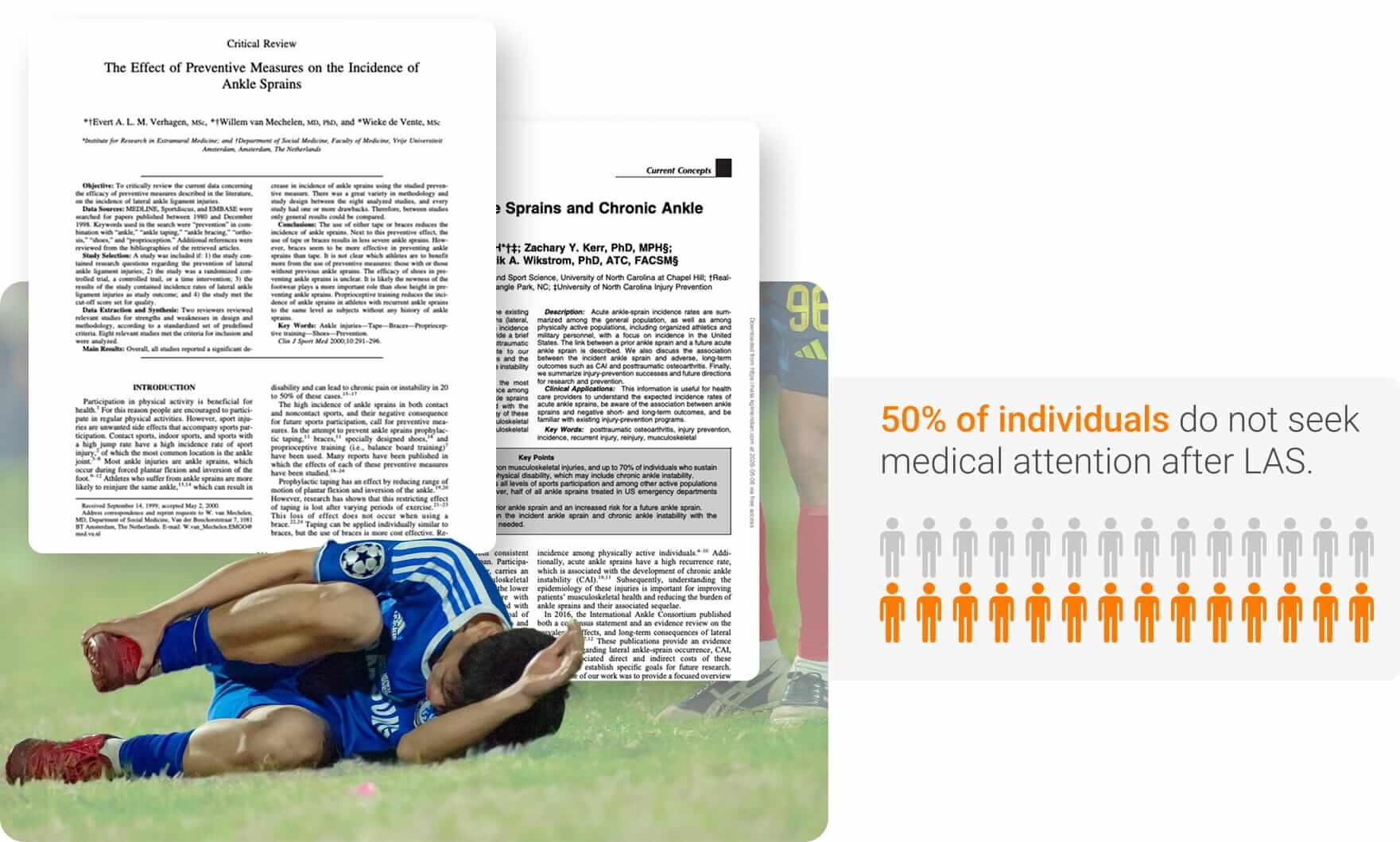
The consequences of treating LAS as an innocuous injury are well documented (Gribble et al., 2016). Recurrence rates are high, with many individuals going on to develop chronic ankle instability (CAI) and, over time, post-traumatic osteoarthritis (PTOA). While pain and swelling frequently resolve within weeks, deficits in ankle strength, range of motion (ROM), balance and neuromuscular control often persist well beyond symptom resolution.
While pain and swelling frequently resolve within weeks, [physical] deficits…often persist well beyond symptom resolution.
Highly regarded clinical frameworks for initial injury evaluation (Delahunt et al., 2019) and return-to-sport testing (Smith et al., 2021) emphasize the assessment of deficits but do not provide examples of how to perform these assessments using objective measurement technology.
Despite the well-established association between increased reinjury risk and deficits in ROM, strength, proprioception, balance and motor control, these qualities are rarely measured objectively in practice.
This article outlines how systems such as ForceDecks, DynaMo, ForceFrame and HumanTrak can objectively identify and monitor mechanical and functional deficits following LAS, supporting data-informed rehabilitation and return-to-activity decisions while helping reduce recurrence risk.
Functional Deficits Persist After Pain Resolves
Following LAS, impairments often extend beyond pain and swelling, with mechanical and functional deficits persisting after symptoms resolve. Changes in joint stability, ROM, proprioception, strength, power and motor control can alter how force is expressed through the ankle and lower limb.
Changes in joint stability, ROM, proprioception, strength, power and motor control can alter how force is expressed through the ankle…
If these deficits are not addressed, they can contribute to CAI, characterized by recurrent episodes of “giving way,” reduced confidence and impaired sport performance or daily function. CAI is also increasingly linked to upstream injury risk, including anterior cruciate ligament (ACL) injury, hamstring strain and proximal muscle dysfunction (Xu et al., 2022).
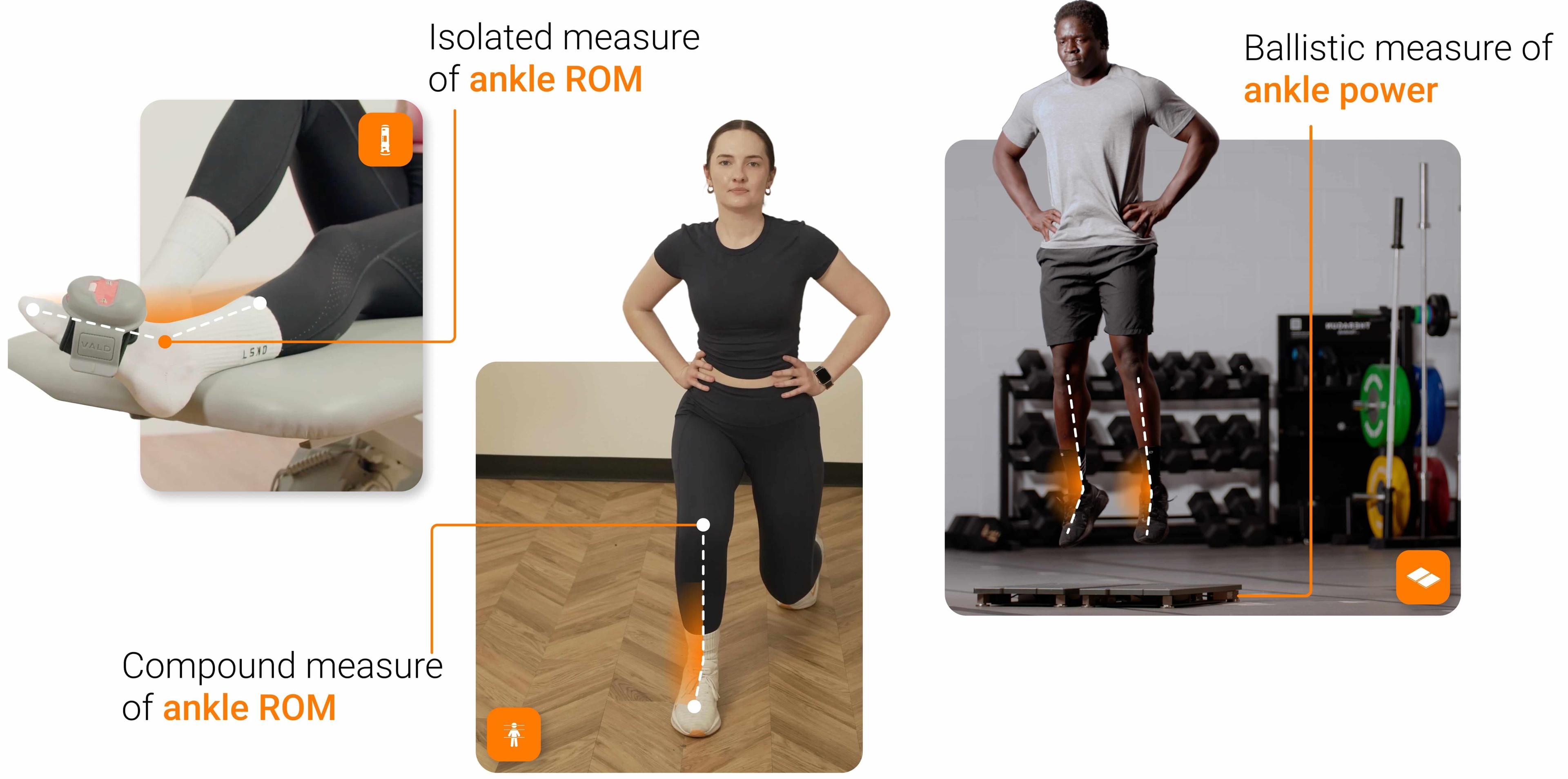
Objective measurement of different qualities commonly affected following LAS.
Many of these deficits are difficult to quantify during traditional clinical testing but can be objectively assessed with jump, balance and isometric strength testing using force plates, dynamometry and movement analysis.
Deficits in stability, landing control and terminal stance push-off can have significant downstream effects on both performance and injury risk. Without objective assessment, these limitations may remain undetected until the individual returns to higher-demand activities.
Using Objective Assessment to Close the Gap
Technologies such as ForceDecks, DynaMo, ForceFrame and HumanTrak allow practitioners to objectively quantify the deficits commonly seen following LAS. Many options for comparison are available to determine physical capacity restoration, including:
- Comparing the involved limb to the contralateral limb (e.g., asymmetry)
- Assessing pre-injury baselines (when available)
- Using normative data (e.g., VALD Norms)
Due to the casual approach often taken toward managing LAS, less emphasis is frequently placed on objective measurement throughout rehabilitation. However, testing may be most valuable in these cases, helping identify subtle deficits in strength, balance, force production and control that can persist after symptoms resolve and contribute to recurrent injury (e.g., CAI) or PTOA.
…testing may be most valuable [post-LAS], helping identify subtle deficits…that can persist after symptoms resolve and contribute to recurrent injury…
The table below outlines common impairments following LAS, associated assessment tools and the available normative data.
| Impairment | Technology | Assessment | Normative Data |
| Eversion Strength Loss | DynaMo, ForceFrame | VALD Norms | |
| Plantar Flexion Strength Loss | DynaMo, ForceFrame, ForceDecks | VALD Norms | |
| Proprioception and Neuromuscular Control Deficits | ForceDecks, HumanTrak | VALD Norms | |
| Ballistic Power Loss | ForceDecks |
VALD Norms, Normative Data Reports | |
| Reactive Strength Loss | ForceDecks |
VALD Norms, Normative Data Reports | |
| Ankle ROM Loss | DynaMo, HumanTrak |
| Research Normative Data Reports |
Normative data is available throughout the VALD ecosystem in several formats, including Norms, VALD’s automated normative data calculations within VALD Hub; Research Normative Data Reports, written summaries of published, peer-reviewed data; and Normative Data Reports, written summaries of data collected from specific populations using VALD systems.

Proprioception and ankle joint position sense are often overlooked because they are difficult to measure. Tools such as DynaMo allow early assessment of ROM and strength, giving immediate feedback to the individual. To learn more about how to apply technology to cases like these, check out this video.

Establishing Post-Injury Reference Points
Pre-injury data can provide a useful reference point but is rarely available and may not reflect true capacity if deficits existed prior to injury. In its absence, the contralateral limb and benchmarks (e.g., VALD Norms) provide practical context for determining whether deficits in strength, ROM, balance or power may be limiting recovery.
Early assessment is important, as systemic detraining during rehabilitation can reduce the value of the contralateral limb as a comparison over time. Establishing benchmarks for commonly impaired physical qualities as early as the initial evaluation helps ensure return-to-activity decisions are based on restored function against an objective standard.
Early [contralateral] assessment is important, as systemic detraining during rehabilitation can reduce the value of the contralateral limb as a comparison over time.
Normative datasets, such as VALD Norms, provide additional context when interpreting performance, helping practitioners determine whether observed deficits fall outside expected ranges for a given population. Practitioners interested in how normative data is collected, interpreted and applied can learn more from our Not All Norms Are Created Equal article.

Criterion‑Based Progression Through Rehabilitation
While tissue healing timelines remain important, physical progression should be guided by objective milestones rather than time alone. One practical approach is to structure rehabilitation into phases, each with a specific clinical focus and assessment emphasis.
While tissue healing timelines remain important, physical progression should be guided by objective milestones rather than time alone.
The following table outlines a basic structure of technology-enabled assessments during LAS rehabilitation.
| Phase | Clinical Focus | Sample Assessments | Key Metrics |
| Initial Consultation | Baseline data – contralateral limb |
|
|
| Phase 1: Restore Access | Pain, loading tolerance, early asymmetry |
|
|
| Phase 2: Rebuild Control | Unilateral stability, sensorimotor control, foundational strength |
|
|
| Phase 3: Rebuild Output | Ballistic force production and landing control |
|
|
| Phase 4: Rebuild Reactivity and Performance | Reactive strength, sprinting and change of direction |
|
|
For more information about each assessment, visit the ForceDecks, DynaMo, ForceFrame and SmartSpeed pages on the VALD Knowledge Base.
Identifying Residual Deficits in Late-Stage Rehabilitation
Plyometric assessments such as CMJs and DJs help identify deficits that may not be apparent during isolated strength or ROM testing. Even when global outcomes such as jump height have returned to pre-injury levels, ankle-specific deficits in push-off mechanics and plantar flexor contribution may still persist.
Even when…jump height [has] returned to pre-injury levels, ankle-specific deficits in push-off mechanics and plantar flexor contribution may still persist.
For example, CMJ phase 2 (P2) concentric impulse reflects late-stage push-off and is strongly influenced by plantar flexor function. Elevated asymmetry may indicate reduced contribution from the injured side despite otherwise normal jump performance.
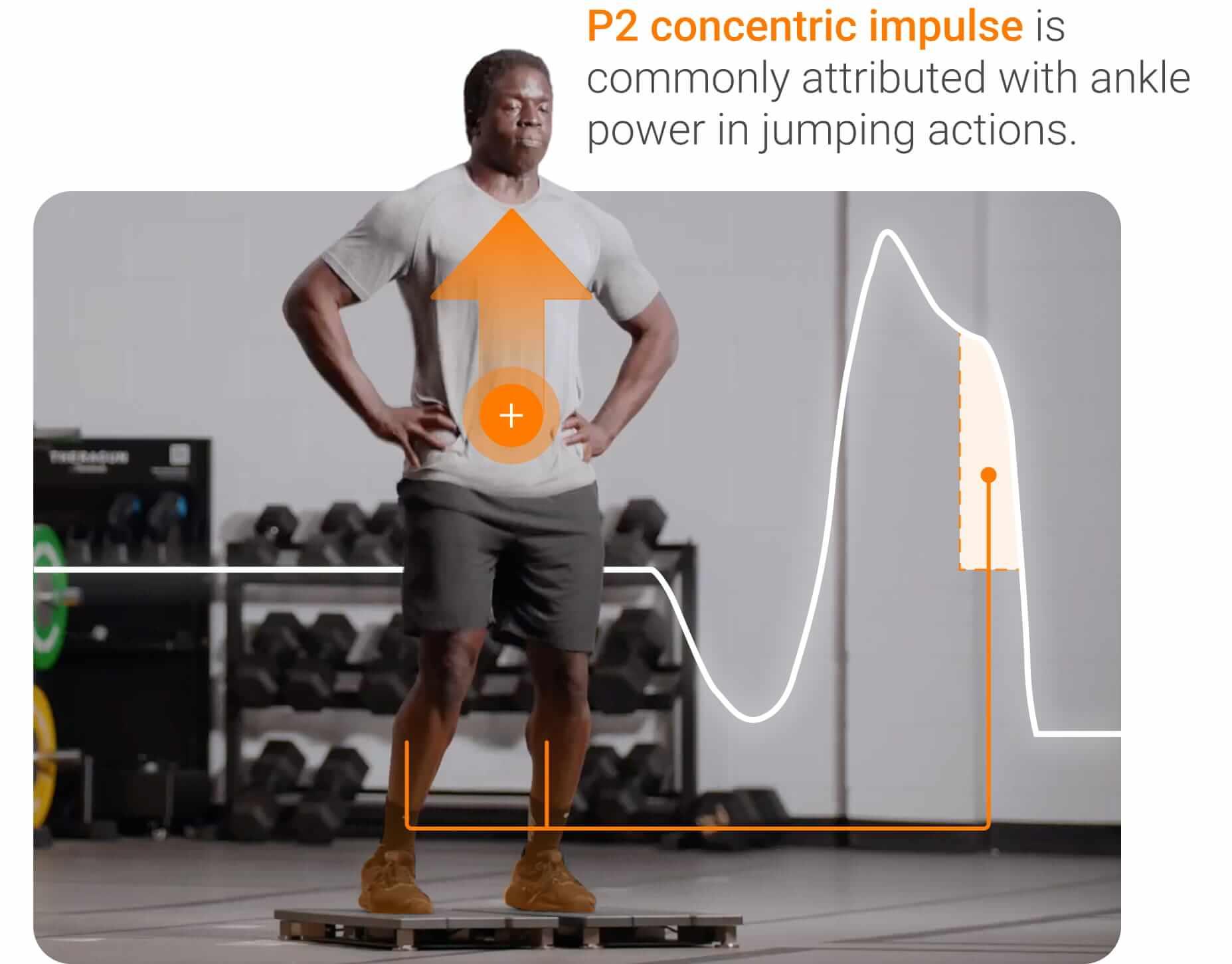
Comparing metrics such as concentric peak velocity and velocity at takeoff can provide further insight into push-off capacity, with larger discrepancies suggesting difficulty sustaining upward velocity through toe-off.
This level of analysis is particularly useful in late-stage rehabilitation when individuals continue to report limitations with acceleration, sprinting or high-speed tasks despite “passing” standard testing.
Looking Beyond the Ankle
Secondary impairments arise from protection, disuse and modified training following the initial injury, often affecting tissues beyond the ankle itself.
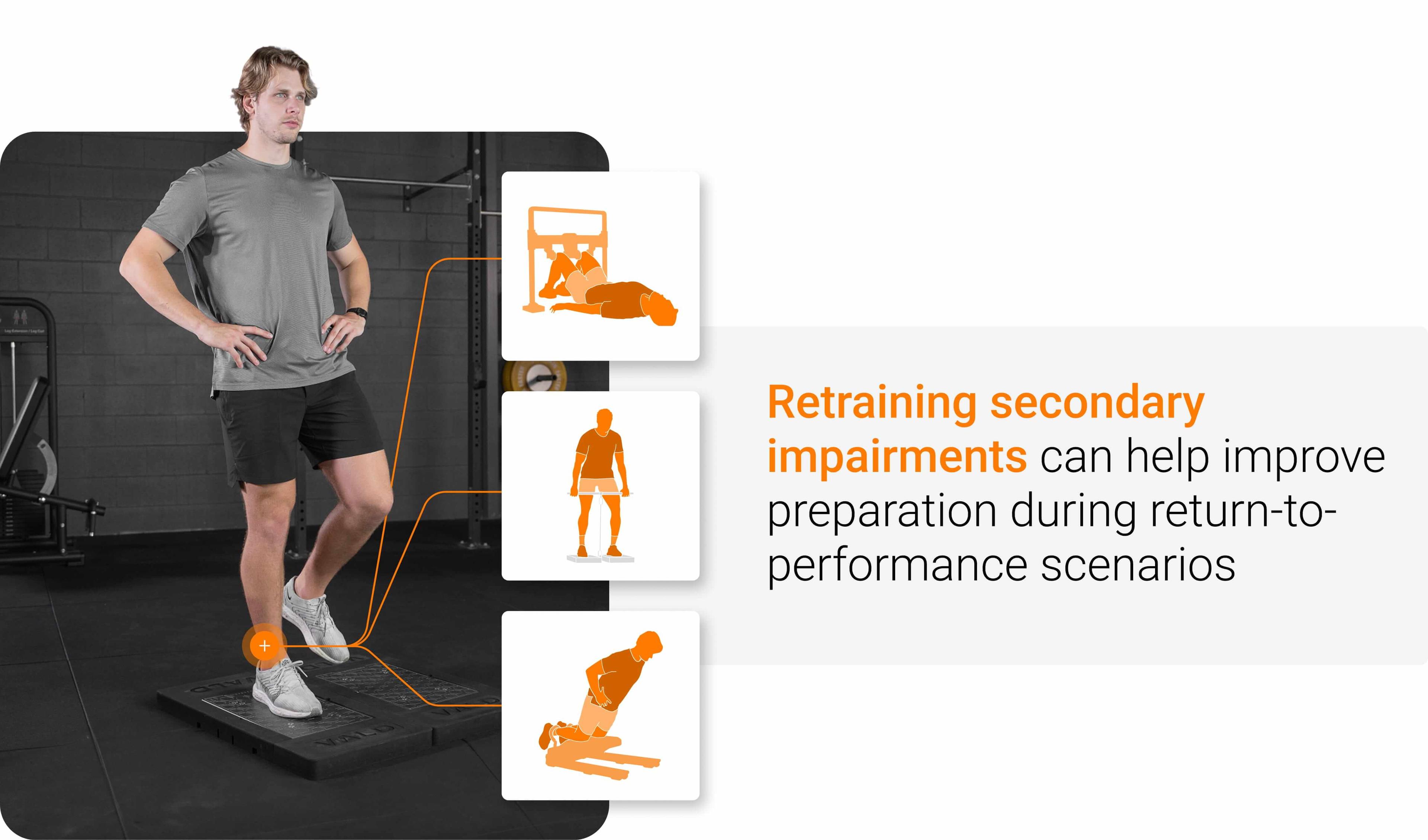
In field-sport athletes, reduced exposure to high-speed running can result in declines in sprint-related capacities. During early rehabilitation, training tools such as NordBord can be used to monitor and maintain eccentric hamstring strength when sprinting is not yet appropriate.
…training tools such as NordBord can be used to monitor and maintain eccentric hamstring strength when sprinting is not yet appropriate.
Similarly, changes to lower-limb loading may reduce stimulus to proximal structures. Assessing knee extension and hip abduction, adduction and extension using ForceFrame and DynaMo helps ensure these strength capacities are maintained throughout rehabilitation, supporting a more complete return to performance.
Leaving Symptom-Driven Management Behind
Lateral ankle sprains are common and often managed quickly, but functional recovery often lags behind symptom resolution. Without objective assessment, meaningful deficits in strength, control and force production can persist unseen, contributing to high rates of reinjury and progression to CAI.
Effective management often requires identifying and restoring the physical qualities lost following injury rather than waiting for physical symptoms to resolve.
Effective management [of LAS] often requires identifying and restoring the physical qualities lost following injury rather than waiting for physical symptoms to resolve.
By identifying impairments early, objectively tracking their response to loading and progressing rehabilitation using criterion‑based milestones, practitioners can move beyond symptom‑driven management. This approach improves decision‑making from the first consultation through return to activity and reduces the likelihood that a “simple” ankle sprain becomes a long-term problem.
If you would like to learn more about how VALD technology can support objective lower-limb assessment and rehabilitation following LAS, get in touch with our team.
References
- Delahunt, E., Bleakley, C. M., Bossard, D. S., Caulfield, B. M., Docherty, C. L., Doherty, C., Fourchet, F., Fong, D. T., Hertel, J., Hiller, C. E., Kaminski, T. W., McKeon, P. O., Refshauge, K. M., Remus, A., Verhagen, E., Vicenzino, B. T., Wikstrom, E. A., & Gribble, P. A. (2018). Clinical assessment of acute lateral ankle sprain injuries (ROAST): 2019 consensus statement and recommendations of the International Ankle Consortium. British Journal of Sports Medicine, 52(20), 1304–1310. https://doi.org/10.1136/bjsports-2017-098885
- Gribble, P. A., Bleakley, C. M., Caulfield, B. M., Docherty, C. L., Fourchet, F., Fong, D. T.-P., Hertel, J., Hiller, C. E., Kaminski, T. W., McKeon, P. O., Refshauge, K. M., Verhagen, E. A., Vicenzino, B. T., Wikstrom, E. A., & Delahunt, E. (2016). Evidence review for the 2016 International Ankle Consortium consensus statement on the prevalence, impact and long-term consequences of lateral ankle sprains. British Journal of Sports Medicine, 50, 1496–1505. http://dx.doi.org/10.1136/bjsports-2016-096188
- Herzog, M. M., Kerr, Z. Y., Marshall, S. W., & Wikstrom, E. A. (2019). Epidemiology of ankle sprains and chronic ankle instability. Journal of Athletic Training, 54(6), 603–610. https://doi.org/10.4085/1062-6050-447-17
- Smith, M. D., Vicenzino, B., Bahr, R., Bandholm, T., Cooke, R., Mendonça, L. M., Fourchet, F., Glasgow, P., Gribble, P. A., Herrington, L., Hiller, C. E., Lee, S. Y., Macaluso, A., Meeusen, R., Owoeye, O. B. A., Reid, D., Tassignon, B., Terada, M., Thorborg, K., Verhagen, E., Verschueren, J., Wang, D., Whiteley, R., Wikstrom, E. A., & Delahunt, E. (2021). Return to sport decisions after an acute lateral ankle sprain injury: Introducing the PAASS framework-an international multidisciplinary consensus. British Journal of Sports Medicine, 55(22), 1270–1276. https://doi.org/10.1136/bjsports-2021-104087
- Verhagen, E. A. L. M., van Mechelen, W., & de Vente, W. (2000). The effect of preventive measures on the incidence of ankle sprains. Clinical Journal of Sport Medicine, 10(4), 291–296. https://doi.org/10.1097/00042752-200010000-00012
- Xu, Y., Song, B., Ming, A., Zhang, C., & Ni, G. (2022). Chronic ankle instability modifies proximal lower extremity biomechanics during sports maneuvers that may increase the risk of ACL injury: A systematic review. Frontiers in Physiology, 13, 1036267. https://doi.org/10.3389/fphys.2022.1036267
