HumanTrak in 2026: More tests, smarter workflows and better insights
Available in:
EN
HumanTrak has evolved significantly since its inception, with even more features and updates introduced over the past six months. New testing options, smarter workflows and improved reporting tools help practitioners assess, monitor and communicate results more efficiently.
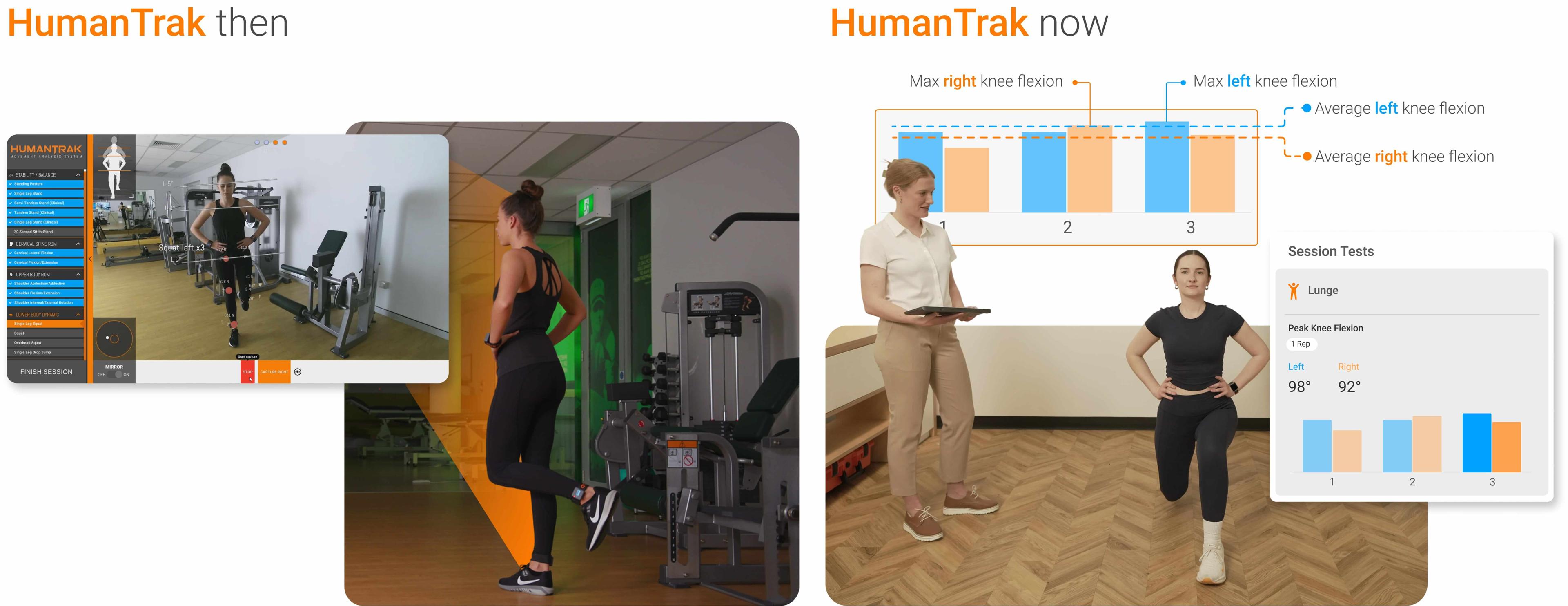
For practitioners who last used HumanTrak prior to 2024, today’s platform would look like an entirely different product – because it is. Rebuilt entirely from the ground up, the differences in HumanTrak are particularly noticeable in how practitioners test, review results and manage data in day-to-day workflows.
For practitioners who last used HumanTrak prior to 2024, today’s platform would look like an entirely different product – because it is.
What Is New in HumanTrak
HumanTrak continues to expand its assessment library, helping practitioners test more movement qualities with the speed, consistency and scalability needed for real-world health and performance settings. The latest additions and improvements include:
- Integrated video recording and playback
- Custom testing and measurements
- Expanded test types
- Better insights and reporting
- Faster testing for teams
HumanTrak continues to expand its assessment library, helping practitioners test more movement qualities with the speed, consistency and scalability…
Integrated Video Recording and Playback
One of the most requested features is now available in HumanTrak, with Video Mode supporting video recording and playback across every test. During testing, videos are automatically recorded, with in-app playback available for both entire-test and individual-repetition videos.
Repetition-synced playback and key-event toggling enable practitioners to review specific moments within a test, while synchronized side-by-side playback enables left- and right-side videos to be viewed together for easier comparison.
Custom Testing and Measurements
One of the biggest additions to HumanTrak is the ability to record and measure almost any movement.
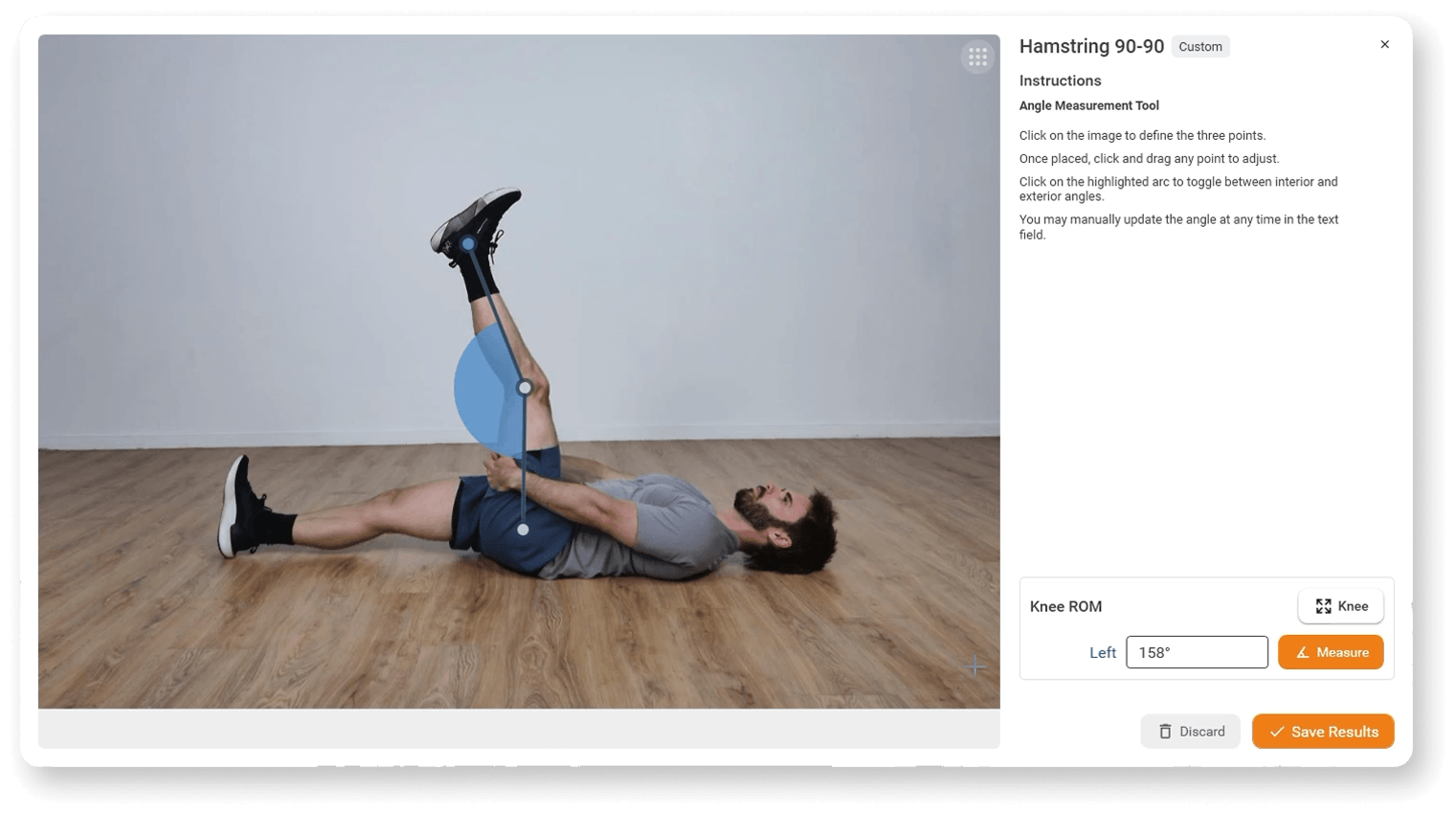
The Test Now, Measure Later feature allows practitioners to record repetitions during testing and add measurements afterward. For high-volume testing sessions, this simplifies data collection, reduces interruptions and gives practitioners more time to focus on their patients or athletes, with the information they need available to support clearer decision-making.
Expanded Test Types
New Jump, Hop and Anthropometry Assessments
HumanTrak now includes several new test types to broaden the assessment toolkit available to practitioners, including:
- Countermovement jump (CMJ)
- Single leg CMJ
- Drop jump
- Broad jump
- Medial hop
- Lateral hop
- Single leg land and hold (time to stability)
Beyond these jump and hop tests, HumanTrak has also introduced new assessments for trunk rotation, unilateral landing, reactive strength and horizontal power, alongside anthropometric measurements.
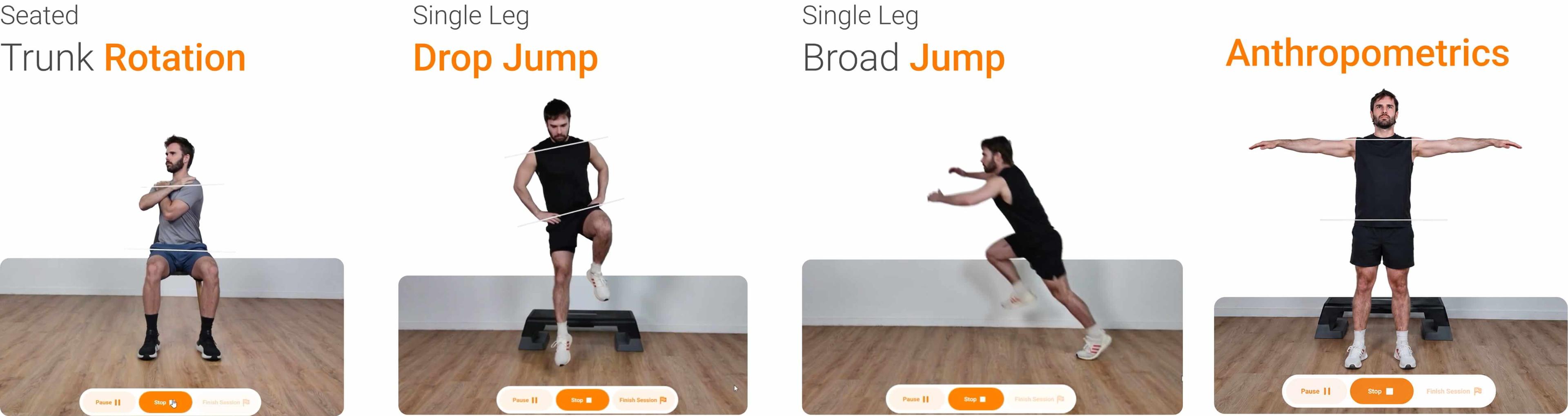
Trunk rotation (seated) provides a more controlled measure of trunk rotational range of motion. Performing the test in a seated position restricts pelvic rotation, reducing compensation and providing a more isolated assessment. The assessment also allows practitioners to compare rotational range of motion between the left and right sides.
Single leg drop jump is a unilateral assessment of reactive strength that helps practitioners evaluate landing control and jump strategy on a single limb. HumanTrak analysis allows this assessment to be particularly useful when monitoring key kinematic variables like dynamic knee valgus on landing.
Single leg broad jump is a unilateral horizontal power assessment that measures jump distance alongside movement characteristics such as takeoff angle. The test is designed for environments where large numbers of individuals need to be assessed quickly and consistently, providing a more scalable alternative to manual measurement methods.
Anthropometric measurements allow practitioners to capture standing height, wingspan and segment lengths quickly without relying on manual processes. The repeatable HumanTrak workflow helps practitioners collect anthropometric data consistently across large groups, while HumanTrak’s high reliability means results can be compared over time.
…these additions broaden the…assessments available within HumanTrak without adding complexity to the assessment process.
Together, these additions broaden the range of performance and rehabilitation assessments available within HumanTrak without adding complexity to the assessment process.
New Functional Movement Assessments
Beyond traditional performance testing, HumanTrak now also includes several new functional movement assessments:
- 30-second sit-to-stand
- 5-repetition sit-to-stand
- Functional sit-to-stand
- Box lift (bench height)
- Box lift (overhead)
[HumanTrak’s expanding test library extends] beyond traditional performance testing…[broadening its application] across occupational health, rehabilitation and functional capacity assessment…
These additions broaden the application of HumanTrak across occupational health, rehabilitation and functional capacity assessment, allowing practitioners in these environments to conduct more assessments within a single platform.
Better Insights and Reporting
HumanTrak has continued to improve how results are viewed and communicated. Detailed results tables are now available across all tests, alongside expanded normative data and improved longitudinal tracking.
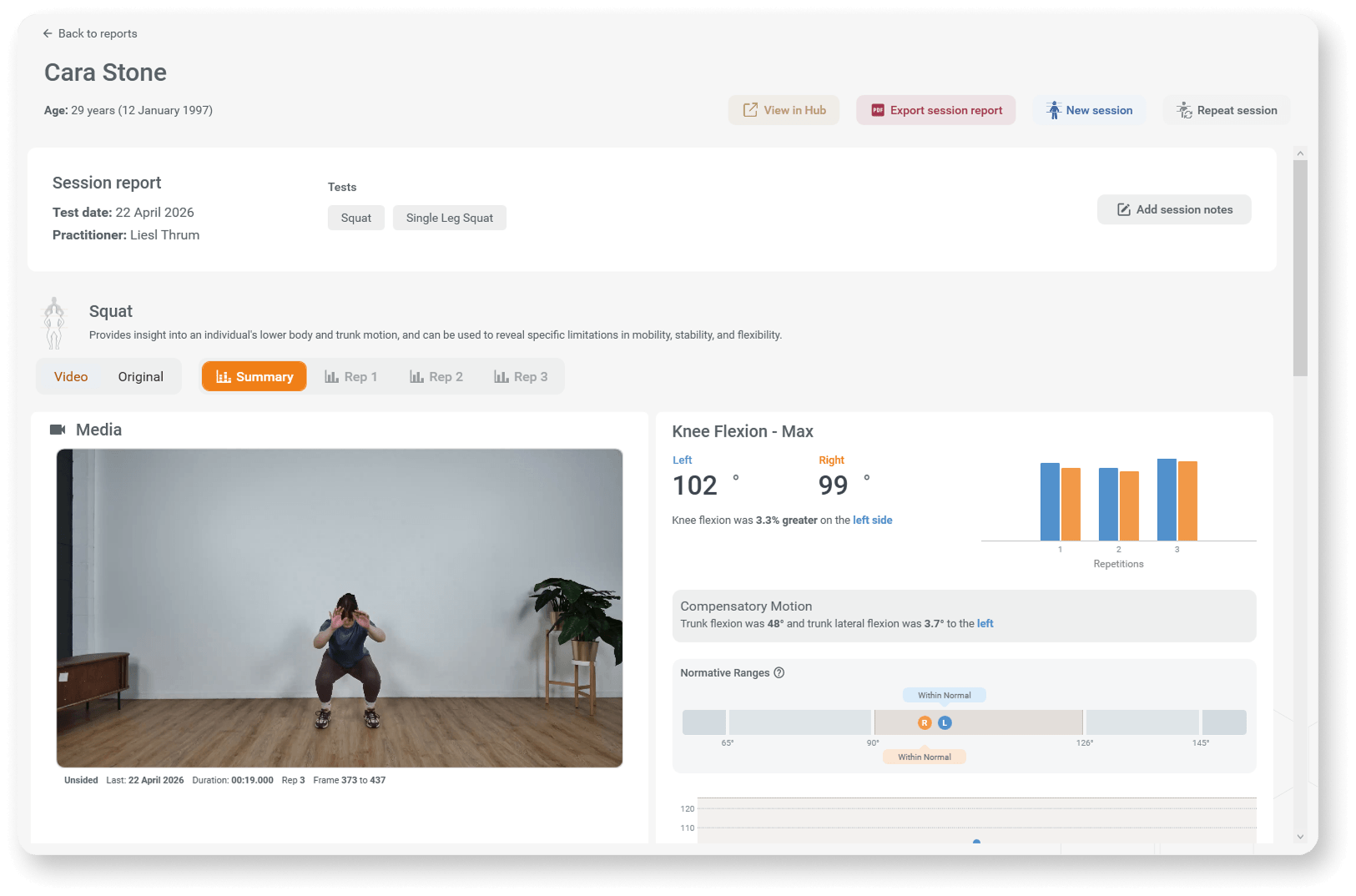
Unlimited repetitions and real-time biofeedback are supported by intuitive reporting with snapshots and dynamic reports accessible in-session or through the MoveHealth app. PDF generation is also faster, with printable reports now including organization branding and notes that can be pasted directly into sessions and reports.
Faster Testing for Teams
For practices and teams conducting high-volume assessments, HumanTrak’s Group Testing Mode helps practitioners coordinate testing across larger groups. Whether assessing 10, 20 or 50 individuals, dedicated workflows, improved queue management and profile reordering help keep individuals moving and sessions on schedule.
Faster report searching and streamlined session management make results easier to locate, while PDF reports can be uploaded automatically to VALD Hub, reducing manual handling after each session.
Additional Behind-the-Scenes Updates
Alongside the new testing capabilities, HumanTrak has also received a range of updates to improve reliability and day-to-day performance across different testing setups, including:
- Enhanced system speed, stability and reliability across a wider range of hardware configurations and high-volume testing sessions
- Improved calibration workflows by moving calibrations that can be shared across tests into a common protocol instead of being performed before every test
- Better neck and hip testing achieved by introducing dedicated calibration steps prior to the tests being performed
Manual Mode is also available for neck flexion and shoulder external rotation (neutral), allowing practitioners to lower manual repetition detection thresholds for patients with limited range of motion.
What Is Next for HumanTrak
HumanTrak continues to evolve in response to practitioner needs, with its growing assessment library providing practitioners with more testing options while ongoing workflow improvements support testing at scale.
There is also more to come, so keep an eye out for the following:
- Single leg heel raise fatigue testing
- Olympic lift analysis
These additions will further expand the HumanTrak test ecosystem, giving practitioners more assessment options within a single platform.
To learn more about the latest HumanTrak capabilities and how they can support objective, repeatable testing in your practice, get in touch with our team.
