Making Better Use of Data with VALD AI
Available in:
EN

Artificial intelligence (AI) has advanced rapidly across industries, becoming one of the most discussed topics worldwide, including in healthcare and sports performance.
For practitioners already collecting objective data, AI platforms such as VALD AI can reduce administrative burden and accelerate decision-making. Having access to a health- and performance-specific model, capable of accelerating insights, can help deliver clarity in day-to-day practice.
Unlike mainstream AI tools, which often require practitioners to upload or paste raw data into a general-purpose language model, VALD AI analyzes structured objective testing data already stored in VALD Hub. Working with curated, standardized data helps improve the reliability and consistency of the analyses generated while reducing the risk of misinterpreting poorly structured or incomplete information.
Unlike mainstream AI tools… [VALD AI works] with curated, standardized data [to] improve the reliability and consistency of the analyses generated…
Understanding AI’s current capabilities and limitations helps ensure it is applied to solve meaningful problems in healthcare and sport.
For more information on what VALD AI specifically is and its capabilities, check out our recent article, Introducing VALD AI.
Defining AI
One of the biggest misconceptions about AI is that it refers exclusively to large language models (LLMs) such as ChatGPT or Claude. While LLMs have dominated public conversation recently, they make up only a small portion of AI applications. AI is best understood as an umbrella term that encompasses the following:
- Machine learning
- Deep learning
- Generative AI
- LLMs
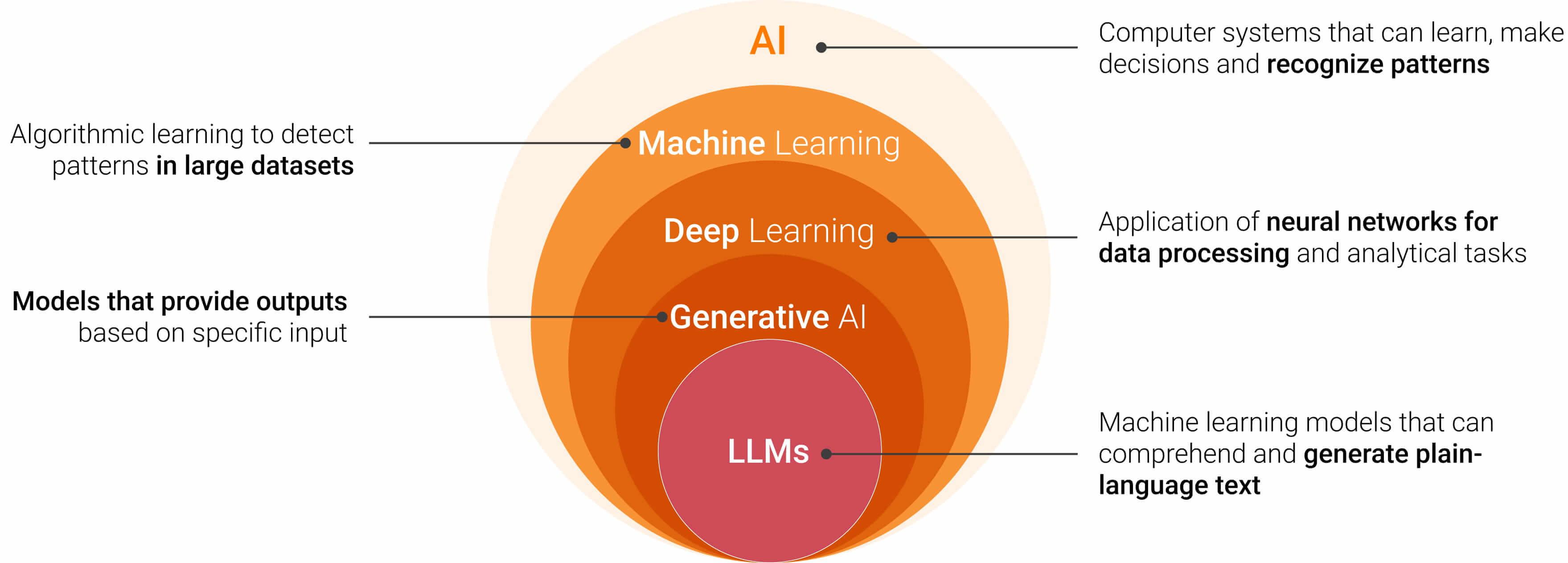
At its core, AI refers to systems designed to identify patterns, make predictions, automate decision-making and interact with information in ways that augment human capabilities. Different AI technologies solve different problems. Statistical and machine learning models are often used to identify patterns in large datasets, generate predictions and automate analytical tasks. LLMs approach a different problem entirely: understanding and generating human language.
Different AI technologies solve different problems. VALD AI [therefore] combines multiple AI technologies to help practitioners interact with objective testing data using natural language.
VALD AI combines multiple AI technologies to help practitioners interact with objective testing data using natural language. Rather than functioning as a standalone chatbot, it integrates language models with structured data retrieval and analytical workflows to enable faster, easier exploration of health and performance data at scale.
Where AI Excels
Practitioners work with enormous volumes of information. Assessment data, reports, research papers and historical testing records all compete for practitioner attention. Finding the right information at the right time can often take longer than interpreting it. This is exactly how AI can help solve practitioners’ problems.
LLMs are exceptionally good at retrieving, summarizing and visualizing information. These functions enable practitioners to spend less time searching and more time making decisions. VALD AI is analogous to having a sport science intern in your back pocket: someone who is skilled at creating and summarizing charts but does not yet have the experience to analyze the data and apply it to decision-making.
For example, when asked to perform a task, VALD AI searches VALD product data that has already been cleaned and sorted, organizes and filters the relevant results and visualizes them in reports, charts or figures, all while adhering to data governance and security standards.
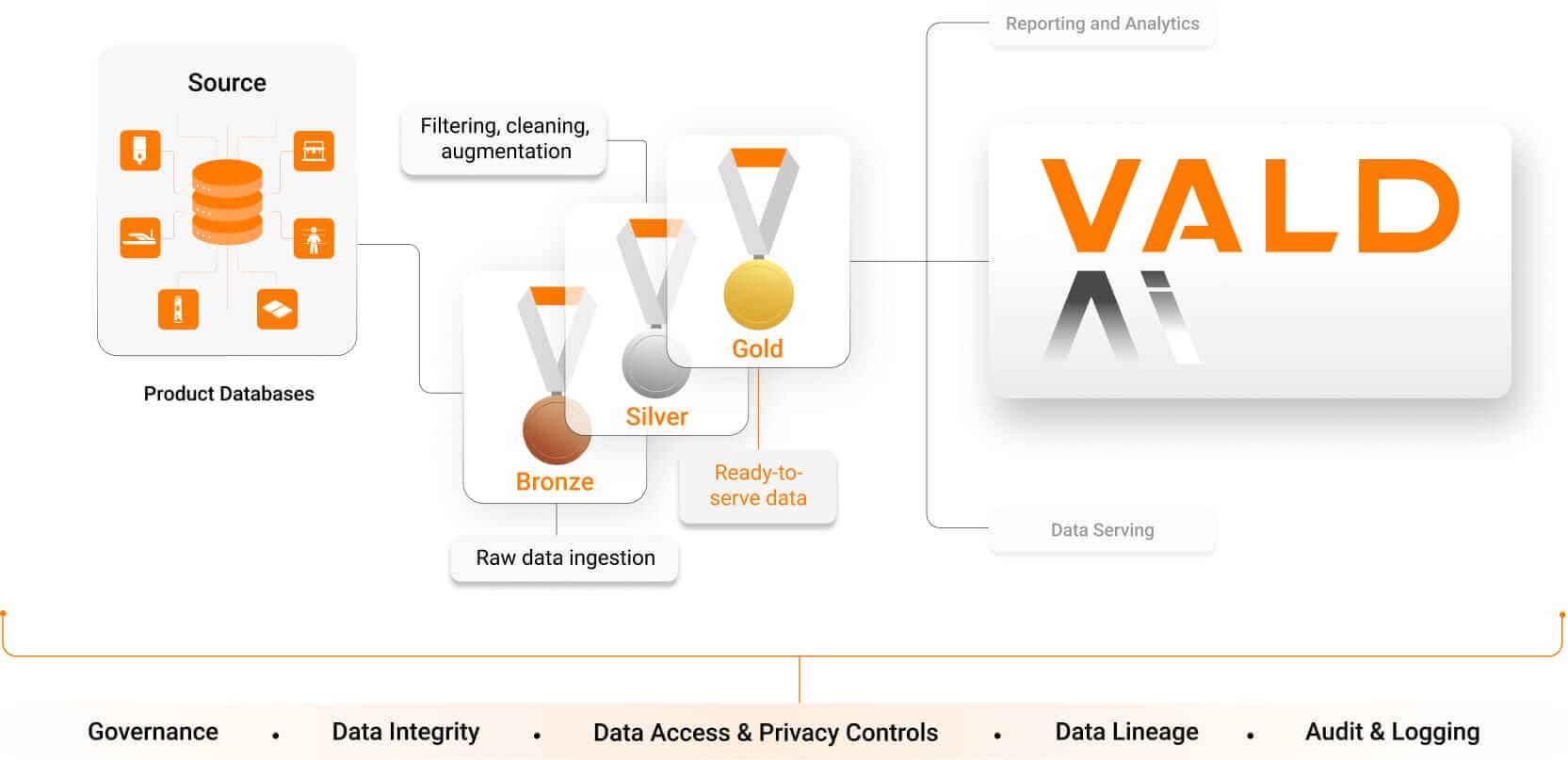
VALD AI draws on modeled and curated data, reducing the effort practitioners need to support treatment and performance decision-making.
This improves efficiency in clinical and performance practice by giving practitioners faster access to relevant information, presented in plain language and ready for interpretation. Instead of learning database structures or analytical languages, they can interact with objective testing data in the same way they would ask a colleague to investigate a particular trend.
[VALD AI] improves efficiency in clinical and performance practice by giving practitioners faster access to relevant information, presented in plain language…
For practitioners, a structured and specific application of AI can support day-to-day clinical and performance practice. Conversely, if you are relying on AI to replace your reasoning and judgment, it will not make you an expert.
Where All Models Fall Short
AI models differ fundamentally from traditional software. Conventional software follows deterministic rules, meaning that the same input consistently produces the same output. However, LLMs are probabilistic, generating responses based on the most statistically likely output given the prompt and available context.
…LLMs are probabilistic, generating responses based on the most statistically likely output given the prompt and available context.
Therefore, when using platforms such as VALD AI, the same question may generate slightly different responses because the model selects the most statistically likely sequence of actions rather than retrieving a fixed answer. With this information in mind, practitioners can better approach AI prompting by writing prompts with enough context and specificity to reduce ambiguity.
AI is not meant to infer intent, making the role of a practitioner important in providing enough context to reduce output ambiguity. With greater prompt specificity, models like VALD AI make fewer assumptions, resulting in more consistent and relevant outputs.
VALD AI Behind the Scenes
While APIs, custom dashboards and manual data exports enable powerful analysis, they often require technical expertise and time-consuming data preparation. VALD AI reduces this friction by allowing practitioners to ask questions in plain language and instantly generate summaries, trends, comparisons and visualizations from the objective testing data already stored in VALD Hub.
[With] VALD AI…practitioners [can] ask questions in plain language and instantly generate summaries, trends, comparisons and visualizations from [their own data]…
Behind the scenes, VALD AI does far more than a simple keyword search. VALD’s data science team has equipped VALD AI with the clinical and performance context needed to interpret practitioner language. By interpreting the desired outcome of a prompt and identifying the relevant assessments, metrics, athletes, groups and timeframes, VALD AI then queries structured data more precisely to generate the requested analysis, visualizations or summaries.
Rather than relying solely on exact keywords, it understands common musculoskeletal terminology, sport science abbreviations and product-specific language that general-purpose AI models are unlikely to recognize. For example, asking for a “swinging-arm CMJ” will retrieve data from an Abalakov jump, while requesting “EUR” will identify the eccentric utilization ratio metric.
…[VALD AI] understands common musculoskeletal terminology, sport science abbreviations and product-specific language that general-purpose AI models are unlikely to recognize.
Practitioners can refer to common abbreviations, test names or metrics using the terminology they naturally use in practice, allowing VALD AI to interpret the request without requiring precise database labels. This contextual understanding allows practitioners not only to prompt the model in plain language but also to use industry-specific terminology, just as they would ask a colleague.
VALD AI Prompting
Prompt specificity remains important. A broad request such as “analyze jump height trends” requires VALD AI to make several assumptions:
- System: Which system captured the jump height data (e.g., ForceDecks, HumanTrak or SmartJump)?
- Test Type: Which test should jump height be extracted from (e.g., countermovement jump, squat jump or drop jump)?
- Metric: Which jump height calculation should be used (flight time or impulse-momentum)?
- Subjects: Which athletes or groups should be included?
- Timeframe: How far back should it look to sample the trend?
The more assumptions VALD AI makes, the lower the likelihood that the prompt will deliver the result the practitioner is looking for.
Learning From Practitioner Workflows
One objective of VALD AI’s closed beta program is to better understand how practitioners want to interact with their testing data. Every prompt provides insight into how practitioners and performance staff search for information, which analyses they perform most often and where AI can meaningfully improve existing workflows.
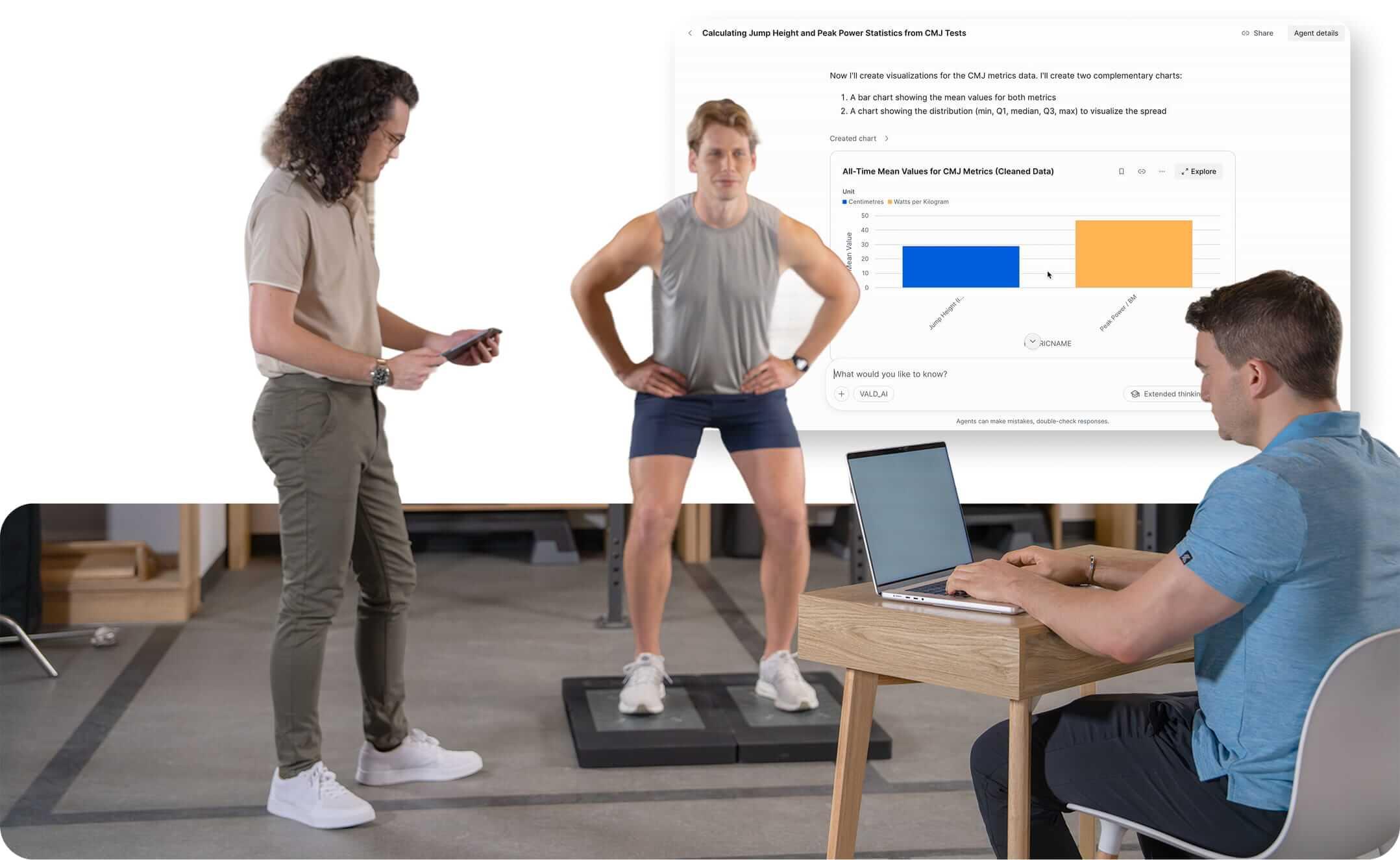
Practitioners can query VALD AI to gather fast, real-time insights to help inform current and future treatment plans.
While the initial focus was on making structured data easier to query, practitioners have quickly expanded their use of the platform across several use cases:
- Monitoring longitudinal performance trends
- Identifying outliers
- Comparing groups
- Generating reports
- Summarizing test results
…practitioners have quickly expanded their use of [VALD AI], including monitoring longitudinal performance trends, identifying outliers, comparing groups, generating reports [and more]…
VALD AI continues to evolve through practitioner feedback. Real-world use cases help refine how the platform interprets questions and presents results, while shaping future capabilities that further streamline clinical and performance decision-making.
What Next?
As AI continues to evolve, its value in healthcare and sport will ultimately be determined by how effectively it helps practitioners solve real-world problems. For organizations already collecting objective data, platforms like VALD AI can reduce the time spent retrieving information, organizing datasets and performing repetitive analyses.
The next stage of VALD AI will focus on expanding its functionality and improving the depth and quality of the insights it can generate from natural language prompts. As the model continues to evolve alongside the growing breadth of data within VALD Hub, practitioners will be able to ask increasingly sophisticated questions and receive richer, more context-aware analyses to support clinical and performance decision-making.
If you are interested in learning more about VALD AI, read our Introducing VALD AI article or get in touch to express your interest in the closed beta program.
