Managing Deceleration in Return-to-Sport Scenarios
Available in:
EN

Deceleration is a fundamental quality needed to perform in field and court sports. Athletes must change momentum, manage force and reposition their body before stopping or changing direction. Despite this, deceleration testing and development are often reintroduced late in rehabilitation, if introduced at all.
The Decel to Excel framework (Sheth & Elis, 2025) identifies this gap and treats deceleration as a skill that can begin to be developed early in rehabilitation. A subsequent paper builds on this framework by providing procedural insights for deceleration testing and development (Sheth & Elis, 2026).
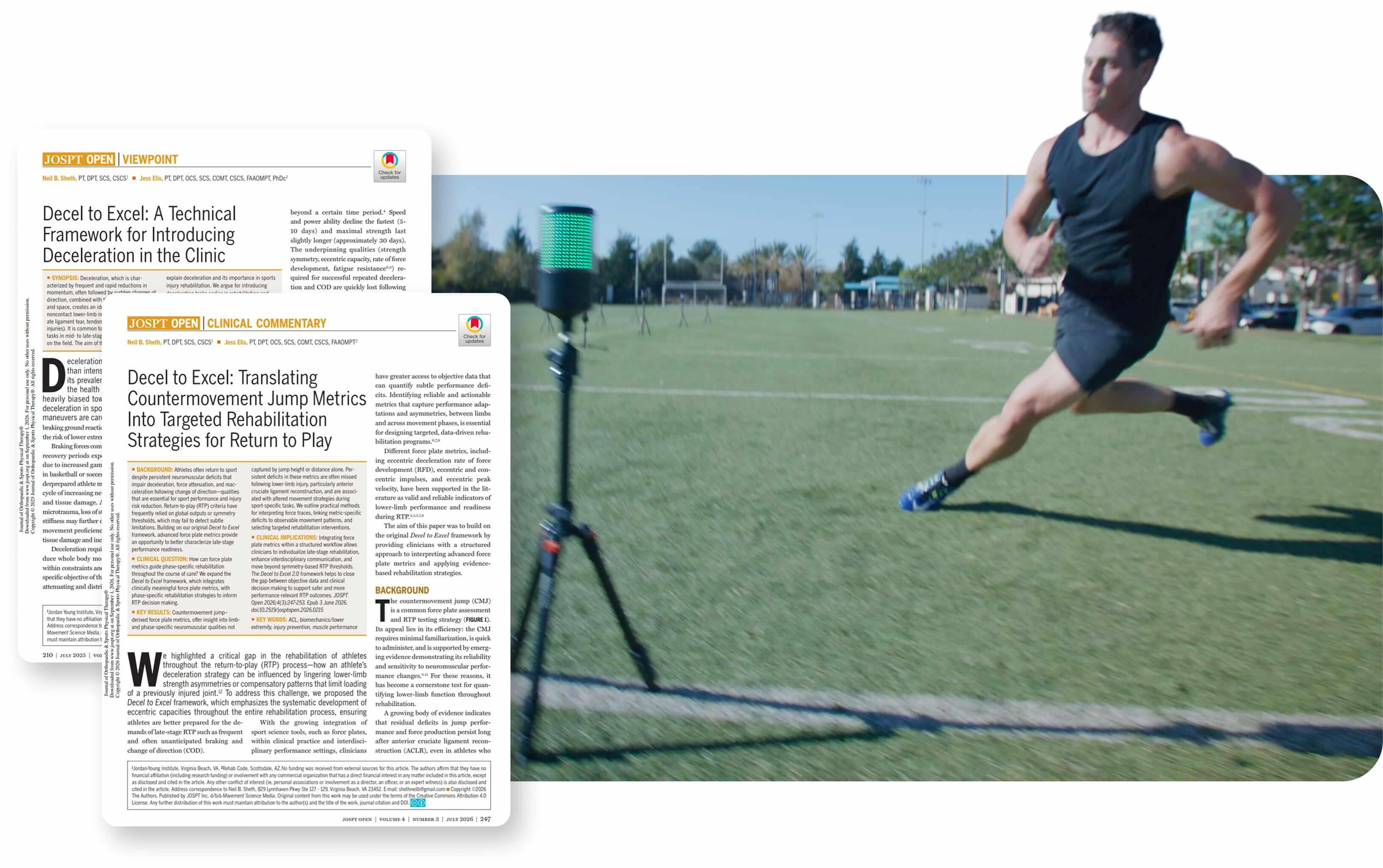
Force plate metrics from countermovement jump (CMJ) testing, using technology like ForceDecks, can help inform the deceleration development process. This approach allows practitioners to link strategy, symmetry and capacity deficits to observable movement patterns, tested through change-of-direction (COD) and sprint assessments like the curved acceleration-deceleration ability test.
Combining force plate and COD assessments helps to target the essential components of deceleration for return to sport after lower-limb injuries.
Addressing Deceleration in Earlier Phases of Rehabilitation
Following injury or surgery, many of the physical qualities underpinning deceleration can decline quickly. Qualities such as eccentric strength, neuromuscular control and fatigue resistance are especially inhibited after surgeries, including anterior cruciate ligament (ACL) reconstruction.

However, high-force and high-velocity tasks may not be reintroduced until several months into rehabilitation. Waiting until late-stage rehabilitation can compress the development of several important qualities into a short period before returning to sport, increasing the risk of underdevelopment and setbacks.
Waiting until late-stage rehabilitation can compress the development of several important qualities into a short period before returning to sport, increasing the risk of underdevelopment and setbacks.
For example, if an athlete rehabilitating from an ACL injury progresses too quickly into large volumes of eccentric training or multidirectional agility drills, they may experience loads greater than they have previously tolerated, potentially leading to increased knee discomfort and setbacks in rehabilitation.
Practitioners can instead progress deceleration across four broad stages:
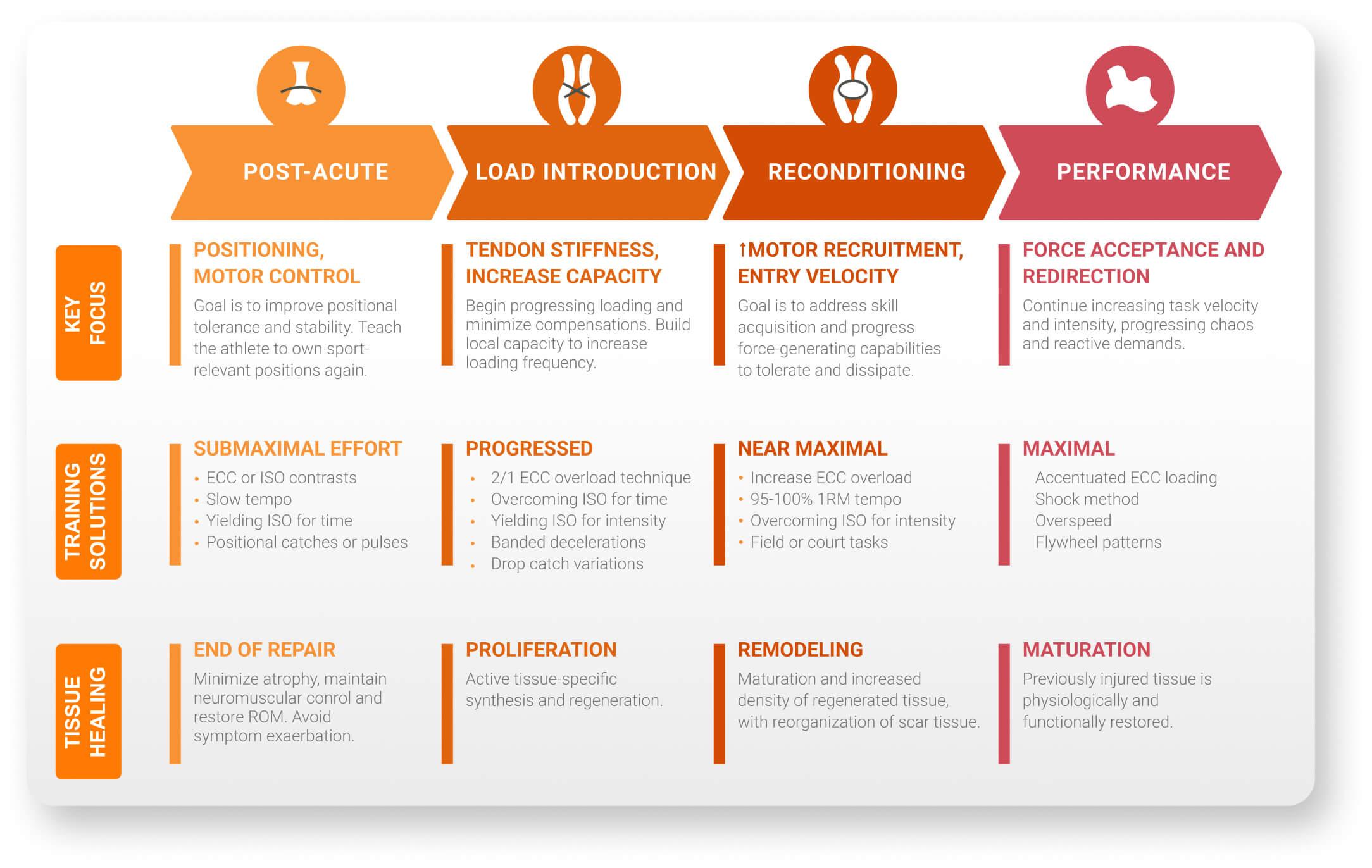
Earlier stages of the framework emphasize positioning, motor control and submaximal eccentric loading. As tissue healing and physical capacity improve, tissue loading, motor recruitment, entry velocity, force management and movement variability can be progressively increased.
Elements of deceleration can be trained without recreating the full high-intensity action. Some examples of drills and exercises that can contribute in early stages to the ability to eventually decelerate at higher speeds include the following:
- ROM capacity
- Controlled eccentric loading during strength training
- Drills that reinforce positional control
- Yielding isometrics
- Coordinated movement drills that support force management
As rehabilitation progresses, practitioners can manipulate training variables such as load and velocity within these exercises to better prepare athletes for higher-speed tasks.
Deceleration Involves More Than Physical Capacity
Movement is coordinated through the interaction between the individual, task and environment. Physical constraints include ROM, maximal force and rapid force-generating capabilities for attenuating forces during deceleration. These force-related qualities can be measured through metrics such as peak eccentric force, RFD and braking impulse to assess the athlete’s capacity to tolerate deceleration.
Movement is coordinated through the interaction between the individual, task and environment.
The task determines how these capacities are expressed. During a COD task like the 5-0-5, athletes must manage momentum through appropriate positioning, lower-limb flexion and force application within a limited number of steps. The environment adds further complexity, with approach velocity, available space and external information influencing the movement strategy selected.
Following surgeries such as ACL reconstruction, athletes may restore strength while continuing to offload the involved limb. Eccentric asymmetries and compensatory strategies can persist after returning to sport, highlighting the importance of introducing deceleration early and progressively developing these qualities throughout rehabilitation.
Using Force Plates to Assess Deceleration Capacity
Directly quantifying the internal tissue loads experienced during multidirectional sport is challenging and not usually needed. Force plate assessments using technology such as ForceDecks can provide relevant insights into the neuromuscular qualities that contribute to braking, force attenuation and speed, helping inform training decisions.
Force plate assessments…provide relevant insights into the neuromuscular qualities that contribute to braking, force attenuation and speed…
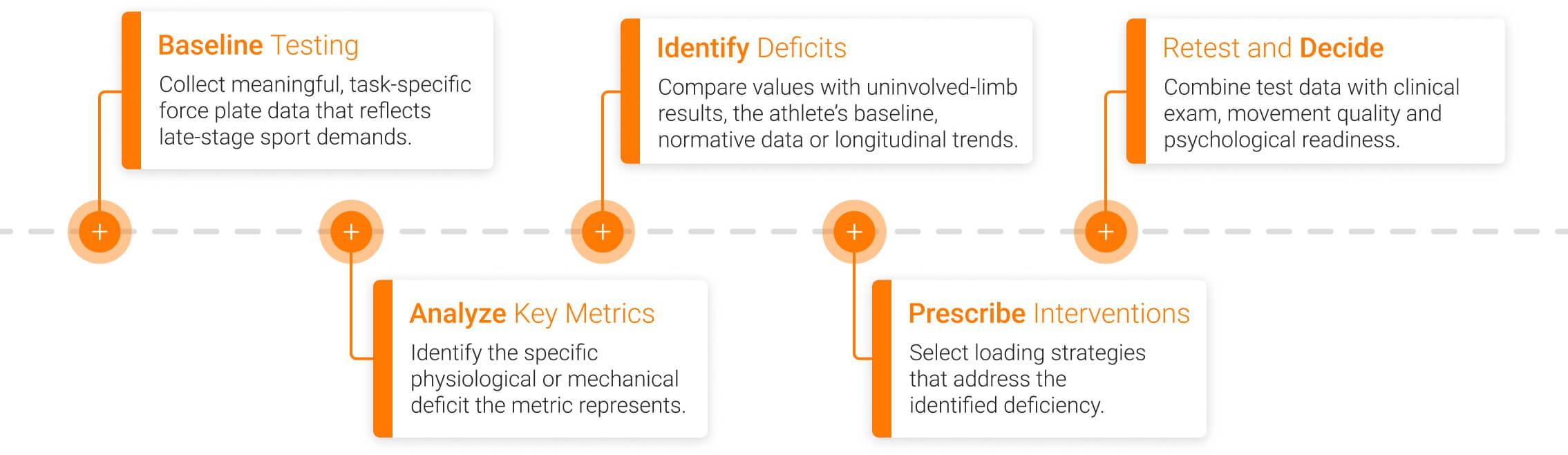
The CMJ is useful because it is sufficiently constrained to be standardized and repeated throughout rehabilitation while providing phase-specific information beyond global outputs such as jump height. Several CMJ metrics are relevant to our process:
- Eccentric Deceleration RFD: Rate at which force is developed during the braking phase.
- Eccentric Braking Impulse: Impulse generated while slowing the downward movement of the center of mass.
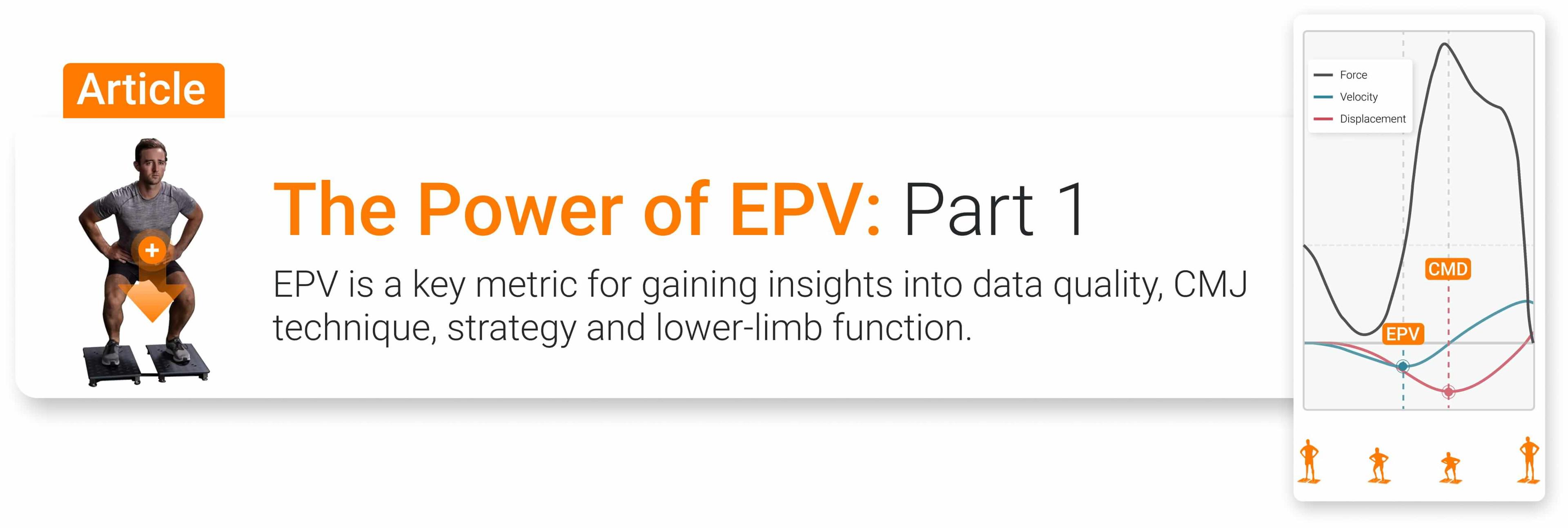
- Eccentric Peak Velocity (EPV): Maximum downward velocity reached before braking.
- Peak Eccentric Force: Maximum force produced during the eccentric phase.
- Concentric Impulse and Peak Concentric Force: Information on how effectively the athlete generates force during the subsequent propulsion phase.
Collectively, these metrics help practitioners understand how an athlete completes the jump rather than relying solely on output metrics.
Connecting ForceDecks Metrics to Deceleration Movements
Deceleration-related metrics, such as eccentric deceleration RFD, help identify an athlete’s rapid braking capacity during a CMJ. These metrics are more informative when interpreted alongside the athlete’s movement. For example, reduced eccentric deceleration RFD may indicate that an athlete takes longer to develop braking force. During field-based tasks, this may coincide with prolonged braking strategies, additional steps before stopping or difficulty rapidly lowering the center of mass.
Reduced eccentric braking impulse may be associated with limited knee excursion, poor single-leg stability or strategies that continue to offload the involved limb. EPV provides another perspective, particularly following injury, when an athlete may adopt a slower, more cautious countermovement strategy. Reduced EPV may be associated with reduced confidence, altered stiffness regulation or difficulty moving quickly into certain positions relevant to deceleration tasks.
ForceDecks data can help identify qualities specific to an athlete’s deceleration capabilities, guide training decisions within the Decel to Excel framework and provide objective benchmarks for serial testing.
ForceDecks data can help identify qualities specific to an athlete’s deceleration capabilities…and provide objective benchmarks for serial testing.
Integrating Speed Testing in Later Rehabilitation Phases
As physical capacity improves, assessment should increasingly match the demands athletes will encounter in sport. At this stage, timing gates such as SmartSpeed can complement ForceDecks testing.
The 5-0-5 test and pro agility drill can assess COD performance, while the flying 10m provides a straight-line sprint reference that can help contextualize the athlete’s velocity entering the COD. Entry velocity can then be compared when changing direction from either side alongside video assessment of movement strategies used to complete the task.
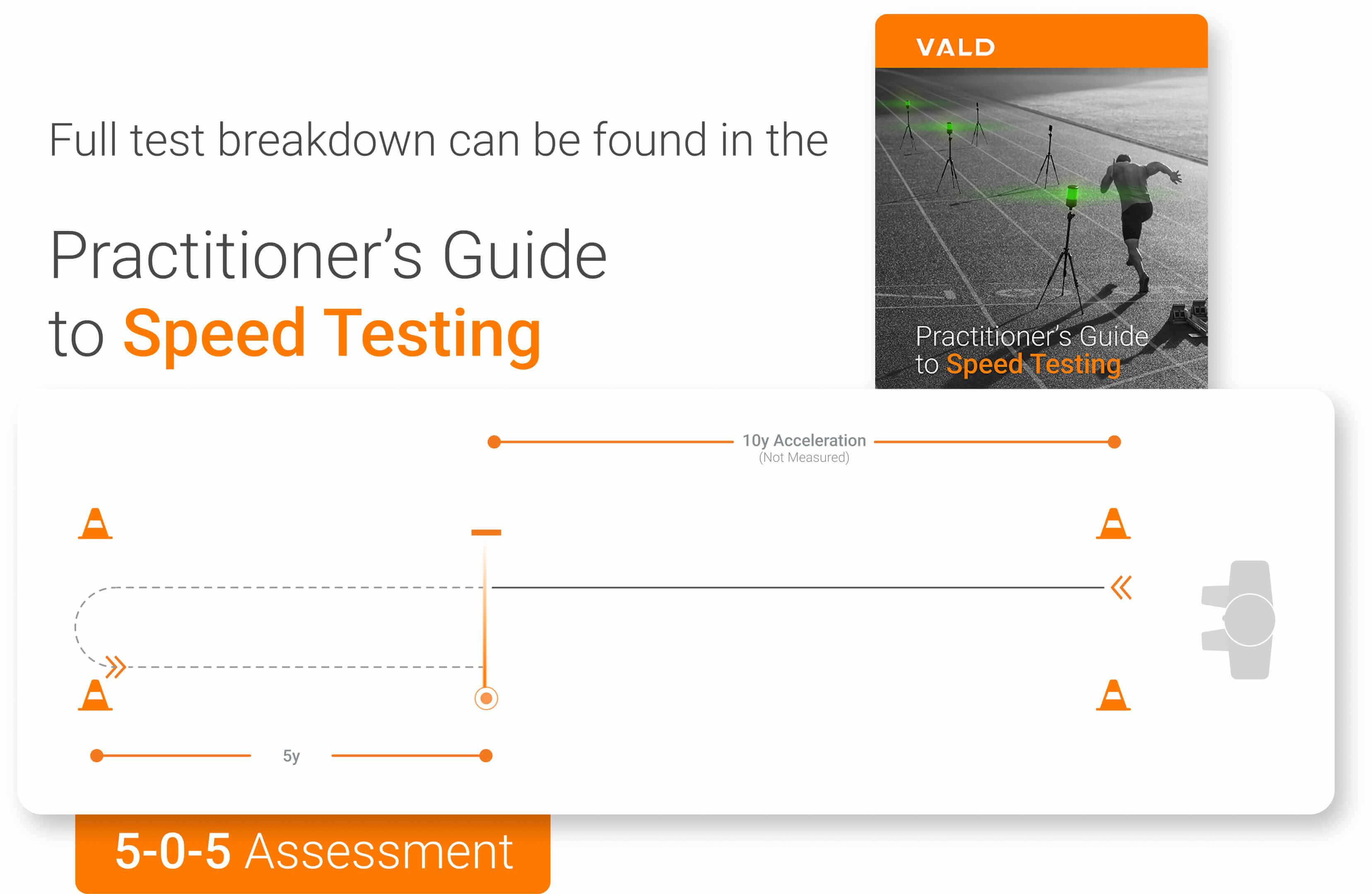
Straight-line flying sprint performance can offer additional context. Comparing straight-line velocity with the velocity an athlete is willing and able to carry into a COD can help practitioners understand whether performance changes as braking demands increase.
This creates a progression in what is being assessed. ForceDecks can quantify underlying force-production and force-attenuation qualities under standardized conditions. SmartSpeed can then quantify athlete performance as approach velocity, horizontal force demands and movement demands increase, while video and practitioner observation provide additional information about the athlete’s movement strategy.
SmartSpeed can…quantify athlete performance as approach velocity, horizontal force demands and movement demands increase…
Addressing Deceleration in Rehabilitation
Deceleration cannot be reduced to a single test, metric or physical quality. Athletes need sufficient strength and eccentric capacity, but they also need the coordination, movement options and confidence to express those qualities at speed and under the constraints of their sport. Practitioners should aim to restore capacity and eventually move toward expressing it in training.
Introducing components of deceleration earlier gives practitioners more time to develop these qualities rather than concentrating them into the final stages of rehabilitation. ForceDecks can provide objective checkpoints throughout that process, while SmartSpeed and field-based assessments progressively introduce the velocity, space and movement demands that characterize sport.
If you want to learn how to integrate testing with technology such as ForceDecks and SmartSpeed into your rehabilitation workflow, get in touch with our team.
References
- Sheth, N. B., & Elis, J. (2025). Decel to Excel: A technical framework for introducing deceleration in the clinic. JOSPT Open, 3(3), 210–213. https://doi.org/10.2519/josptopen.2025.0107
- Sheth, N. B., & Elis, J. (2026). Decel to Excel: Translating countermovement jump metrics into targeted rehabilitation strategies for return to play. JOSPT Open, 4(3), 247–253. https://doi.org/10.2519/josptopen.2026.0215
