Rethinking ROI
Available in:
EN
In this Q&A, Dr. Ziad Dahdul, owner of Ignite Phyzio, shares why hiring, retention, onboarding and technology integration drive long-term return on investment (ROI) beyond traditional “money in, money out” thinking. His answers reflect how clinics can build cultures that attract high-quality clinicians, accelerate skill development and deliver data-driven care using systems such as ForceDecks, DynaMo, ForceFrame and SmartSpeed.
What matters most when hiring clinicians today?
The first step in hiring is knowing exactly what your team needs – clinically, culturally and operationally. If you don’t have clarity on the gaps in knowledge, expertise or service opportunities that your team is lacking, your next hire won’t make the impact you’re looking for.
If you don’t have clarity on the gaps in knowledge, expertise or service opportunities that your team is lacking, your next hire won’t make the impact you’re looking for.
Clinicians bring more than clinical expertise; we also play a critical role in the patient experience. The ability to keep a patient motivated, engaged and committed beyond a single session is a key attribute I look for.
Technical ability is always important, but we have confidence in our structured onboarding process, embedded with VALD technologies and resources, to effectively and efficiently upskill our new hires.
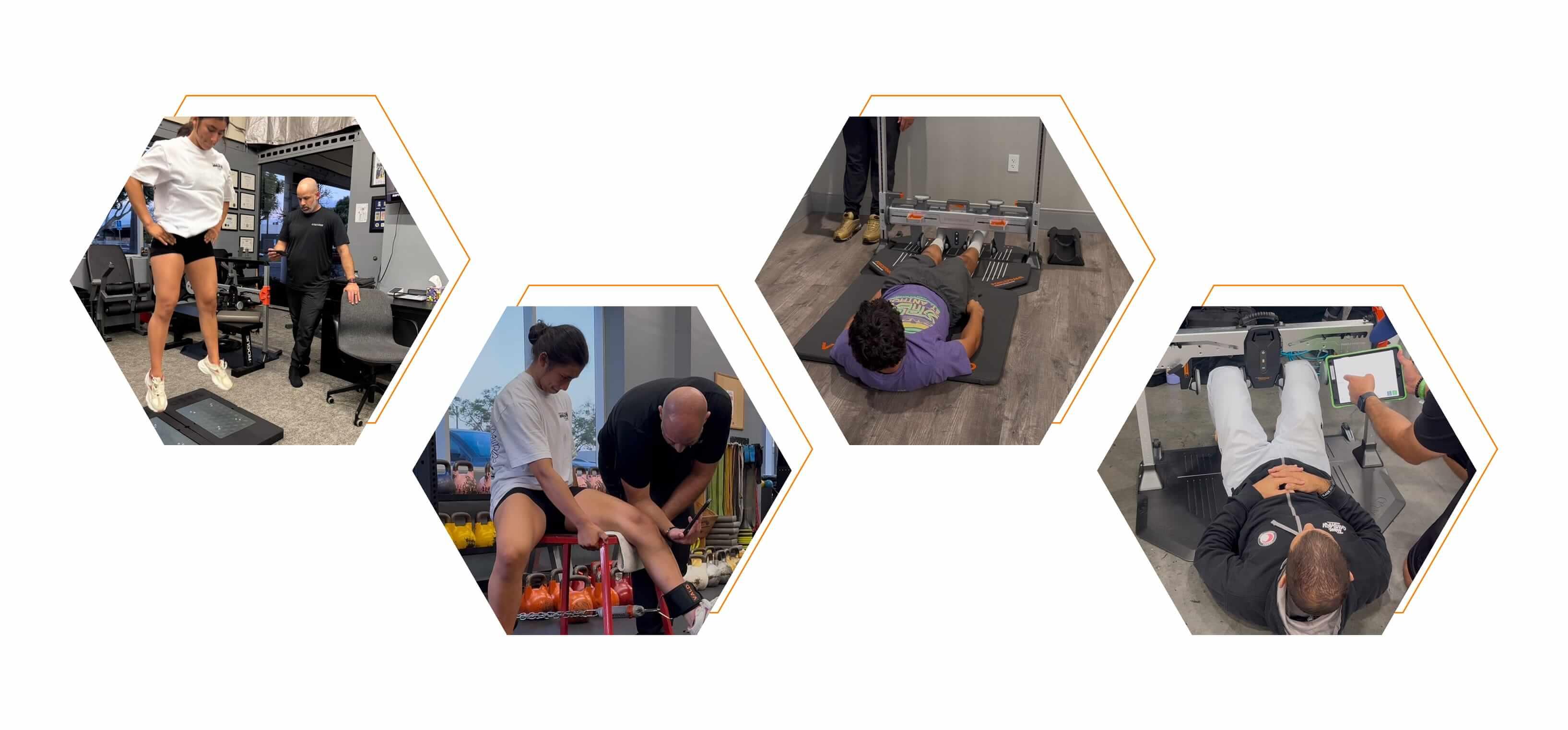
Ziad assessing patients on ForceDecks, DynaMo and ForceFrame.
When it comes to hiring experience versus adaptability, I’ll choose emotional intelligence over intellectual intelligence every time. Hiring an elite clinician who can’t be present, attentive or personable is something we always try to avoid.
Our best hires tend to be 2-4 years out of school – clinicians who know what it feels like to be constrained by traditional models and are ready for an environment that finally lets them practice the way they envisioned.
What makes clinicians want to stay at Ignite Phyzio?
We’ve approached retention by creating an environment where clinicians choose to stay, rather than trying to restrict or retain them. High-level clinicians often have ambitious career goals, and we strive to provide an environment that supports those aspirations.
We create pathways for higher-level roles within our organization – such as Director of Education, Director of Performance and Outreach Coordinator – that give clinicians a sense of purpose beyond treatment sessions. Many physical therapists (PTs) don’t want to run their own businesses, but they want responsibility, ownership and to feel like they’re progressing in their careers.
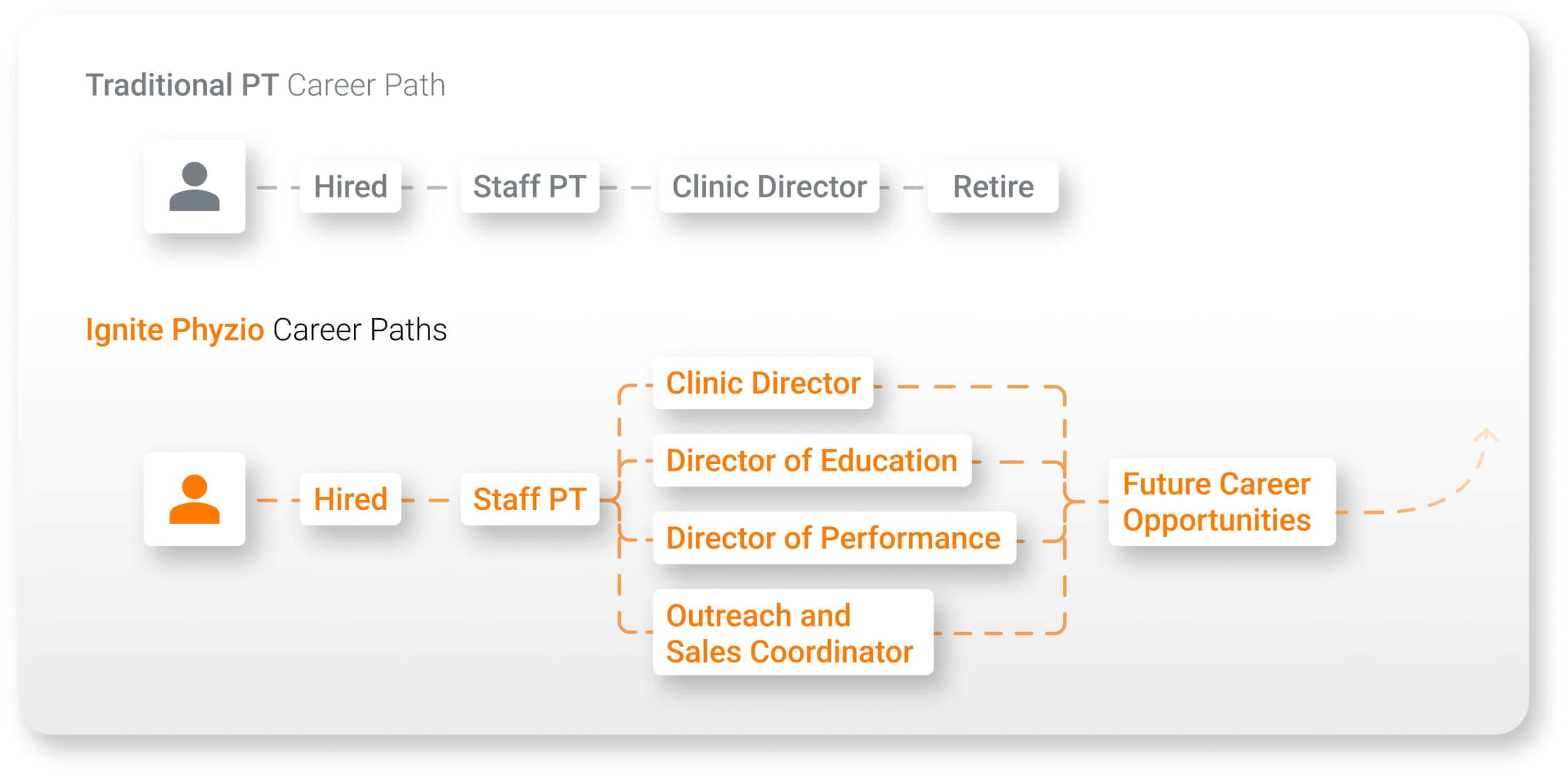
Traditional career paths compared to Ignite Phyzio’s staff progression framework.
Technology plays a major role in why clinicians stay. When new hires see tools like ForceDecks, DynaMo and ForceFrame used every day, they immediately understand the standard we operate at. They feel like they’re part of a clinic that’s pushing the profession forward rather than staying a decade behind. That environment fuels engagement, reinforces growth and makes clinicians want to be part of the long-term trajectory of the business.
When new hires see tools like ForceDecks, DynaMo and ForceFrame used every day… They feel like they’re part of a clinic that’s pushing the profession forward…
When clinicians are supported in shaping a role that aligns with both their goals and the clinic’s objectives, long-term commitment develops naturally and sustainably.
Where does technology fit into hiring and retention?
High-quality clinicians today expect a data-informed clinic. As an organization that prides itself on providing high-level care, our duty is not only to meet clinician expectations but also to create an environment that pushes them to improve. Technology has become a central part of providing that experience to our clinicians.
VALD systems remove barriers – there’s no excuse not to test strength when DynaMo or ForceFrame can be set up in seconds. Accessibility pushes clinicians to evolve, which accelerates their development, deepens buy-in and makes our facility a hub for high-level rehabilitation and training.
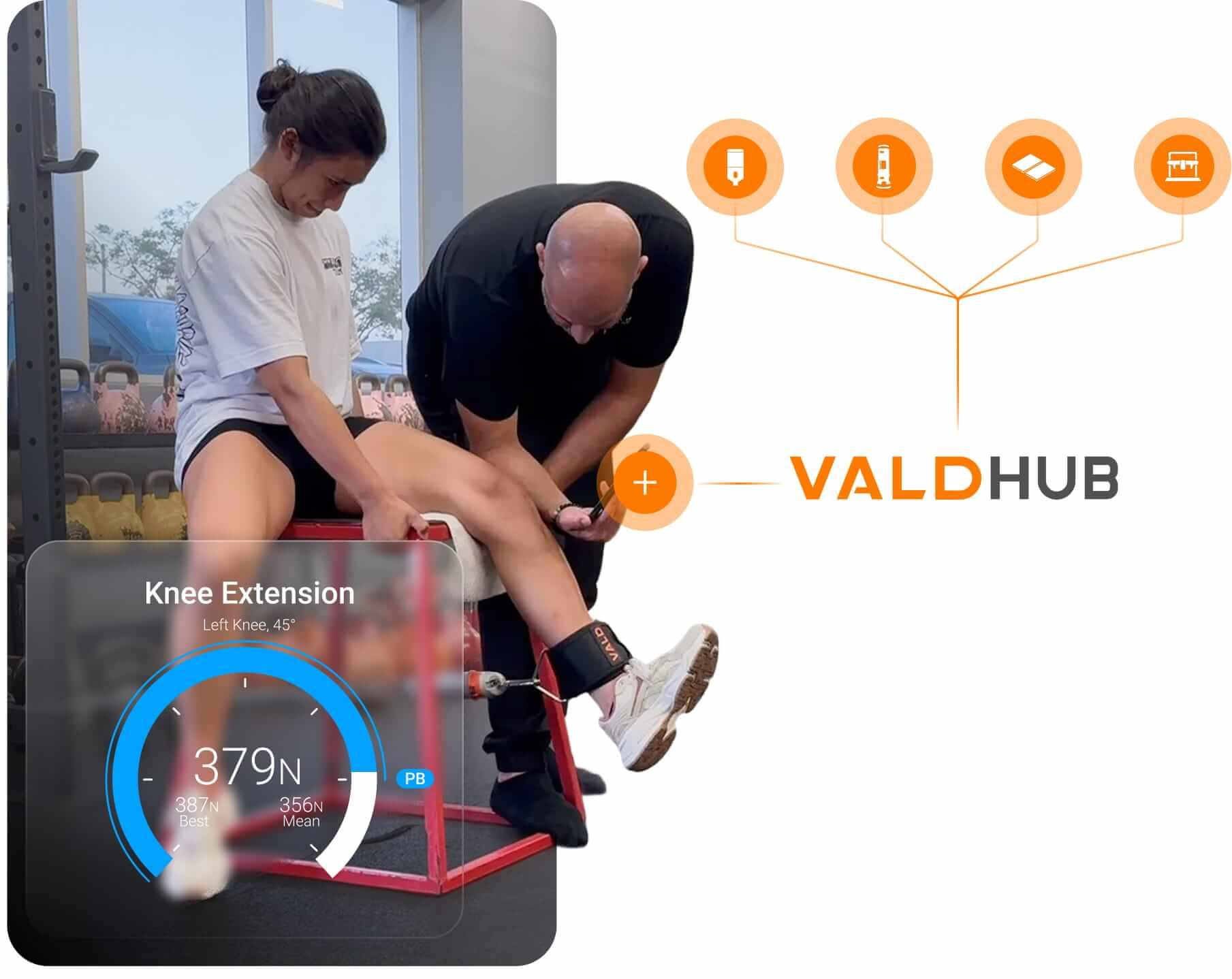
Ziad using DynaMo to test knee extension strength during rehabilitation.
We’ve always prioritized objective data. While we used other systems previously, the key difference with VALD is the unified ecosystem. Instead of piecing together solutions, our team has one integrated platform that elevates everything we do.
What does onboarding look like for a new clinician at Ignite Phyzio?
We use a structured 12-week onboarding process, deliberately investing in staff learning and future clinical success. Progressing too quickly can limit clinician development and compromise the standard expected in each session.
We use a structured 12-week onboarding process, deliberately investing in staff learning and future clinical success.
The first two weeks focus on observation – shadowing appointments, learning how clinicians communicate and understanding what makes an Ignite session different. From there, caseload increases gradually as we build toward full capacity by week 12.
Technology education is integrated throughout the onboarding process and tailored to each clinician’s background and competency. Exposure to systems such as ForceDecks, DynaMo, ForceFrame and SmartSpeed is introduced progressively, allowing each clinician to learn at their desired pace with guided mentoring sessions along the way.
By the end of the first 90 days, clinicians are confident operating each system independently and integrating objective testing into treatment sessions to support clinical decision-making.
What key performance indicators (KPIs) do you use after onboarding to support continued growth?
Similar to our onboarding process, ongoing learning and development are tailored to each clinician’s goals. Monthly one-on-one meetings and quarterly KPIs ensure personal development remains aligned with the clinic’s growth.
For example, one clinician may require more reps interpreting ForceDecks metrics, while another may need more support with how they prescribe exercise. One of our new hires lacked confidence using ForceDecks, so their quarterly KPI focused on testing a set number of patients each week to build both experience and confidence with the technology.
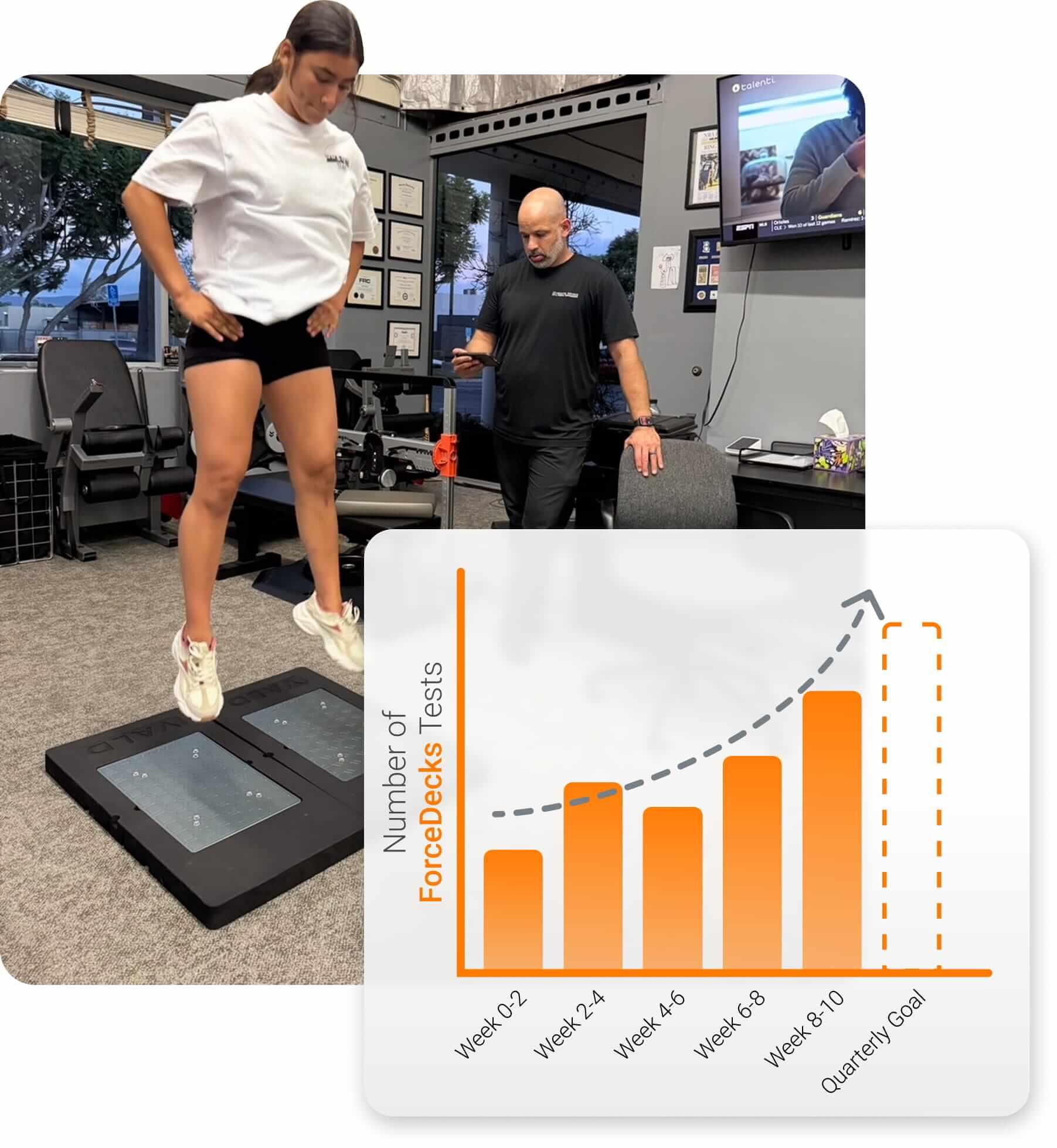
Clinician KPIs tracked over the course of a quarter.
Metrics and goals keep clinicians moving forward – without them, engagement drops, development stalls and retention eventually declines. We avoid that by treating clinical progression the same way we treat our patients: with structured, intentional and continuous goals.
…[we treat] clinical progression the same way we treat our patients: with structured, intentional and continuous goals.
How do you approach the concept of ROI at Ignite Phyzio?
Many clinics look at ROI in simple terms:
“If we spend X on technology, how do we get X back?”
But that’s not how we operate. The return from VALD systems extends beyond visit numbers or pricing changes; the systems drive higher standards, stronger staff engagement, more consistent care and an improved reputation within the community.
ForceDecks, DynaMo, ForceFrame and SmartSpeed helped us secure relationships with local soccer and volleyball clubs – partnerships I’m confident we wouldn’t have landed without VALD’s technology. Those relationships build brand value, visibility and trust.
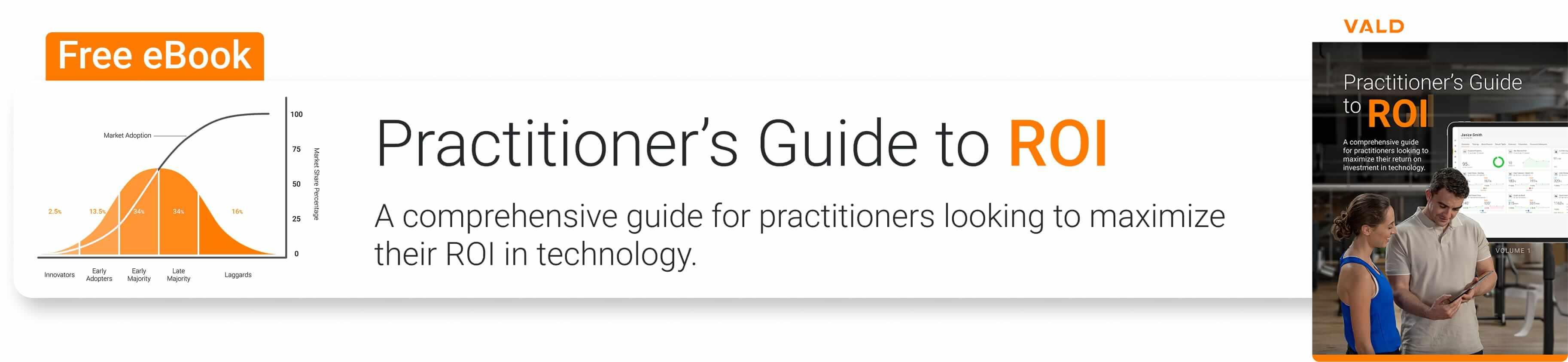
Visibility within performance and rehabilitation settings compounds over time. When athletes say they heard our clinic mentioned at multiple gyms in the same week, that level of exposure is priceless.
Clinics that limit ROI to immediate revenue underestimate the long-term value of investing in their clinicians, processes and tools.
Clinics that limit ROI to immediate revenue underestimate the long-term value of investing in their clinicians, processes and tools.
What final thoughts would you share with clinic owners who are rethinking ROI?
If you invest in your clinicians with the same intentionality that you invest in your business, everything moves forward together. Hiring becomes easier, retention becomes natural and development becomes continuous. Technology becomes the backbone that ties clinical reasoning, objective data and patient experience together.
Interested in building a clinic culture that drives retention, development and long-term ROI? Get in touch with our team.
