Velocity-Based Training in Rehabilitation: A practical guide
Available in:
EN
Velocity-based training (VBT) is commonly associated with strength and conditioning and return-to-sport programming. However, many of the same principles can be applied much earlier for practitioners working in rehabilitation.
For healthcare practitioners, velocity provides an objective measure that can complement traditional measures of load, repetitions and perceived effort. This can be particularly valuable when maximal strength testing is inappropriate, fatigue needs to be carefully managed or small improvements may otherwise be difficult to identify.
For healthcare practitioners, velocity provides an objective measure that can complement traditional measures of load, repetitions and perceived effort.
VBT also delivers immediate feedback. Rather than simply completing a prescribed number of repetitions, patients can see how they are performing from one repetition to the next, track their performance within the session and stay engaged throughout the process.
What Is VBT?
VBT uses movement velocity to help prescribe and monitor resistance training. Importantly, while VBT was originally intended to categorize load-velocity relationships for athletes exercising with maximal intent, VBT can be used as a powerful, submaximal biofeedback tool.
Patients can be prescribed a target velocity range to control movement speed and avoid potentially irritable velocities. For example, a knee extension may be intentionally performed within a velocity range (e.g., 0.15-0.2m/s) to encourage controlled execution of the movement, allowing heavy, moderate or light loads to be used as a reflection of the patient’s tolerance to the exercise.
Patients can be prescribed a target velocity range to control movement speed and avoid potentially irritable velocities.
Measuring, monitoring and prescribing velocity give additional context around how the patient is responding to a given load. For example, practitioners may use velocity to do the following:
- Provide real-time feedback during exercise.
- Help prescribe training loads without maximal strength testing.
- Monitor fatigue and determine when to end a set.
- Track changes in strength, velocity and power throughout rehabilitation.
For a broader introduction to these principles, read our Velocity-Based Training 101 article.
Why Use VBT in Rehabilitation?
Individualizing resistance training can be challenging when a patient cannot safely complete maximal or near-maximal strength testing. Without an established reference such as a one-repetition maximum (1RM), practitioners may rely on clinical judgment to prescribe loads and repetition ranges or use patient feedback through rating of perceived exertion (RPE) or repetitions in reserve (RIR).
For example, RIR requires the patient to estimate how many repetitions they could complete before reaching failure. Research suggests this can be difficult to estimate accurately, especially when patients are further from task failure (Halperin et al., 2022).
Velocity provides another option. Rather than relying exclusively on subjective estimates, practitioners can measure how quickly a patient moves a given load. When compared to reference values or benchmarks, this data can help inform loading decisions, quantify fatigue and track progress without requiring frequent maximal testing.
Early Rehabilitation: Using Feedback and Establishing a Baseline
Early rehabilitation may not appear to be an obvious application for VBT, as loads are often relatively low and restoring movement, range of motion and basic strength remain the primary priorities. However, velocity data can still provide value as resistance training is introduced. GymAware can support early rehabilitation by helping practitioners:
- Provide Real-Time Feedback: Give patients an external target after each repetition, allowing them to see and respond to their performance.
- Establish an Uninjured-Limb Reference: Collect velocity data during unilateral exercises to provide a benchmark for later comparison.
- Track Progression Within Training: Compare velocity or power over time during exercises already included in the rehabilitation program.
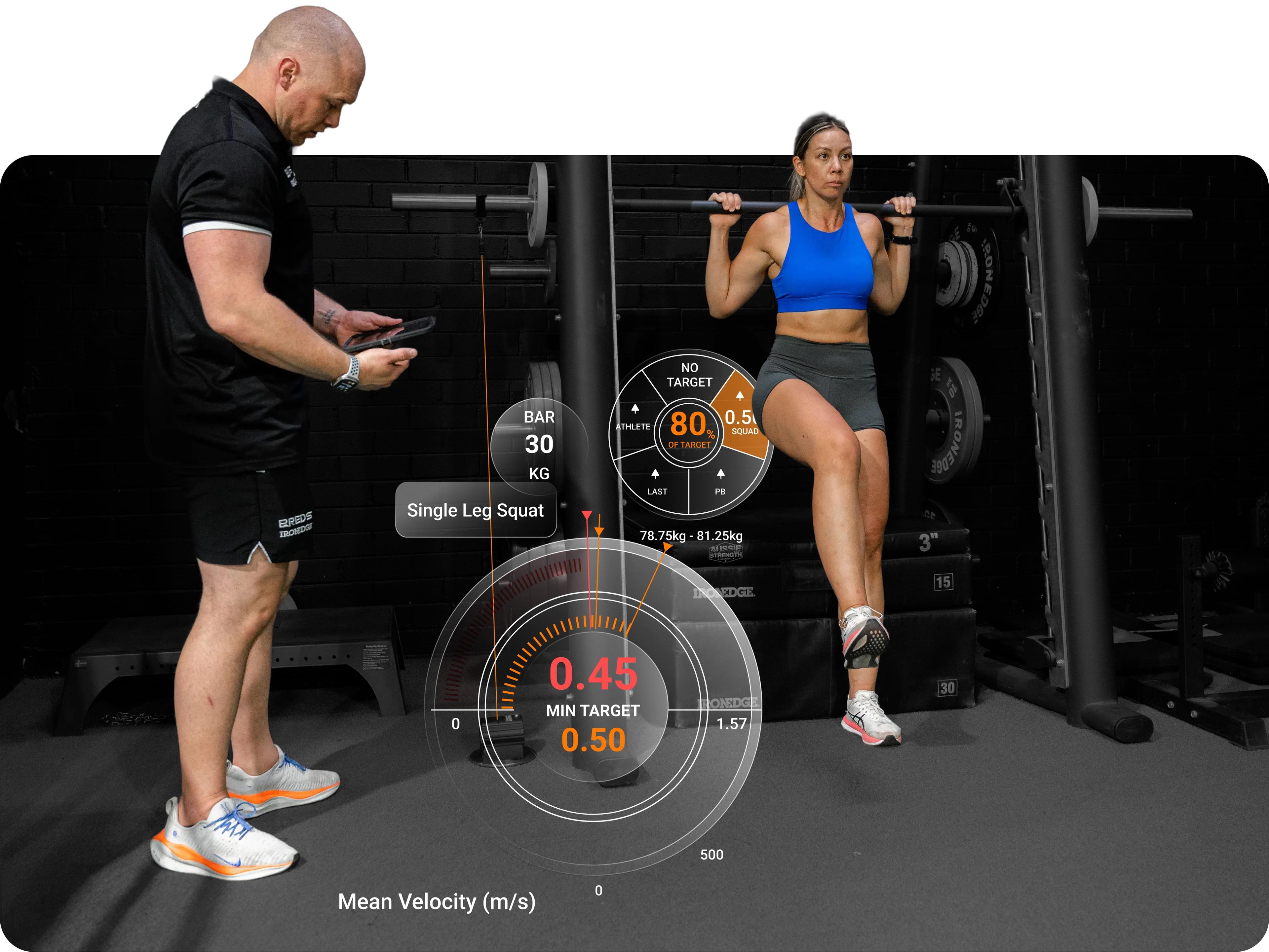
GymAware providing real-time velocity feedback during a single leg squat.
For example, practitioners can collect velocity data across pain-free repetitions of submaximal loads during a unilateral leg press or knee extension, then compare these results with those from the injured limb as rehabilitation progresses.
…practitioners can collect velocity data across pain-free repetitions of submaximal loads during a unilateral leg press or knee extension…
VBT does not replace strength or functional assessments but provides another way to quantify progression while making feedback more immediate and objective.
Mid-Stage Rehabilitation: Prescribing Load and Managing Fatigue
As rehabilitation progresses, resistance training typically becomes more demanding. The challenge shifts from introducing load toward determining how much load and volume the patient can tolerate. This is where VBT can become particularly useful.
When external load increases, movement velocity generally decreases, creating a predictable load-velocity relationship. Traditional percentage-based programming requires a known or estimated 1RM, but regularly performing maximal testing may not always be practical during rehabilitation. Instead, a load-velocity profile can be developed using several submaximal loads performed with maximal intent, providing a practical way to understand and prescribe loading without requiring frequent maximal testing.
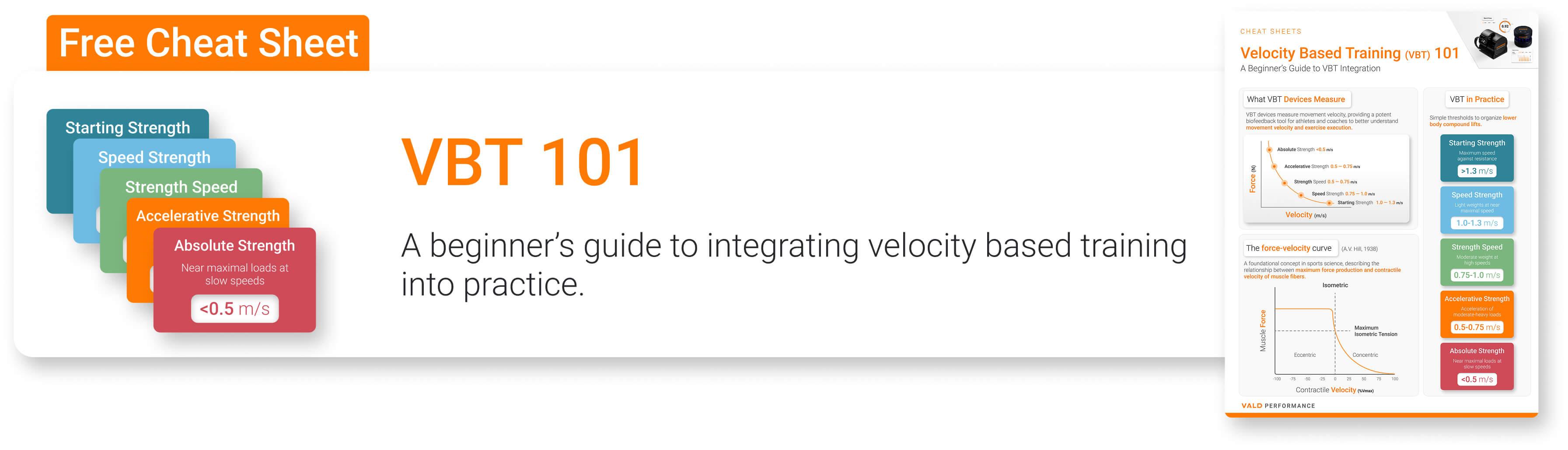
This approach may be particularly useful for unilateral exercises, for which maximal testing can be more difficult to implement.
[Load-velocity profiling is] particularly useful for unilateral exercises, for which maximal testing can be more difficult to implement.
Velocity can also help manage training volume. As fatigue accumulates within a set, concentric velocity typically decreases. Rather than prescribing a fixed number of repetitions, practitioners can establish a velocity-loss threshold and end the set once velocity falls by a predetermined amount.
For example, a set may end when velocity drops 20% below the fastest repetition, providing an objective way to manage fatigue while accounting for day-to-day performance changes. Moderate velocity-loss thresholds have also been discussed as a potential strategy for developing strength while limiting unnecessary fatigue during rehabilitation (Forelli et al., 2025).
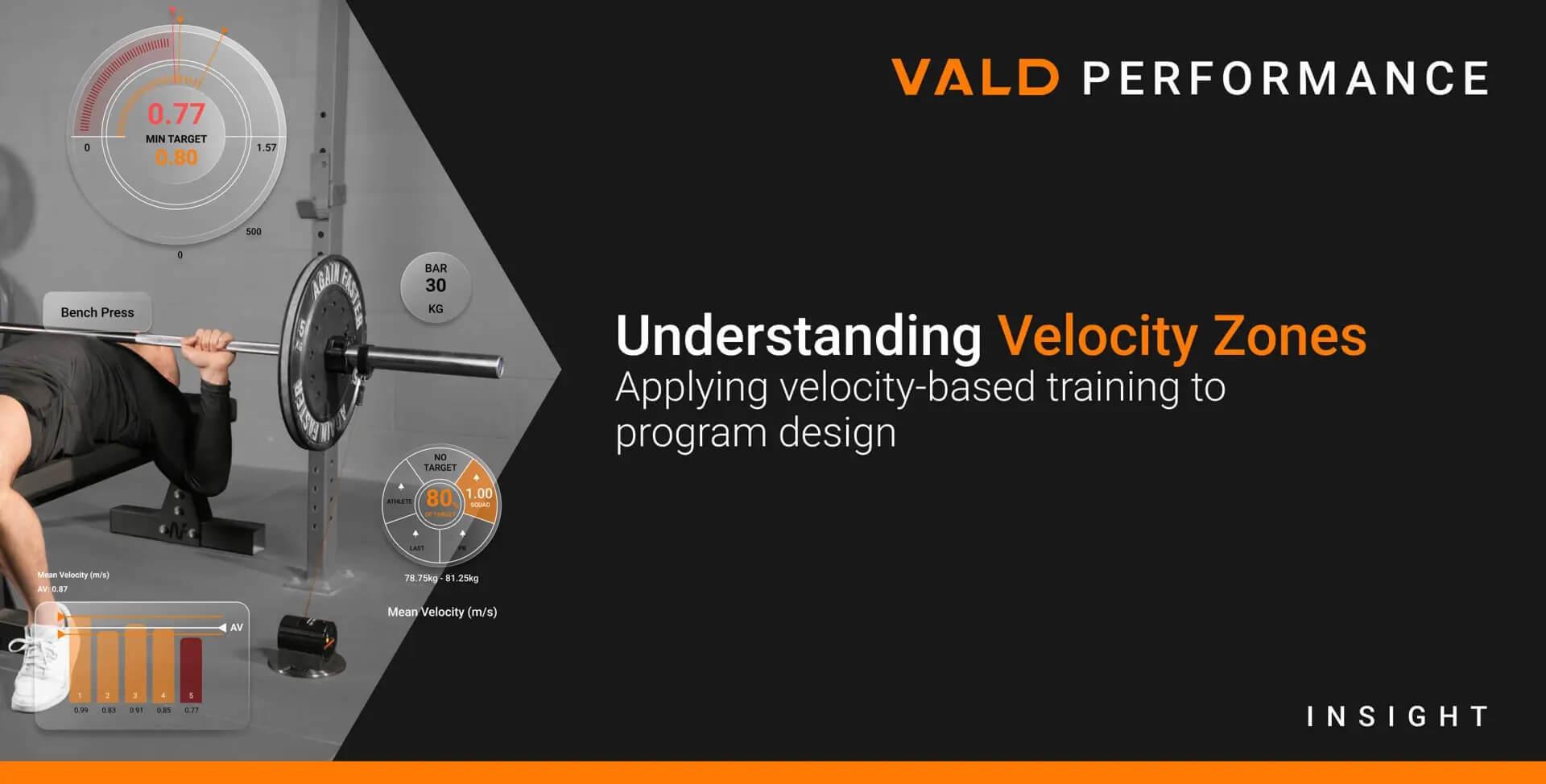
For more information on using velocity to guide resistance training prescription, read our Understanding Velocity Zones: Applying velocity-based training to program design article.
Late-Stage Rehabilitation: Tracking Progress and Developing Specific Qualities
As patients approach the later stages of rehabilitation, simply restoring maximal strength may not be sufficient. Sport, work and daily activities often require patients to express force quickly. A patient may regain substantial strength but still demonstrate limitations in velocity or power. Similarly, a patient may tolerate heavier resistance while still struggling with faster or more demanding tasks.
Sport, work and daily activities often require patients to express force quickly. A patient may regain substantial strength but still demonstrate limitations in velocity or power.
VBT can help practitioners distinguish between these qualities, and progress may be indicated by moving the same load at a higher velocity or handling a heavier load at the same velocity.
These adaptations can provide useful context when determining the next training priority. If a patient has regained force-producing capacity but remains limited at higher velocities, programming may begin to emphasize faster movements and power development. Conversely, a patient who moves lighter loads quickly but remains limited as load increases may require greater emphasis on maximal force production.
How Can VBT Be Used Across the Rehabilitation Journey?
VBT does not need to be reserved for patients approaching return to sport. Its application can evolve throughout rehabilitation, from providing real-time feedback and establishing reference data to guiding load prescription, managing fatigue and monitoring changes in strength, velocity and power.
Importantly, VBT should complement, rather than replace, clinical reasoning, symptoms, strength testing and functional assessment. By adding objective data to exercises already used in rehabilitation, velocity can help practitioners monitor progress while giving patients a clearer, more meaningful view of their improvement.
If you would like to learn more about how GymAware can help you apply VBT throughout rehabilitation, get in touch with our team.
References
- Forelli, F., Marine, P., Moiroux-Sahraoui, A., Mazeas, J., Thoelen, M., Swinnen, B., Bizzini, M., Van Melick, N., & Rambaud, A. (2025). Velocity-based training in mid- and late-stage rehabilitation after anterior cruciate ligament reconstruction: A narrative review and practical guidelines. BMJ Open Sport & Exercise Medicine, 11(2), e002503. https://doi.org/10.1136/bmjsem-2025-002503
- Halperin, I., Malleron, T., Har-Nir, I., Androulakis-Korakakis, P., Wolf, M., Fisher, J., & Steele, J. (2022). Accuracy in predicting repetitions to task failure in resistance exercise: A scoping review and exploratory meta-analysis. Sports Medicine, 52(2), 377–390. https://doi.org/10.1007/s40279-021-01559-x
