How Digital Platforms Are Transforming Healthcare
Available in:
EN
Nicol van Dyk, PT, PhD, is a Specialist Sports Physiotherapist, Clinical Researcher and Performance Health Consultant. He is currently an Assistant Professor and Ad Astra Fellow at the School of Public Health, Physiotherapy and Sport Science at University College Dublin, and also holds the role of deputy editor for the British Journal of Sports Medicine.
He previously worked at the Sports Science Institute of South Africa (SSISA), Aspetar Sports Medicine Hospital and as medical research lead for the Irish Rugby Football Union.
With experience across multiple sporting environments and cultural contexts, his research continues to focus on musculoskeletal health, injury prevention and high-performance team optimization.
Transformations rarely happen all at once. They build gradually, often quietly, until the new way of doing things feels like the way it has always been. However, seamless transitions make it easy to forget that tools alone do not deliver meaningful digital transformation.
Most people no longer check car oil with a dipstick, shop only in-store or wait in line at the bank. These changes occurred because digital processes replaced outdated workflows, not because a single device appeared.
In health and performance, VALD systems have created similar shifts. Tools such as ForceDecks, DynaMo and SmartSpeed go beyond digitizing analog data. Instead, they form an ecosystem that captures objective data, streamlines clinical workflows and delivers insights that improve how practitioners assess, monitor and communicate with patients.
Although it may seem pedantic, distinguishing digitization from true digital transformation is essential. Force plates and dynamometers are often viewed as tools that simply make information digital, but their real value lies in how they are used to streamline workflows, improve efficiency and drive better outcomes.
The most effective users…are the practitioners who turn technology into better-informed decisions, improved experiences and stronger business performance.
The most effective users are not always those who create new metrics or make research discoveries – they are the practitioners who turn technology into better-informed decisions, improved experiences and stronger business performance.
Digitization: Fixing the Past
Many tasks we no longer perform – memorizing phone numbers, writing checks or calculating fuel range – are outcomes of digitization.
Digitization converts information into digital formats. It changes how data is stored, accessed and shared but does not change the underlying workflow.
Digitization converts information into digital format …but does not change the underlying workflow.

Simply recording and uploading peak force values is an example of digitization from VALD products.
Recording sets and repetitions in a spreadsheet creates a digital record of the data but does not support improved decision-making. The value ends at storage.
…digitization is only the first step.
In the VALD ecosystem, digitization refers to generating reliable, validated data through systems that remove guesswork, streamline data collection and eliminate manual recordkeeping. However, digitization is only the first step.
Digitalization: Improving the Present
Digitalization reorganizes workflows around digital tools. It not only converts existing tasks into a digital format – it creates a more efficient process altogether.
Email replacing physical mail is a simple example: once digitized, the task fundamentally changes.
Within the VALD ecosystem, digitalization occurs when data flows directly into VALD Hub. Instead of exporting spreadsheets or entering numbers into an electronic medical record (EMR), results appear instantly, update automatically and populate reports without additional work.
Instead of exporting spreadsheets…[VALD Hub] results appear instantly…and populate reports without additional work.
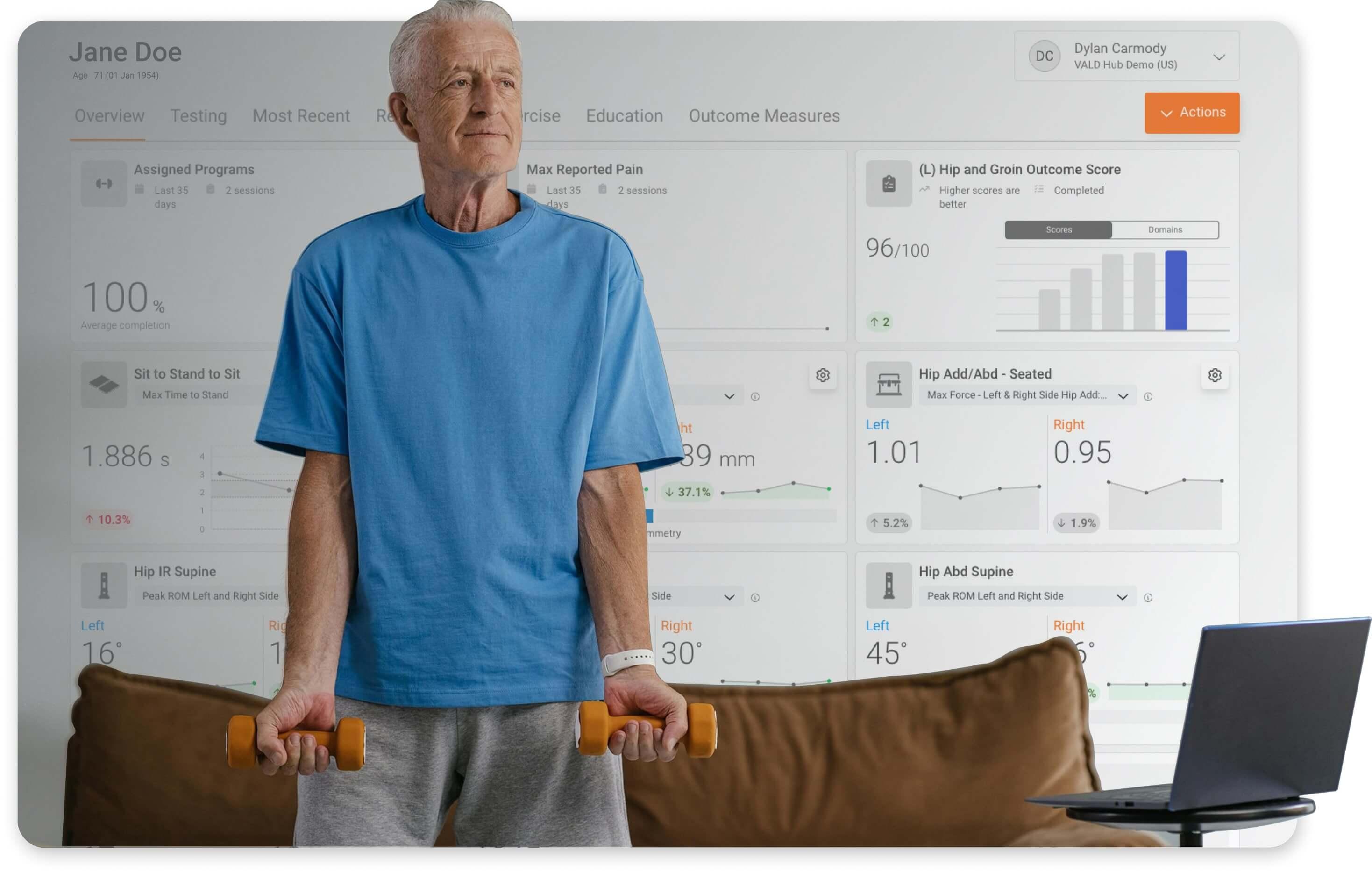
Objective data feeds directly into VALD Hub, giving practitioners a clear view of patient progress.
Digitalization streamlines clinic operations by using digitized data. It is a meaningful step forward, but many practitioners stop here – well before realizing the technology’s full potential.
Digital Transformation: Shaping the Future
Digital transformation uses technology to fundamentally reshape how a clinic operates. It influences culture, workflow design and day-to-day decision-making. In healthcare, this may include the following:
- New pricing models supported by high-frequency assessment
- Automated decision support based on trended strength and movement data
- More efficient staffing models driven by reduced subjective back-and-forth
- Faster, clearer patient communication through connected platforms such as MoveHealth
Achieving digital transformation demands leadership support, openness to testing and readiness to replace long-standing processes with more effective, technology-driven systems. True change occurs when technology reshapes the system, not just the task.
True change occurs when technology reshapes the system, not just the task.

Patient accessing all their health and performance data in one central login.
Although each clinic’s path will look different, the principle remains the same: identify where technology can elevate operations, test new approaches and scale those that improve outcomes and efficiency.
Transformation in Action: A Changing Digital Landscape
Many clinics have moved their documentation onto computers, yet their workflows remain largely unchanged. Practitioners still spend more time typing than interacting, and information remains scattered across multiple systems.
A transformed workflow looks very different:
- Patient demographics and history populate automatically
- Prior activity, exercises and appointments sync without manual input
- Objective data from testing systems appear instantly
- Timelines and trends are displayed clearly, supporting better education and decision-making
During an appointment, the practitioner remains focused on the patient while the system captures, organizes and visualizes information in the background.
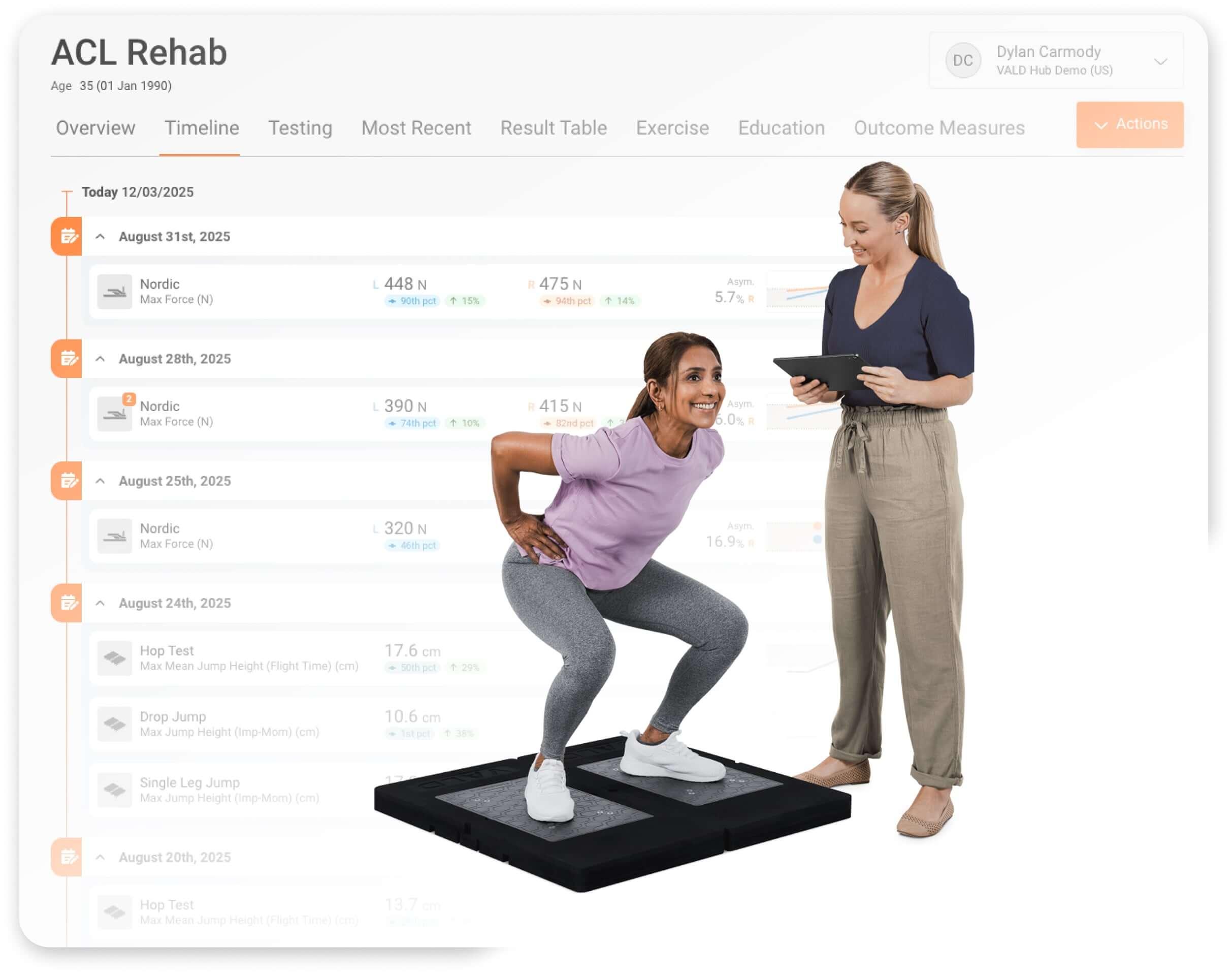
Patient and practitioner testing during rehabilitation with VALD Hub’s Timeline view visualized.
VALD’s ecosystem supports this shift. Tools such as DynaMo, ForceFrame, ForceDecks, HumanTrak, NordBord and SmartSpeed feed directly into VALD Hub, where results are visualized in real time and reports are generated automatically. MoveHealth extends this transformation by giving patients direct access to the same information – improving understanding, engagement and long-term adherence.
[Digital health] does not replace what practitioners do best – it amplifies it, enabling clearer decisions and more meaningful patient interaction.
Digital transformation strengthens every part of the care experience. It streamlines assessment workflows, enhances communication, reduces administrative load and supports new pricing and delivery models. It does not replace what practitioners do best – it amplifies it, enabling clearer decisions and more meaningful patient interaction.
If you would like to learn more about moving beyond digitization and using VALD’s ecosystem to transform your clinic, get in touch with our team.
