My Dashboard: Marko Grönholm

My Dashboard is a series featuring insights from health and performance experts on the tests and metrics they use to identify performance and rehabilitation deficits. Each article breaks down their VALD Hub dashboard, which has been optimized for a specific type of athlete or patient, outlining key tests, metrics and training insights to help practitioners better integrate testing data into practice.
Contributor

Athlete Profile
A 22-year-old female floorball player competing at national and international levels is working toward returning to full team training and competition approximately 10.5 months after anterior cruciate ligament (ACL) reconstruction.
Given the demands of floorball, including frequent acceleration, deceleration and changes of direction, late-stage rehabilitation requires assessment beyond isolated strength and jump performance. Evaluating early force production, angle-specific knee-flexor strength, jump performance and landing characteristics can help identify residual deficits and guide progression toward unrestricted sport participation.
A 22-year-old female floorball player…approximately 10.5 months after ACL reconstruction…[whose] late-stage rehabilitation requires assessment beyond isolated strength and jump performance.
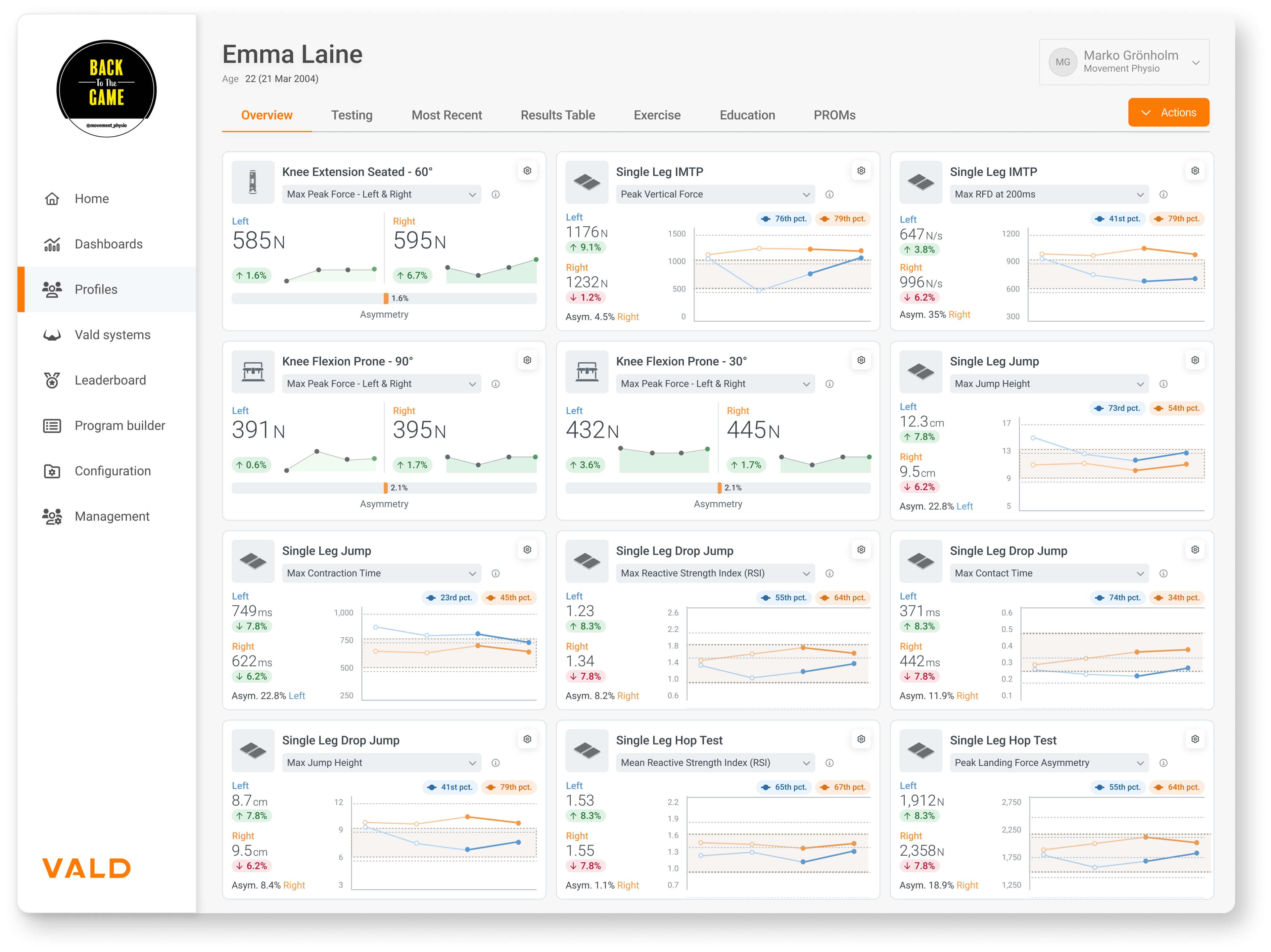
Marko’s VALD Hub dashboard tracking lower-limb performance and limb asymmetry during late-stage ACL rehabilitation.
Overview
This dashboard displays isolated strength and whole-limb force, as well as single leg jump and landing tests used in late-stage ACL rehabilitation. I interpret absolute and body-mass-normalized outputs alongside limb asymmetries, longitudinal change, movement quality and symptoms.
The exercise tables provide options rather than automatic prescriptions: a low value does not explain why the athlete has a performance deficit. Before adjusting training, I review the force-time curve, technique, joint response and related tests. Based on these findings, I then select the load, velocity, range, contact time or coordination demand that best matches the limiting factor.
Seated 60° Knee Extension

| Test | Metric | Exercise Prescription for Improvement |
 | Peak Force |
|
| Peak Force Asymmetry | ||
| Rate of Force Development (RFD) at 200ms |
|
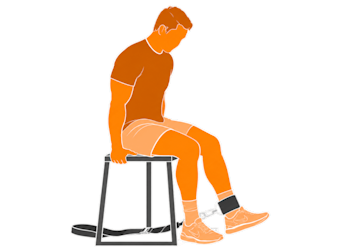
The seated 60° knee extension test is my primary local measure because it isolates quadriceps force more directly than a compound task. Quadriceps strength relates to knee mechanics during step-down and landing and requires targeted open- and closed-chain loading (Buckthorpe et al., 2019; Lisee et al., 2019). I track peak force, limb asymmetry and RFD using consistent joint position, restraint and pad placement. Peak force describes maximal capacity, while RFD adds a time-sensitive view of how quickly force rises.
Although the featured athlete demonstrated similar knee-extension force, I still monitored each limb over time and compared it to specific reference ranges, such as VALD Norms and Normative Data Reports, as symmetry can hide bilateral underperformance. Isolated knee extension answers a local capacity question, while whole-limb and jump tests show how that capacity is expressed.
Isolated knee extension answers a local capacity question, while whole-limb and jump tests show how that capacity is expressed.
Single Leg Isometric Mid-Thigh Pull

| Test | Metric | Exercise Prescription for Improvement |
 | Peak Vertical Force |
|
| RFD at 200ms |
|
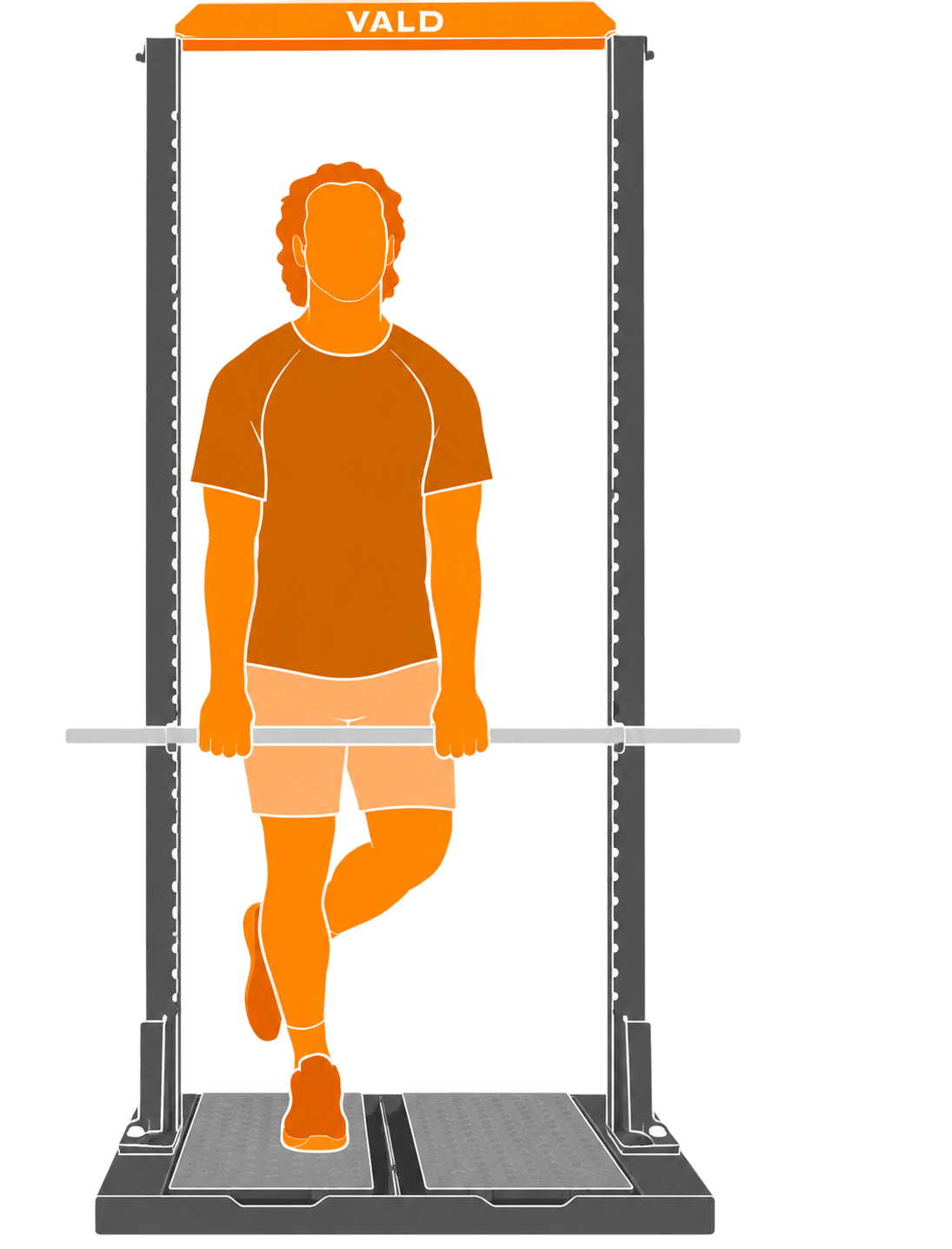
The single leg isometric mid-thigh pull complements isolated knee-extension testing by assessing whole-limb force production across the hip, knee and ankle. The featured athlete demonstrated a 4.5% limb asymmetry in peak force but a 35% difference in RFD at 200ms, raising questions about early force production despite similar maximal force.
…demonstrated a 4.5% limb asymmetry in peak force but a 35% difference in RFD at 200ms, raising questions about early force production…
RFD is sensitive to contraction onset, instruction and setup, and is often more variable than peak force. I therefore confirm the pattern across valid trials and repeated sessions before treating it as a deficit. If it persists, heavy strength work can be paired with ballistic isometrics, loaded jumps and fast concentric actions, consistent with late-stage emphasis on explosive neuromuscular performance (Buckthorpe, 2019; Buckthorpe & Della Villa, 2020).
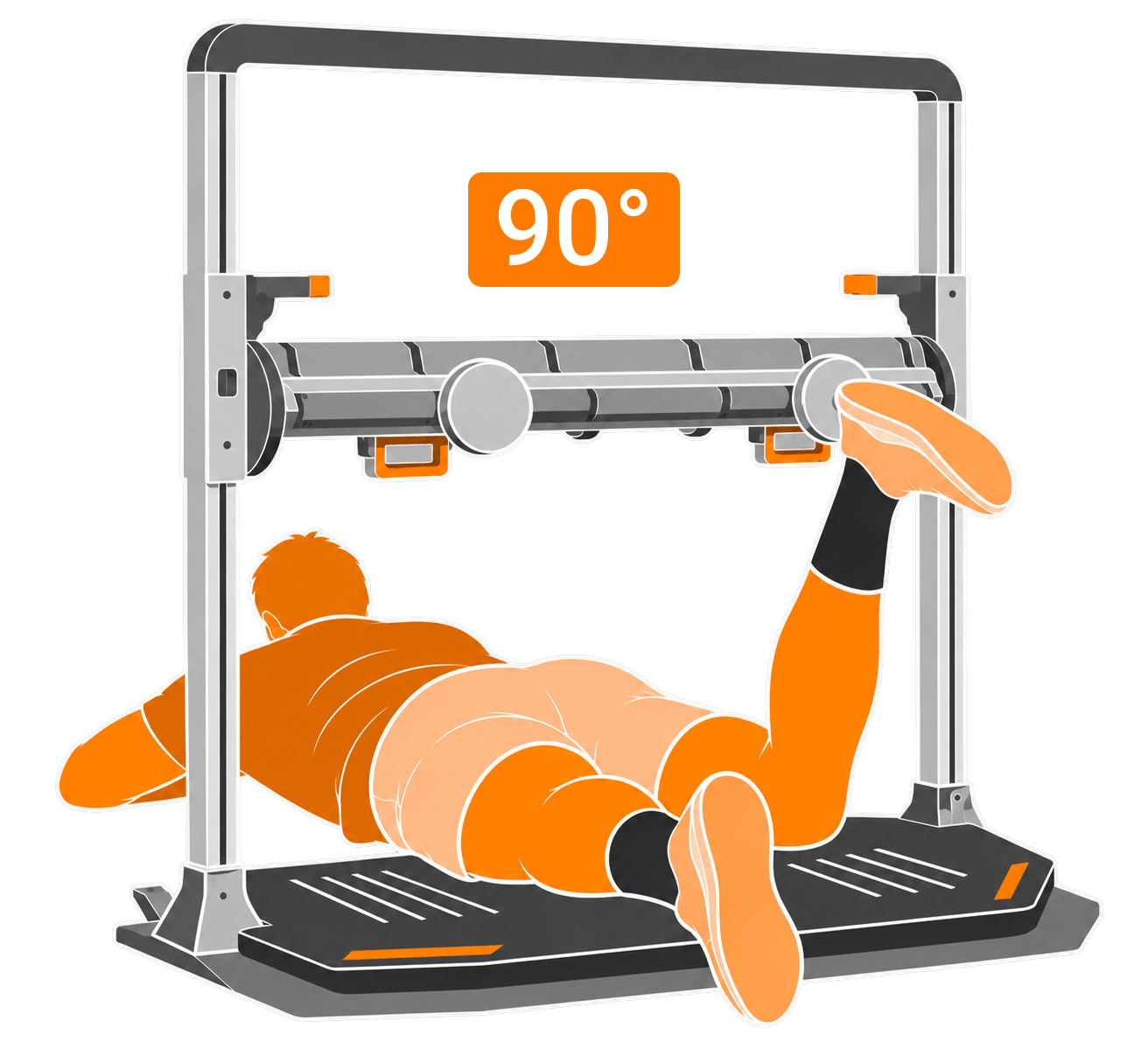
Prone Knee Flexion at 30° and 90°

| Test | Metric | Exercise Prescription for Improvement |
 | Peak Force |
|
| Peak Force Asymmetry | ||
 | Peak Force |
|
| Peak Force Asymmetry |
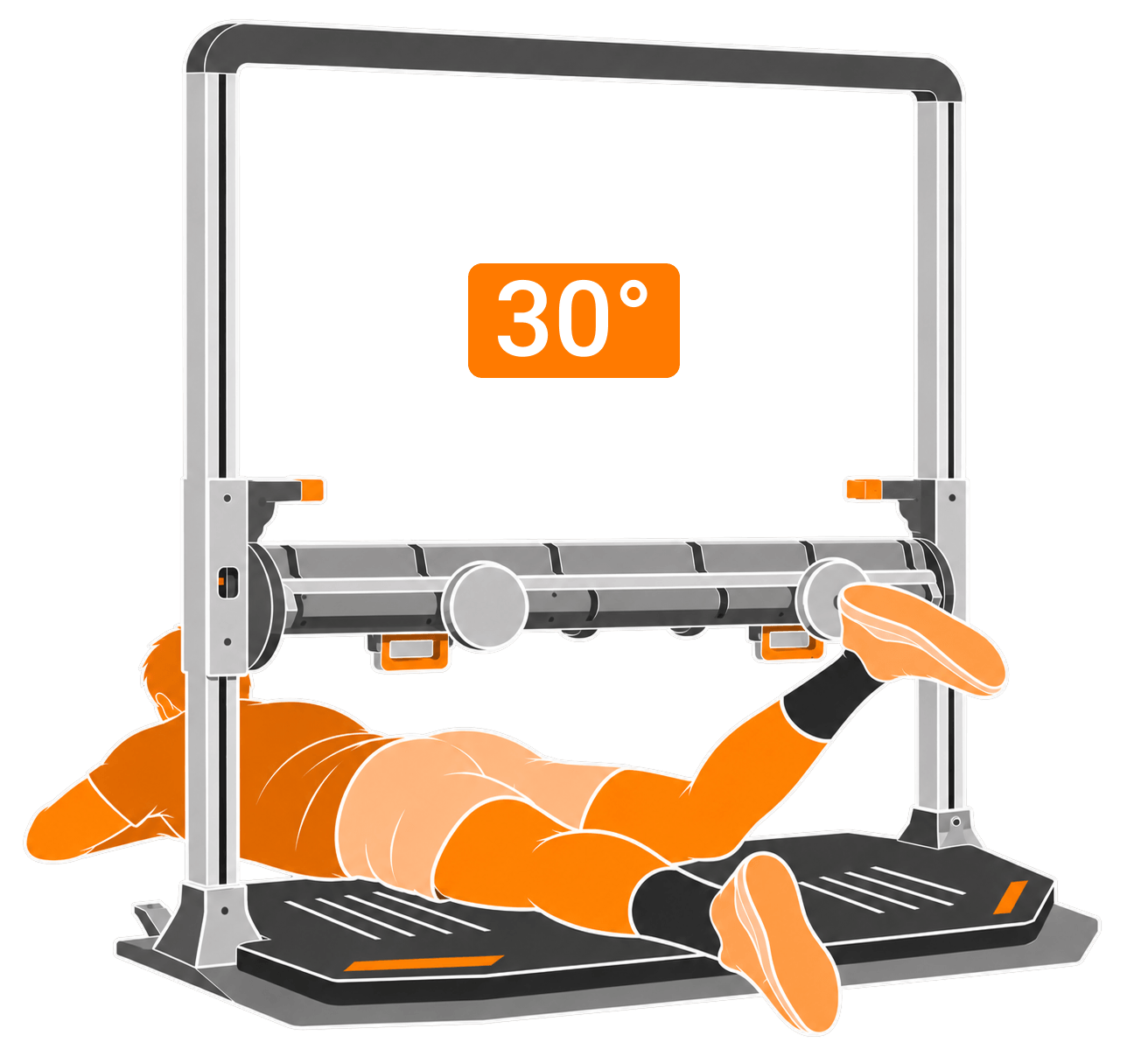
Prone knee-flexion testing at 30° and 90° assesses different parts of the knee-flexor length-tension profile, with 30° measuring force closer to knee extension and 90° testing the inner range. This matters particularly when hamstring function remains angle-specific after ACL reconstruction or hamstring tendon harvest (Buckthorpe et al., 2021).
Ankle position also influences force, with approximately 22% greater force reported at 90° with the ankle dorsiflexed versus plantarflexed (Marchetti et al., 2021). Because the gastrocnemius crosses the knee and ankle, plantarflexion changes the measured system; it does not isolate the hamstrings.
Following ACL reconstruction, limb symmetry can vary substantially between testing positions. In preliminary Swedish data from 43 patients after hamstring autograft ACL reconstruction, mean limb symmetry index (LSI) ranged from 98.2% in seated isokinetic testing to 52.5% in prone testing at 90° with the ankle plantarflexed, and none of the patients achieved 90% LSI in the prone testing condition (Högberg et al., 2025). These data illustrate setup sensitivity, not a reference threshold.
I therefore standardize knee angle, ankle position, restraint and pad placement, store each position as a separate condition and use the profile to target longer- or shorter-length knee-flexor work rather than treating “hamstring strength” as one value.
Single Leg Jump
| Test | Metric | Exercise Prescription for Improvement |
 | Jump Height |
|
| Contraction Time |
| |
| Peak Landing Force Asymmetry |
|
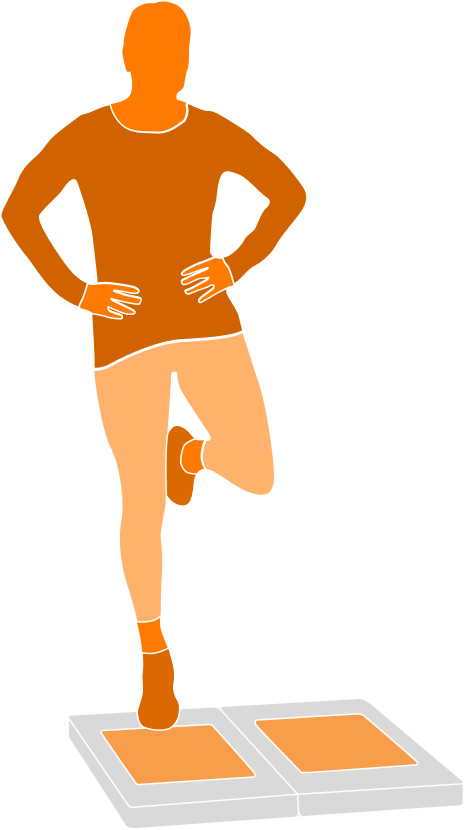
The single leg jump assesses unilateral jump performance and landing characteristics, complementing isolated strength testing. Jump height reflects performance output, contraction time provides insight into jump strategy, and peak landing force asymmetry quantifies the relative difference in peak external force between limbs during landing. None identifies joint-level contribution, so I interpret them with the force-time curve, video and the isolated strength profile.
Following ACL reconstruction, similar jump outcomes do not necessarily reflect similar joint contributions. Research reported 97% symmetry in single leg hop distance despite only 69% symmetry in knee work during propulsion (Kotsifaki et al., 2022). Therefore, satisfactory height or distance from jump tests prompts further review of jump strategy and other measures of output.
Research reported 97% symmetry in single leg hop distance despite only 69% symmetry in knee work during propulsion.
Single Leg Drop Jump
| Test | Metric | Exercise Prescription for Improvement |
 | Reactive Strength Index (RSI) |
|
| Contact Time |
| |
| Jump Height |
|
The single leg drop jump assesses reactive strength and the ability to absorb and reproduce force rapidly. RSI is a ratio of jump height to contact time, so I inspect both components before interpreting the score. The same RSI can arise from different strategies, such as a high jump with a longer contact or a short contact with limited displacement.
The featured athlete recorded limb asymmetry of approximately 8% or less in drop-jump height and RSI, suggesting relatively similar reactive performance. I still examine force-time characteristics and landing video before progressing box height, approach momentum, unilateral demand or contact-time constraints. These variables provide a practical way to grade plyometric intensity and specificity (Buckthorpe & Della Villa, 2021).
…recorded limb asymmetry of approximately 8% or less in drop-jump height and RSI, suggesting relatively similar reactive performance.
Single Leg Hop Test
| Test | Metric | Exercise Prescription for Improvement |
 | RSI |
|
| Peak Landing Force Asymmetry |
|
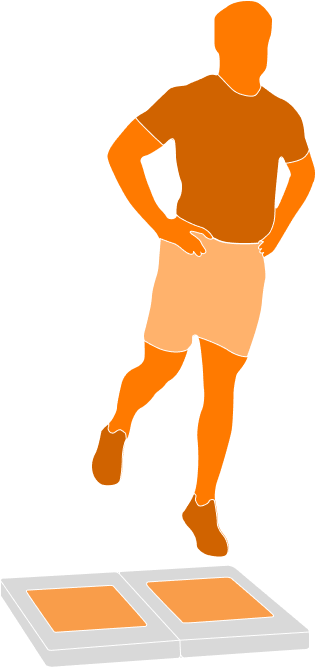
The single leg hop test extends the single-jump assessment across consecutive landing and propulsion cycles. In addition to mean RSI, I examine whether limb asymmetries in contact time and jump height change across repetitions, because a stable average can conceal an emerging deficit under repeated contacts.
The featured athlete demonstrated only 1.1% limb asymmetry in hop RSI but an 18% peak landing force asymmetry during rebound testing. Similar reactive outcomes can therefore coexist with different loading strategies. Peak vertical force is an external measure and does not localize the asymmetry to the knee; force-time data, video, symptoms and, where available, kinematics are needed before selecting an intervention.
How These Tests Integrate
Combining isolated strength, whole-limb force production, jump performance and landing measures provides a broader view of late-stage ACL rehabilitation. LSI quantifies relative limb symmetry, but it neither shows whether either limb meets sport demands nor discriminates reliably between safe return and second ACL injury (Simonsson et al., 2025). Current tests remain snapshots rather than pass-or-fail clearance tools (Hamrin Senorski et al., 2026).
I therefore interpret LSI alongside absolute and body-mass-normalized outputs, longitudinal change, task quality and the closest relevant sport, sex and competition-level cohort available in VALD Hub. The featured athlete demonstrated relatively similar knee-extension strength, peak force and jump performance across limbs, but limb asymmetries in early force production and landing characteristics remained. The program therefore prioritized angle-specific knee-flexor work, maintenance of isolated quadriceps strength, rapid force production, graded reactive loading and progressive floorball exposure.
The tests shown in this VALD Hub dashboard form only one part of my return-to-sport battery, which also includes change-of-direction, field-based sport-specific and neurocognitively challenging test variations. I interpret the combined findings and do not use any single result or symmetry threshold as a clearance test. Standard tests omit much of floorball’s perceptual and decision-making load. Adding cognitive demand can reduce hop performance, alter coordination and produce greater cognitive-motor interference after ACL reconstruction (Grooms et al., 2023; Gokeler et al., 2025; Strong et al., 2025).
This remains a future assessment layer and cannot be inferred from the current VALD Hub dashboard. I would compare the same movement under standard and defined dual-task conditions and calculate the relative change in motor output and cognitive accuracy. A dual-task cost may expose a hidden limitation, but it is not a validated clearance threshold and should not be inferred here.
Interested in building your own dashboard or applying similar testing strategies to late-stage ACL rehabilitation and return-to-sport decision-making? Get in touch with our team.
References
- Buckthorpe, M. (2019). Optimising the late-stage rehabilitation and return-to-sport training and testing process after ACL reconstruction. Sports Medicine, 49(7), 1043–1058. https://doi.org/10.1007/s40279-019-01102-z
- Buckthorpe, M., & Della Villa, F. (2020). Optimising the ‘mid-stage’ training and testing process after ACL reconstruction. Sports Medicine, 50(4), 657–678. https://doi.org/10.1007/s40279-019-01222-6
- Buckthorpe, M., & Della Villa, F. (2021). Recommendations for plyometric training after ACL reconstruction: A clinical commentary. International Journal of Sports Physical Therapy, 16(3), 879–895. https://doi.org/10.26603/001c.23549
- Buckthorpe, M., Danelon, F., La Rosa, G., Nanni, G., Stride, M., & Della Villa, F. (2021). Recommendations for hamstring function recovery after ACL reconstruction. Sports Medicine, 51(4), 607–624. https://doi.org/10.1007/s40279-020-01400-x
- Buckthorpe, M., La Rosa, G., & Della Villa, F. (2019). Restoring knee extensor strength after anterior cruciate ligament reconstruction: A clinical commentary. International Journal of Sports Physical Therapy, 14(1), 159–172. https://doi.org/10.26603/ijspt20190159
- Gokeler, A., Zandbergen, M. A., Hoogeslag, R. A. G., van Houten, A., Nijmeijer, E. M., & Heuvelmans, P. (2025). Neurocognitive demands reduce jump distance and coordination variability of the injured leg in athletes after anterior cruciate ligament reconstruction. Knee Surgery, Sports Traumatology, Arthroscopy, 33(4), 1321–1332. https://doi.org/10.1002/ksa.12439
- Grooms, D. R., Chaput, M., Simon, J. E., Criss, C. R., Myer, G. D., & Diekfuss, J. A. (2023). Combining neurocognitive and functional tests to improve return-to-sport decisions following ACL reconstruction. Journal of Orthopaedic & Sports Physical Therapy, 53(8), 415–419. https://doi.org/10.2519/jospt.2023.11489
- Hamrin Senorski, R., Piussi, R., Högberg, J., Sundberg, A., Lindskog, J., Prill, R., & Hamrin Senorski, E. (2026). Current concepts and future perspective of muscle function tests to inform return to sport decision-making after ACLR: A narrative review. Journal of Experimental Orthopaedics, 13(1), e70643. https://doi.org/10.1002/jeo2.70643
- Högberg, J., Hermansson, E., Wernbom, M., Samuelsson, K., & Hamrin Senorski, E. (2025). Signifikant variabilitet i hamstringsstyrka mellan fyra olika styrketest efter främre korsbandsrekonstruktion [Conference poster abstract]. Idrottsmedicin, 44(2), 62. https://forening.sls.se/media/kewb033r/svensk-idrottsmedicin-2-2025_digital-tidning.pdf
- Kotsifaki, A., Whiteley, R., Van Rossom, S., Korakakis, V., Bahr, R., Sideris, V., Graham-Smith, P., & Jonkers, I. (2022). Single leg hop for distance symmetry masks lower limb biomechanics: Time to discuss hop distance as decision criterion for return to sport after ACL reconstruction? British Journal of Sports Medicine, 56(5), 249–256. https://doi.org/10.1136/bjsports-2020-103677
- Lisee, C., Birchmeier, T., Yan, A., & Kuenze, C. (2019). Associations between isometric quadriceps strength characteristics, knee flexion angles, and knee extension moments during single leg step down and landing tasks after anterior cruciate ligament reconstruction. Clinical Biomechanics, 70, 231–236. https://doi.org/10.1016/j.clinbiomech.2019.10.012
- Marchetti, P. H., Magalhães, R. A., Gomes, W. A., da Silva, J. J., Stecyk, S. D., & Whiting, W. C. (2021). Different knee and ankle positions affect force and muscle activation during prone leg curl in trained subjects. Journal of Strength and Conditioning Research, 35(12), 3322–3326. https://doi.org/10.1519/JSC.0000000000003333
- Simonsson, R., Sundberg, A., Piussi, R., Högberg, J., Senorski, C., Thomeé, R., Samuelsson, K., Della Villa, F., & Hamrin Senorski, E. (2025). Questioning the rules of engagement: A critical analysis of the use of limb symmetry index for safe return to sport after anterior cruciate ligament reconstruction. British Journal of Sports Medicine, 59(6), 376–384. https://doi.org/10.1136/bjsports-2024-108079
- Strong, A., Boraxbekk, C. J., & Markström, J. L. (2025). Greater cognitive-motor interference among patients after anterior cruciate ligament reconstruction compared with controls. American Journal of Sports Medicine, 53(5), 1041–1049. https://doi.org/10.1177/03635465251322947
