Morgan Williams is a Data Scientist at VALD, Adjunct Associate Professor at Griffith University and an external affiliate member of the Australian Centre for Precision Health and Technology (PRECISE).
Morgan WilliamsPhD, FHEA, CSCS
Available in:
EN
Morgan Williams is a Data Scientist at VALD, Adjunct Associate Professor at Griffith University and an external affiliate member of the Australian Centre for Precision Health and Technology (PRECISE).
Matt Bourne is an Associate Professor and Principal Research Fellow at Griffith University and spearheads the Precision Athlete research program at PRECISE.

Morgan Williams is a Data Scientist at VALD, Adjunct Associate Professor at Griffith University and an external affiliate member of the Australian Centre for Precision Health and Technology (PRECISE).

Matt Bourne is an Associate Professor and Principal Research Fellow at Griffith University and spearheads the Precision Athlete research program at PRECISE.
This is Part 2 of our Understanding the Nordic Hamstring Exercise series. This article outlines how the Nordic hamstring exercise (NHE) can be effective, how specific mechanisms underpin its impact on injury risk and how technology can be used to quantify, monitor and improve its use in practice.
Hamstring strain injuries (HSIs) remain among the most common and costly problems in sport, particularly in football codes and sprint-based disciplines (Maniar et al., 2023). The NHE has a uniquely strong evidence base for reducing hamstring injury risk when implemented correctly. Meta-analyses of large-scale trials confirm that athletes who perform the NHE sustain 51% fewer hamstring injuries than those who do not (van Dyk et al., 2019).
…misconceptions and poor adherence often undermine the effectiveness of the NHE.
However, misconceptions and poor adherence often undermine the effectiveness of the NHE. For instance, a 10-week NHE program in Norwegian soccer players showed no effect on HSIs, yet compliance data showed that only 20% of participants completed the protocol (Engebretsen et al., 2008). Similarly, amateur Australian football players who were assigned five NHE sessions over three months showed no reduction in injuries, but over half of the participants dropped out of the study after the first session (Gabbe et al., 2006).
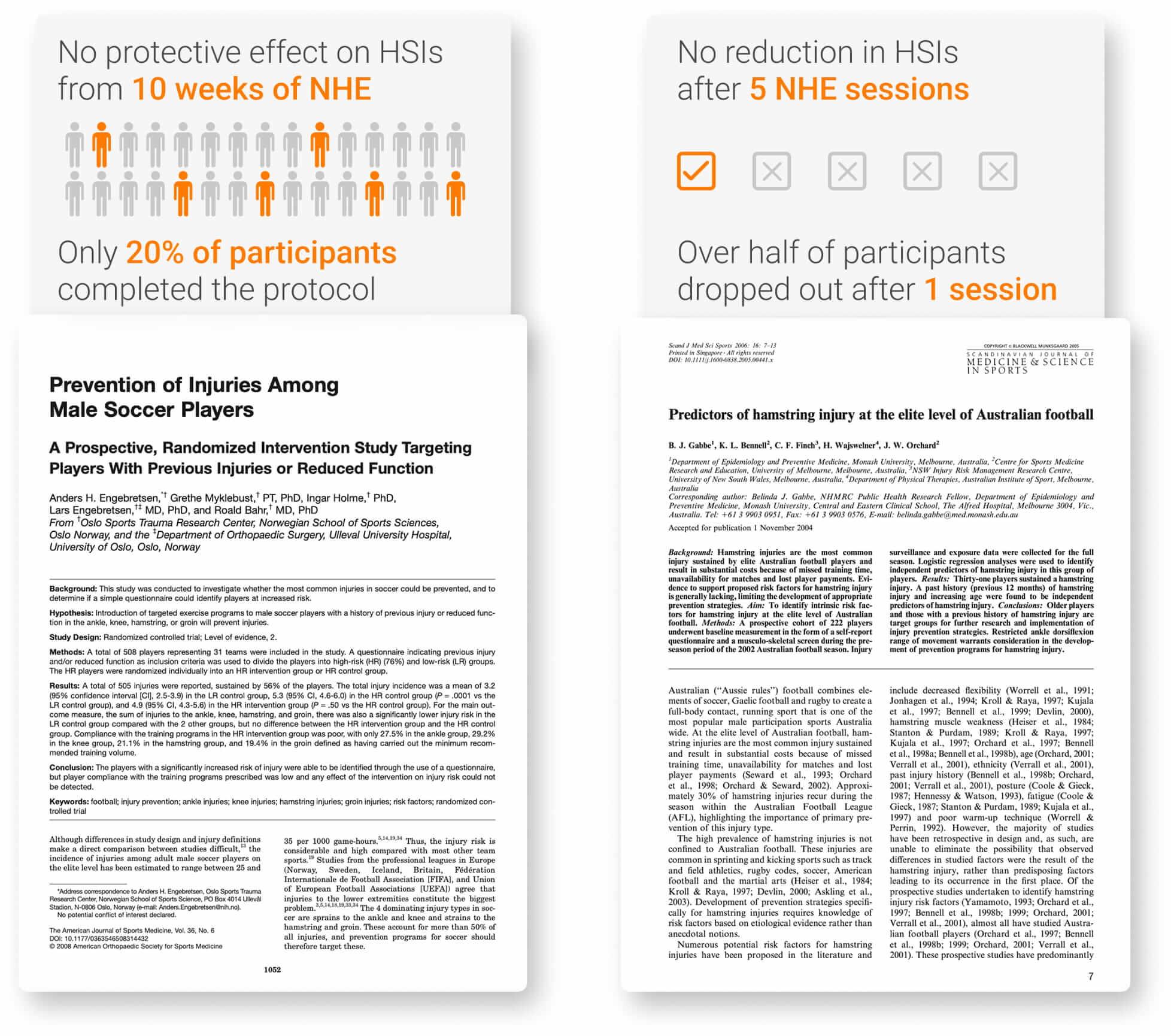
These intervention outcomes are not a reflection of NHE efficacy but rather of implementation failure associated with an exercise known to elicit delayed-onset muscle soreness (DOMS). Importantly, surveys of professional football teams reveal fewer hamstring injuries among those that systematically implement the NHE (Ekstrand et al., 2022).
For more information about the background of the NHE and proper execution, refer to our Understanding the Nordic Hamstring Exercise Part 1 article.
The NHE can increase eccentric knee flexor strength by 27-74% over 6-10 weeks (Bourne et al., 2017). However, strength alone does not fully explain injury prevention. A meta-analysis found that isolated strength measures were weak predictors of HSI, suggesting that gains in strength accounted for only a small part of the reduced injury risk (Green et al., 2020).
The NHE can increase eccentric knee flexor strength…[but] strength alone does not fully explain injury prevention.
The protective effect of the NHE is multifactorial. It is not simply about “getting stronger”; rather, it reflects a combination of structural and functional adaptations that enhance damage resistance in high-demand activities such as sprinting.
Several mechanisms have emerged as likely contributors to this effect, including:
…[the NHE elicits] adaptations that enhance damage resistance in high-demand activities such as sprinting.
The adaptations from the NHE are structural, neural and mechanical, all of which work together to protect the hamstrings.
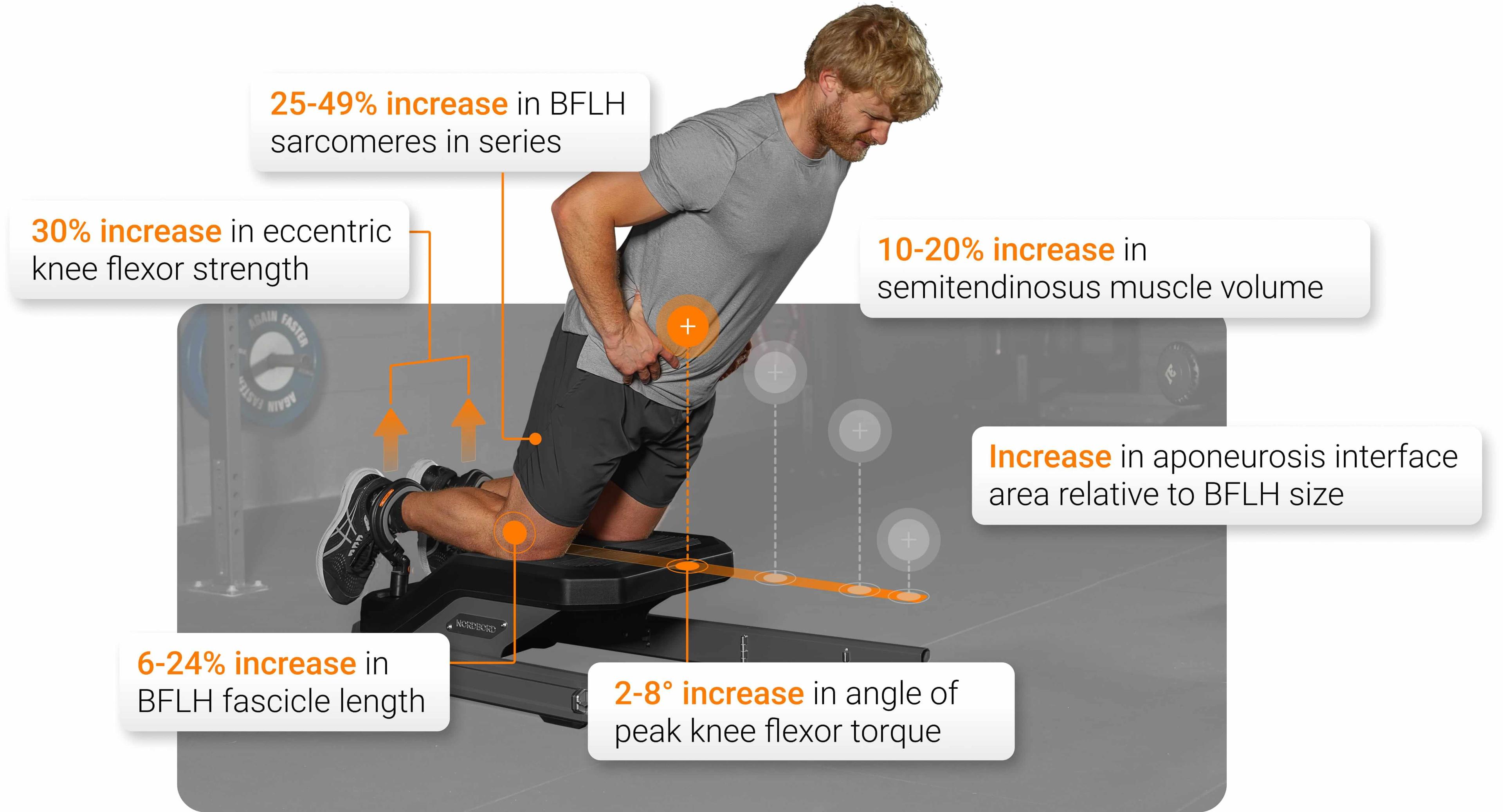
Potential mechanisms underpinning the injury-prevention benefits of the NHE. Information supplied by Dr. Tyler Collings.
Repetition counting alone does not reveal intensity, asymmetry or limb contribution, all of which influence exercise stimulus and subsequent adaptation. Early research using NordBord showed that athletes with prior HSIs often demonstrate different NHE strategies, highlighting the need for precise monitoring (Opar et al., 2013).
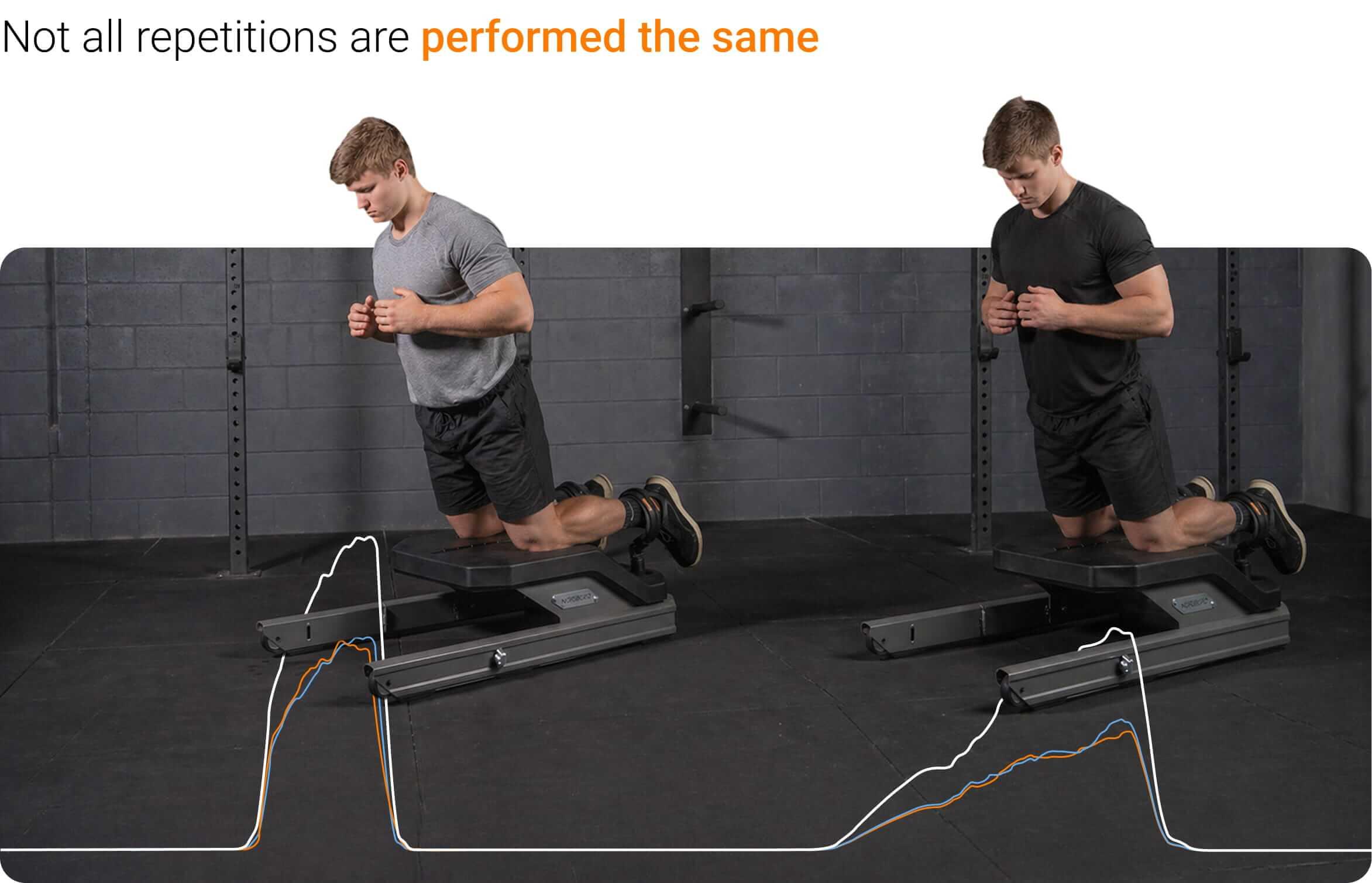
Counting repetitions alone would imply that all repetitions elicit the same adaptation, despite clear differences in force output and NHE strategy.
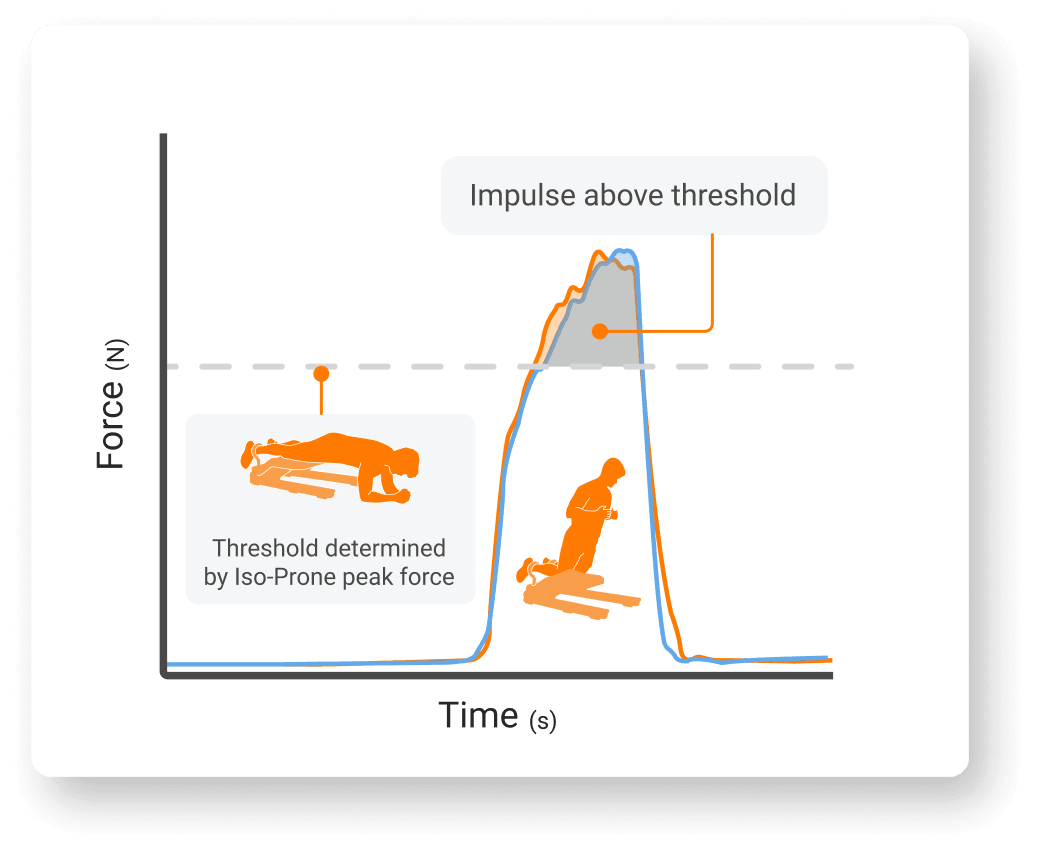
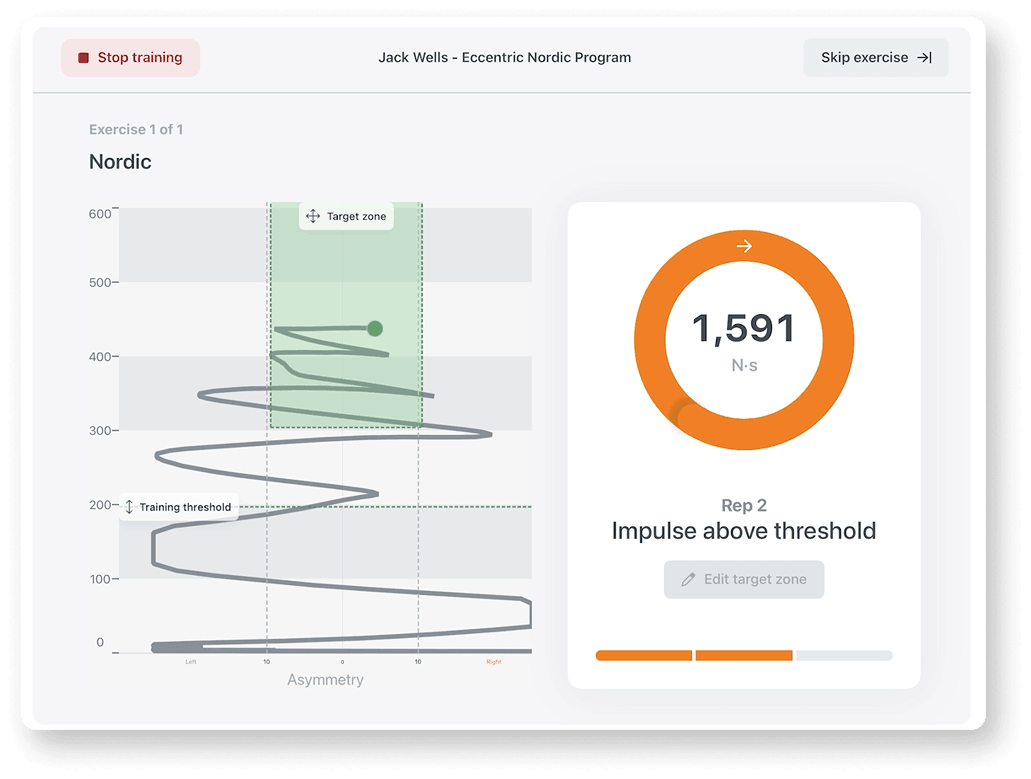
NordBord Training Mode’s real-time feedback on force output, asymmetry and repetition quality addresses the need for more precise monitoring during training. Live force-time curves and impulse thresholds enable technical adjustments with greater precision and support more consistent effort across repetitions.
[Training Mode enables] technical adjustments with greater precision and [supports] more consistent effort across repetitions.
Training can be individualized using peak force and asymmetry thresholds set prior to training and monitored throughout the session. For example, setting a target zone that corresponds to the expected force at a given knee angle provides athletes with clear, individualized and objective feedback. This promotes muscle lengthening under tension and prevents the repetition from being cut short (Andrews et al., 2025).
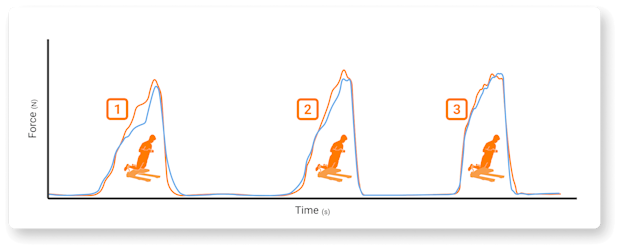
The following table outlines key metrics received in Training Mode and their influence on hamstring training.
| Eccentric Training Metrics | ||
| Quantity Metrics |
|  |
| Quality Metrics Above Threshold |
|  |
| Quality Metrics in Target Zone |
|  |
| Quality Metrics with Reference to Peak Force |
| 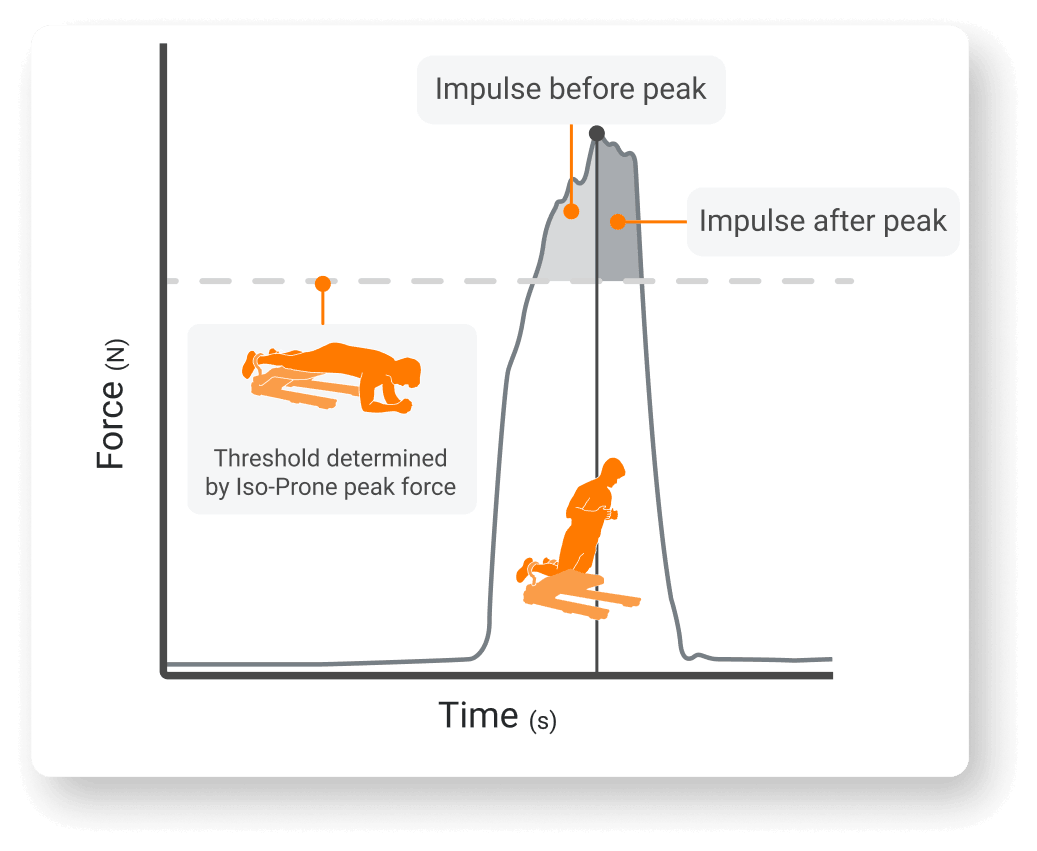 |
NordBord Training Mode metrics provide a more granular representation of NHE training volume than the traditional total number of repetitions.
The primary barrier to adopting the NHE is the discomfort and DOMS that many athletes experience (Goode et al., 2015). However, this soreness often decreases quickly with subsequent exposures due to the repeated-bout effect, in which muscles adapt and their fibers become more resilient to subsequent bouts of eccentric exercise (McHugh, 2003).
A practical way to introduce NHE is to start with low volume and progress gradually. Research shows that programs following the approach below have fewer complications (e.g., soreness) than a traditional hamstring curl control group (Mjølsnes et al., 2004).
Research shows that programs following [a gradual approach] have fewer complications than a traditional hamstring curl control group.
| Week | Frequency per Week | Sets per Session | Repetitions per Set | Weekly Volume (Repetitions) |
| 1 | 1 | 2 | 5 | 10 |
| 2 | 2 | 2 | 6 | 24 |
| 3 | 3 | 3 | 6-8 | 54-72 |
| 4 | 3 | 3 | 8-10 | 72-90 |
| 5-10 | 3 | 3 | 12-10-8 | 90 |
Another effective approach, used in injury prevention programs such as the FIFA 11+, is to integrate the NHE into warm-ups alongside other exercises. Beginners start with 3-5 repetitions and progress up to 15 as they advance.
More comprehensive programs often combine the NHE with exercises such as the Romanian deadlift (RDL) to better reflect typical training practice (Crawford et al., 2025). The RDL targets hip extension and promotes more uniform activation across the hamstrings, while the NHE emphasizes knee flexion and preferentially loads the medial hamstrings. The RDL has also been shown to produce greater hamstring stretch than both the NHE and sprinting (Breed et al., 2026).
Combining hip extension exercises with the NHE may help ensure all hamstring muscles receive sufficient stimulus for strength and hypertrophy.
Combining hip extension exercises (e.g., RDLs) with the NHE may help ensure all hamstring muscles receive sufficient stimulus for strength and hypertrophy. For more information about exercise selection and muscle adaptations, check out the Practitioner’s Guide to Hamstrings.

Research protocols should be applied with caution. Laboratory studies often use high volumes and intensities to maximize measurable effects, but these can reduce compliance and are often impractical in applied settings.
In Gabbe et al. (2006), more than half of the participants withdrew after completing 72 NHE repetitions in the first session. For untrained individuals or those not used to performing near-maximal eccentric training, this volume is likely to cause severe DOMS. This level of soreness can impair training quality and limit adherence (Goode et al., 2015).
Behan et al. (2023) further highlight a dose-response relationship, with higher volumes producing greater and more sustained DOMS. Responses varied between individuals, reinforcing the need to individualize loading strategies.
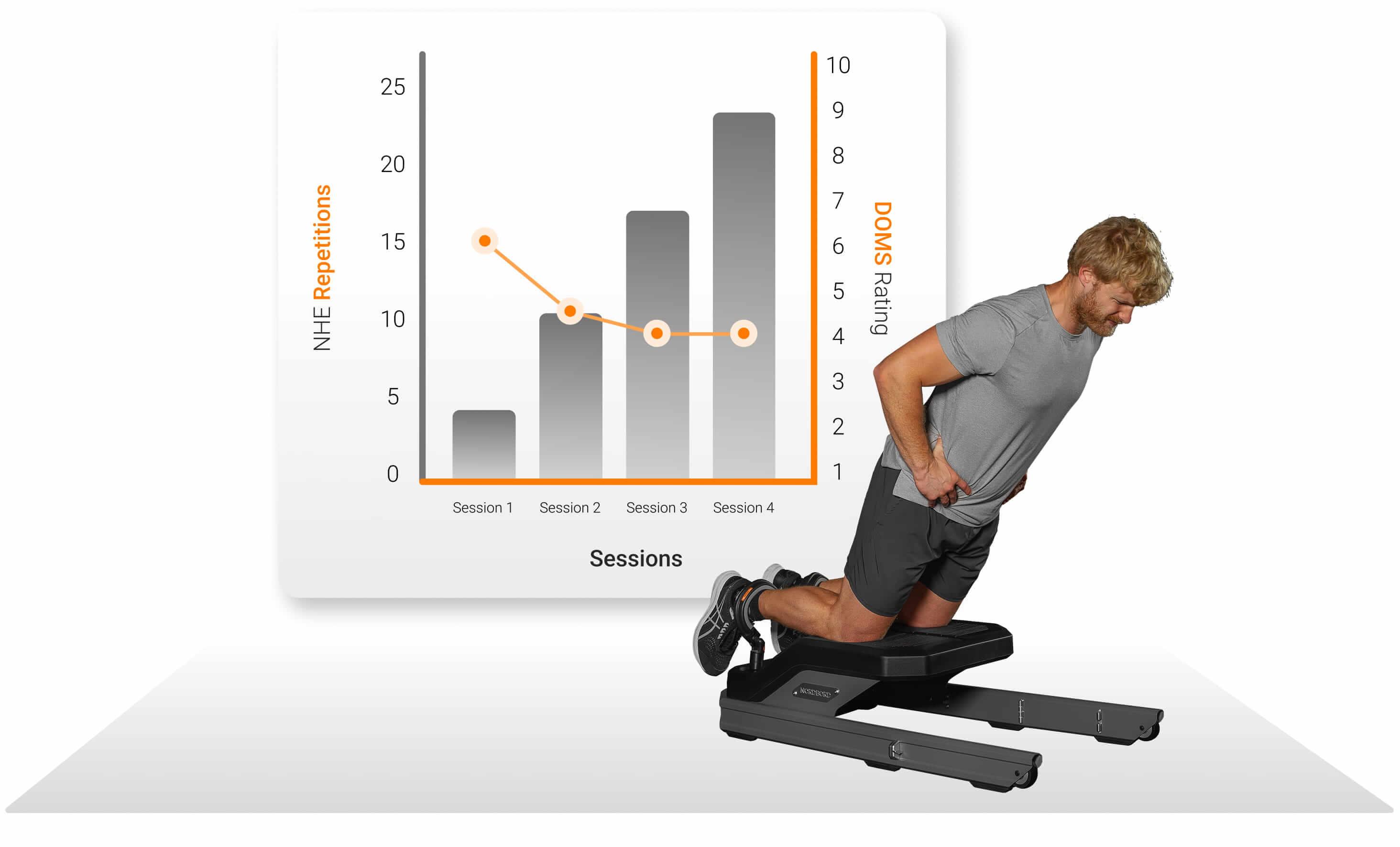
The NHE elicits greater soreness early on (orange line graph), but it becomes more manageable, even with increasing volume (gray bar graph), due to the repeated-bout effect. Graph adapted from Behan et al. (2022).
Behan et al. (2022) showed that low-volume NHE exposure was insufficient to increase BFLH fascicle length, although as few as 48 repetitions improved eccentric strength. Structural adaptations, including increased fascicle length and reduced pennation angle, were only observed in higher-volume groups, which also reported greater DOMS. These adaptations were not maintained after four weeks of detraining, except in the highest-volume group.
Together, these findings demonstrate a clear dose-response relationship between NHE volume, DOMS and adaptation, supporting higher-volume loading in the off-season. During this period, athletes are better able to tolerate initial soreness, benefit from the repeated-bout effect and develop protective architectural adaptations, such as increased fascicle length and reduced pennation angle.
[There is a]…dose-response relationship between NHE volume, DOMS and adaptation, supporting higher-volume loading in the off-season.
These changes can then be maintained as training and competition demands increase. Entering preseason in a deconditioned state limits the opportunity to meaningfully influence strength and muscle architecture, as competing training loads and limited time before competition can constrain the development of protective adaptations. This aligns with prospective evidence showing that shorter fascicle lengths and greater pennation angles are associated with increased early-season hamstring injury risk under competition-level loading (Sim et al., 2024).
The NHE can reduce hamstring injury risk by up to 51%, but only with consistent implementation. Volume should be individualized based on capacity, training history and injury profile, with a focus on technique and gradual progression to manage DOMS. The off-season provides an important window to build exposure before training loads and competition demands increase.
Tracking repetitions alone provides an incomplete picture of training execution. To drive the desired adaptation, repetitions must be performed with sufficient intent and quality. Real-time feedback and repetition thresholds, such as those provided by NordBord Training Mode, can help guide progression and ensure effective NHE execution on every repetition.
If you would like to learn more about implementing NordBord Training Mode or assessing the NHE in your performance or rehabilitation programs, please get in touch.

Copyright © 2026 VALD Health
.
All Rights Reserved |
Privacy Policy