Integrating Technology into Chiropractic Practice
Available in:
EN

Objective testing technology is becoming increasingly accessible to chiropractic practices, providing new ways to quantify strength, movement and physical function within existing clinical workflows. From evaluating spinal mobility to monitoring rehabilitation and communicating with referring providers, these measurements can support both patient care and practice development.
At Sport and Spine Chiropractic Rehab, our team of chiropractors and strength and conditioning coaches has integrated DynaMo, ForceDecks and HumanTrak into routine clinical assessments. In our experience, objective testing has complemented traditional chiropractic care while creating opportunities for patient engagement, interdisciplinary collaboration and business growth.
Building on Existing Assessments
Chiropractors routinely assess strength, range of motion and movement quality to identify physical limitations and guide treatment. By integrating technology into our existing clinical assessments, we have improved the precision, consistency and usefulness of the information we already collect.
By integrating technology…we have improved the precision, consistency and usefulness of the information we already collect.
At Sport and Spine Chiropractic Rehab, we provide chiropractic care, rehabilitation and strength and conditioning services to patients with spinal conditions, musculoskeletal injuries and post-surgical rehabilitation needs.
We initially introduced DynaMo and ForceDecks to improve the quality of our strength-testing measurements and recently expanded our assessment capabilities to include 3D motion capture with HumanTrak. These systems are now incorporated into assessments already familiar to most chiropractors, including:
- Strength Testing: DynaMo measures force production during assessments such as knee extension, hip abduction and shoulder rotation.
- Movement Assessment: HumanTrak quantifies joint range of motion and movement characteristics during tasks such as squatting, reaching and spinal rotation.
- Functional Testing: ForceDecks measures force production, power and asymmetries during tasks such as squats, jumps and isometric strength assessments.
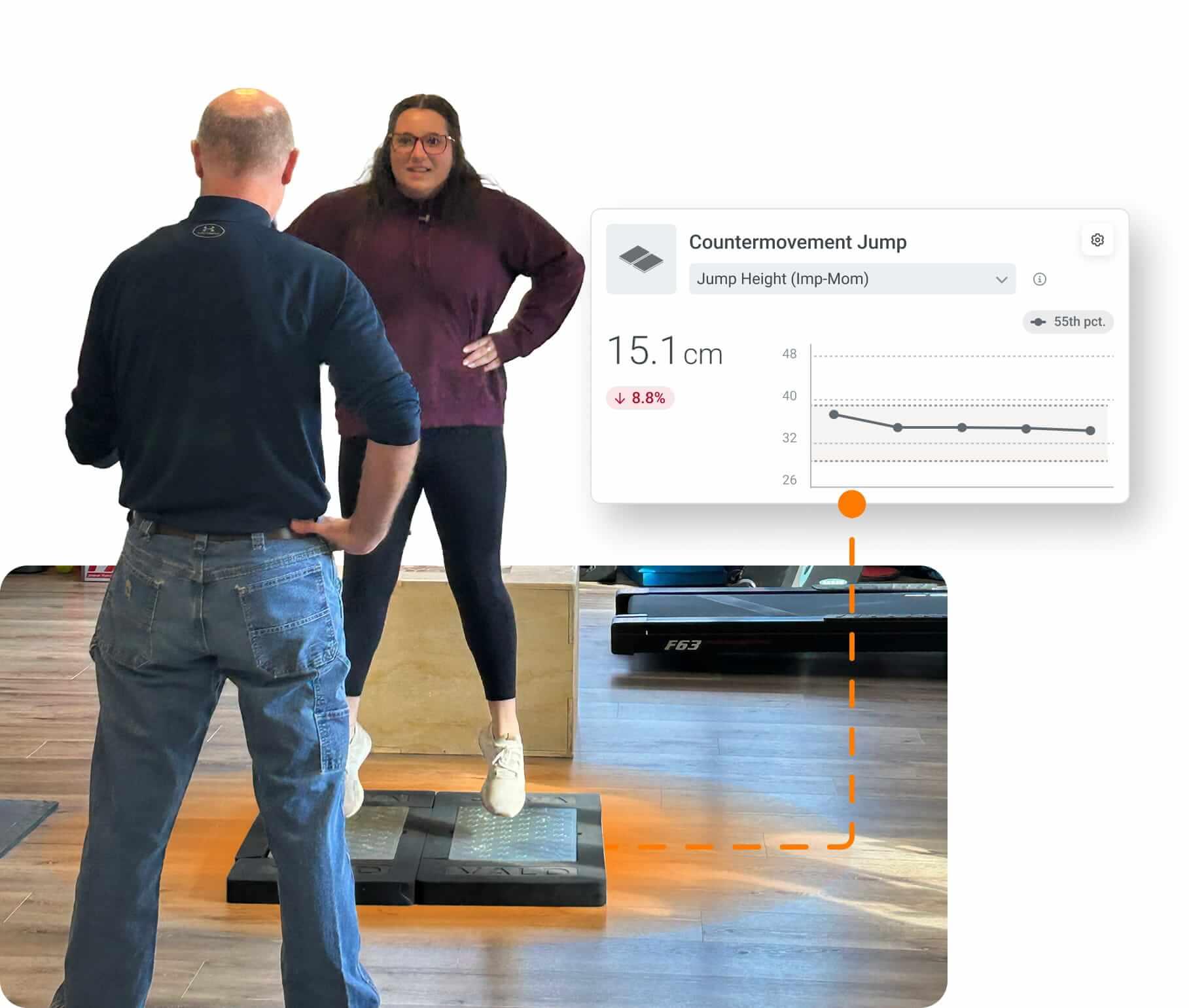
These measurements provide additional information that can be considered alongside symptoms, clinical examination findings and the patient’s functional goals.
Quantifying Strength and Movement
Strength Assessment
Manual muscle testing is a frequent method for assessing strength and identifying potential deficits. However, traditional grading systems provide broad classifications that may be difficult to interpret when monitoring smaller changes in force production or comparing results across patients and practitioners.
For example, a patient receiving a 4+/5 grade during knee extension testing may receive substantially different grades across testing days and testers, while the grading system offers limited granularity for detecting change.
Handheld dynamometry builds on this assessment using many of the same testing positions. Practitioners familiar with manual muscle testing can therefore introduce DynaMo without substantially changing how they position or assess patients.
Practitioners familiar with manual muscle testing can therefore introduce DynaMo without substantially changing how they position or assess patients.
At Sport and Spine Chiropractic Rehab, DynaMo is used to quantify hip and knee strength in athletes and general population patients. Results can be compared between limbs, monitored over time and evaluated against VALD Norms, which provide age- and sex-specific reference values drawn from a large database of assessments. These comparisons help practitioners understand how a patient’s strength compares to similar populations, identify potential deficits and monitor changes following treatment or exercise interventions.
Movement Assessment
Standardized movement assessments provide a repeatable process for evaluating how patients perform specific tasks. However, observational scoring alone may provide limited information about the magnitude of movement restrictions or differences between limbs.
…observational scoring alone may provide limited information about the magnitude of movement restrictions or differences between limbs.
HumanTrak adds quantitative measurements to these assessments, including joint range of motion and movement characteristics. For example, during an overhead squat assessment, I use metrics such as squat depth, knee valgus and knee flexion to track progress in both physical capacity and motor control.
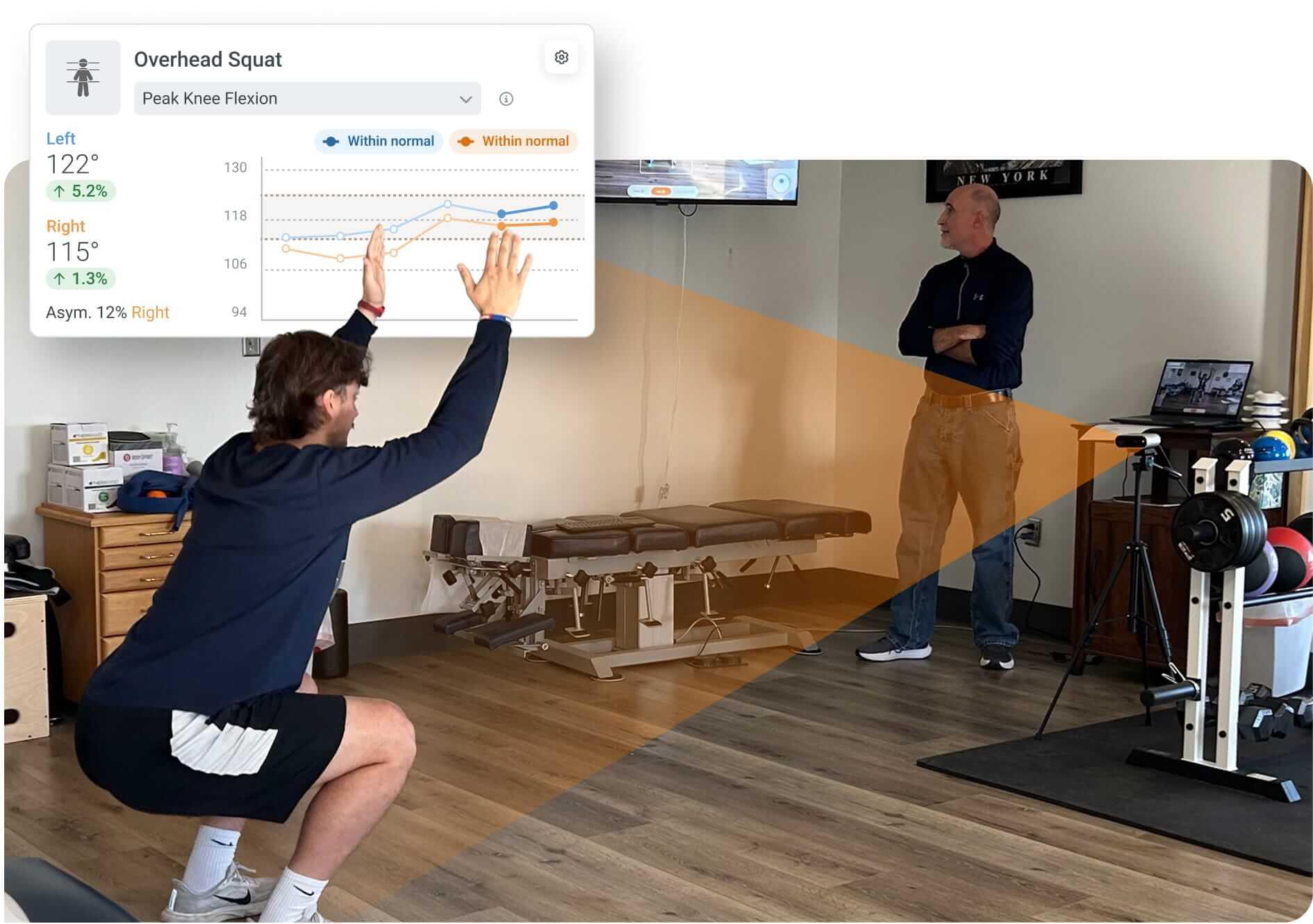
ForceDecks provides complementary information by quantifying how force is distributed between limbs during a squat. When HumanTrak identifies changes in squat kinematics, we can use ForceDecks to assess whether these movement patterns are associated with differences in limb loading. For example, a lateral weight shift observed during a squat can be examined alongside force distribution data to quantify the resulting asymmetry.
These measurements can also improve patient engagement. Patients can review their own movement, compare results with relevant reference values and observe changes across subsequent assessments.
Applying Technology to Spinal Care
Strength and movement testing is commonly associated with sports rehabilitation, but many of the same assessments are relevant to patients presenting with spinal complaints. At Sport and Spine Chiropractic Rehab, we use DynaMo and HumanTrak to quantify key qualities affected by back pain, such as hip strength and thoracic mobility. This information can inform exercise selection and provide a baseline for monitoring changes throughout care.
Assessment setups are fast and repeatable, allowing for simple test-retest clinical assessments following an intervention. If mobility improves immediately after an intervention, it provides us with feedback on the patient’s response and helps guide subsequent clinical decision-making.
[HumanTrak] assessment setups are fast and repeatable, allowing for simple test-retest clinical assessments following an intervention.
HumanTrak offers additional opportunities to assess cervical and spinal movement. For example, cervical rotation and flexion measurements can help establish baseline mobility and monitor changes across appointments.
These assessments may be particularly useful when symptoms fluctuate or when patients have difficulty recognizing gradual changes in their physical capabilities. The goal is to identify which measurements are relevant to the patient’s presentation and use those results to support clinical reasoning.
Expanding Business Opportunities
Beyond supporting clinical decision-making, objective testing can improve patient engagement, strengthen referral relationships and create opportunities for additional services. At Sport and Spine Chiropractic Rehab, measurable changes in strength, mobility and movement help us communicate rehabilitation progress, particularly when improvements are gradual or symptoms fluctuate. Longitudinal assessments provide individualized reference points, helping patients understand their progress and practitioners communicate treatment priorities.
…objective testing can improve patient engagement, strengthen referral relationships and create opportunities for additional services.
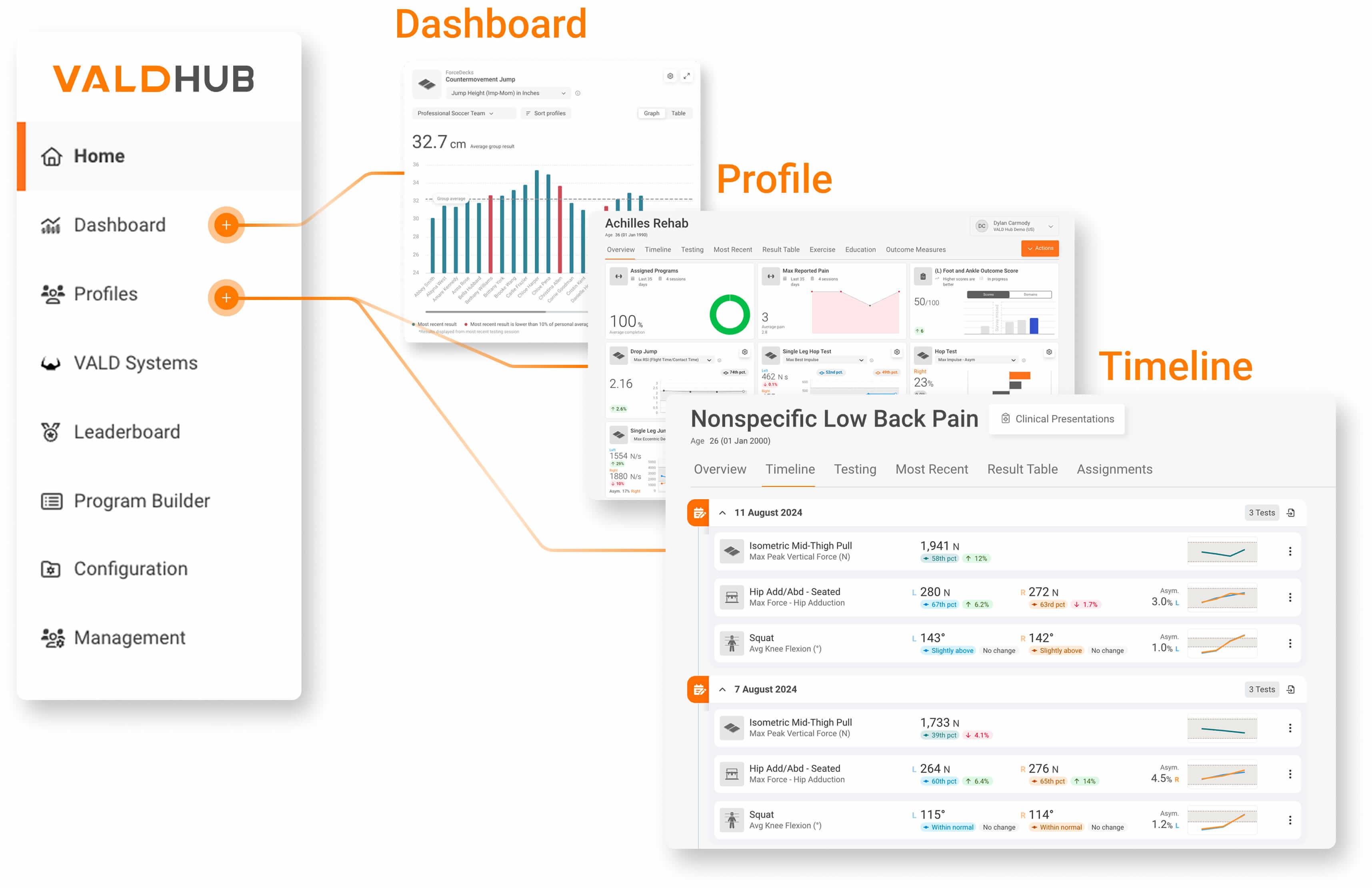
Objective testing also supports collaboration with other healthcare professionals. Through our partnership with a local high school, we use VALD Hub to share testing results with athletic trainers and help coordinate rehabilitation programs. The practice also receives referrals from orthopedic providers for strength assessments and post-surgical rehabilitation, using standardized protocols and quantitative reports to communicate patient progress.
Beyond routine patient care, we have expanded our testing services to Lock Haven University’s Division II baseball program, using DynaMo, ForceDecks and HumanTrak to assess pitchers’ strength, mobility and physical performance. Similar services can extend to recreational athletes, active adults and other sports organizations, creating opportunities to diversify services, strengthen referral networks and support long-term practice growth.
Practical Considerations for Integrating Technology
For chiropractic practices considering objective testing, the most practical starting point is identifying where additional measurements can improve existing assessments. Systems such as DynaMo, ForceDecks and HumanTrak allow practitioners to build on familiar clinical assessments by incorporating objective measures of strength, movement and physical function.
In our experience, this approach allows us to integrate technology into existing workflows without significantly disrupting routine care. Over time, standardized testing protocols can support consistent monitoring, inform patient discussions and facilitate communication with collaborating healthcare providers.
By making objective measurements part of routine assessments, chiropractors can better track rehabilitation progress, communicate measurable outcomes and support clinical decision-making. This approach also creates opportunities to strengthen referral relationships, expand services and support long-term practice growth.
If you are interested in exploring how DynaMo, ForceDecks and HumanTrak can help your chiropractic practice quantify patient progress, enhance clinical decision-making and expand its service offerings, get in touch with our team.
