Technology in Concussion Rehabilitation: Moving beyond symptom resolution
Available in:
EN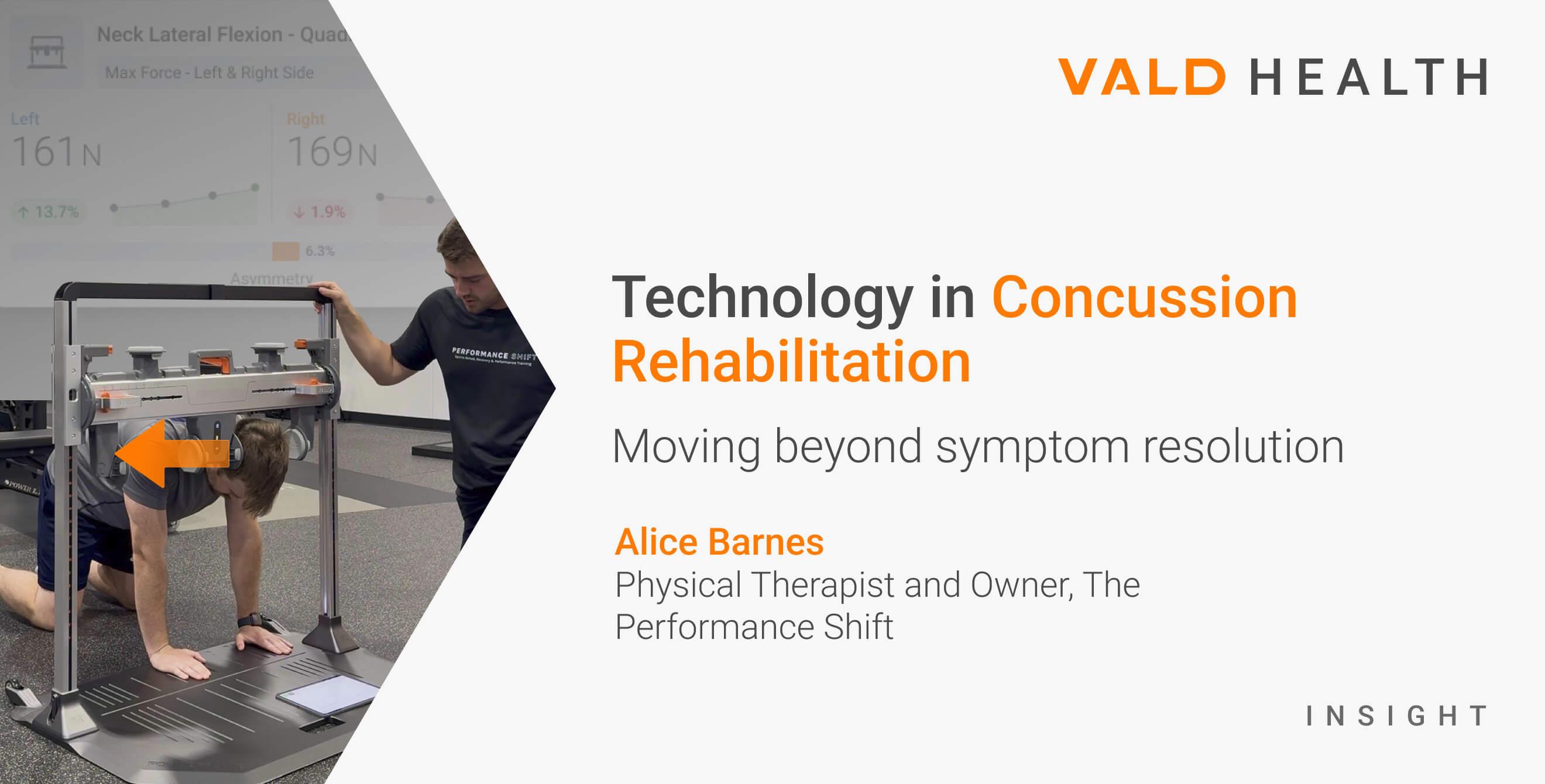
Concussion rehabilitation has evolved considerably over the past decade. Modern clinical practice extends well beyond recommending rest and waiting for symptoms to resolve. Instead, current practice standards recognize concussion as a multifactorial injury that may affect the cervical spine, vestibular system, oculomotor function, balance, cognition and athletic performance.
As rehabilitation has become more comprehensive, assessment strategies have evolved alongside it. Tools such as DynaMo, ForceFrame and ForceDecks provide measurable information that complements a thorough physical examination, helping practitioners monitor recovery, identify deficits that may not be visible during observation and communicate progress with greater confidence.
…current practice standards recognize concussion as a multifactorial injury…[requiring] practitioners [to] monitor recovery, identify deficits…and communicate progress…
Every Concussion Assessment Starts with the Fundamentals
Every concussion evaluation begins with a thorough clinical assessment.
For athletes undergoing preseason screening, this may include cervical range of motion (ROM), cervical strength, vestibular and oculomotor assessment, balance testing, dual-task performance and functional movement assessments such as squats and jumping tasks. Together, these establish an athlete’s movement profile before injury while identifying areas that may warrant targeted intervention throughout the season.
For practitioners interested in learning more about preseason screening and group testing, check out the Practitioner’s Guide to Group Testing:
Following a concussion, the same evaluation process is repeated to assess the effects of the concussion on the athlete’s physiology. Acute sideline assessments remain essential for diagnosis and immediate management, but rehabilitation extends well beyond initial safety screening.
At The Performance Shift, we continue to monitor cervical impairments, vestibular function, balance, movement quality and neuromuscular control throughout recovery to guide progression back toward unrestricted sport. Cervical ROM and strength are tracked with DynaMo and ForceFrame, while balance, functional and jump assessments are monitored using ForceDecks.
Measuring the Cervical Spine Objectively
Although concussion is commonly viewed as a brain injury, the cervical spine is frequently affected. Restricted mobility, reduced strength and muscular dysfunction may reproduce symptoms that closely resemble vestibular impairments, including dizziness, headaches and balance disturbances. Distinguishing between physical contributors and true neurologic impairment becomes an important component of rehabilitation.
…[cervical impairments] may reproduce symptoms that closely resemble vestibular impairments, including dizziness, headaches and balance disturbances.
ForceFrame provides an opportunity to objectively measure cervical isometric strength across flexion, extension and lateral flexion, replacing subjective manual muscle testing with quantifiable data. Similarly, DynaMo can be used to objectively measure cervical ROM before and after manual therapy or exercise interventions, allowing practitioners to determine whether treatment has produced meaningful improvements.
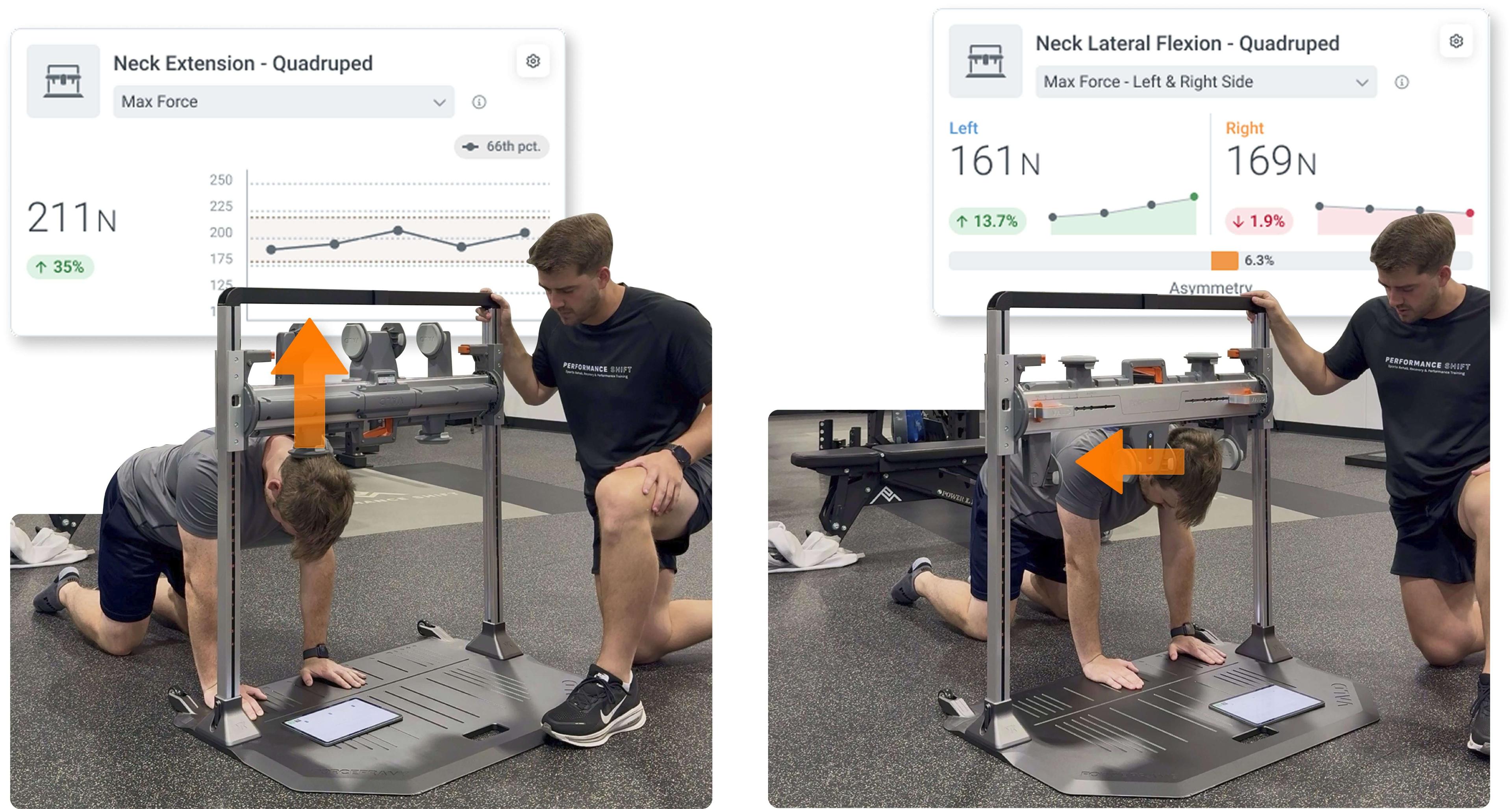
While standardized cervical testing protocols continue to evolve, objective measurement provides a more repeatable approach than subjective grading alone and establishes meaningful baselines that can be monitored throughout rehabilitation.
Balance Often Improves Last, Not First
Balance assessment has become one of the most widely recognized applications of force plate technology in concussion rehabilitation.
Research has shown that measurable balance impairments can persist long after athletes report symptom resolution, suggesting that symptom-based clearance alone may overlook ongoing neuromuscular deficits (Kleffelgaard et al., 2012). These persistent impairments may help explain the increased risk of lower-extremity injuries reported following concussion.
Research has shown that measurable balance impairments can persist…suggesting that symptom-based clearance alone may overlook ongoing neuromuscular deficits.
ForceDecks allows practitioners to quantify postural control across several measures:
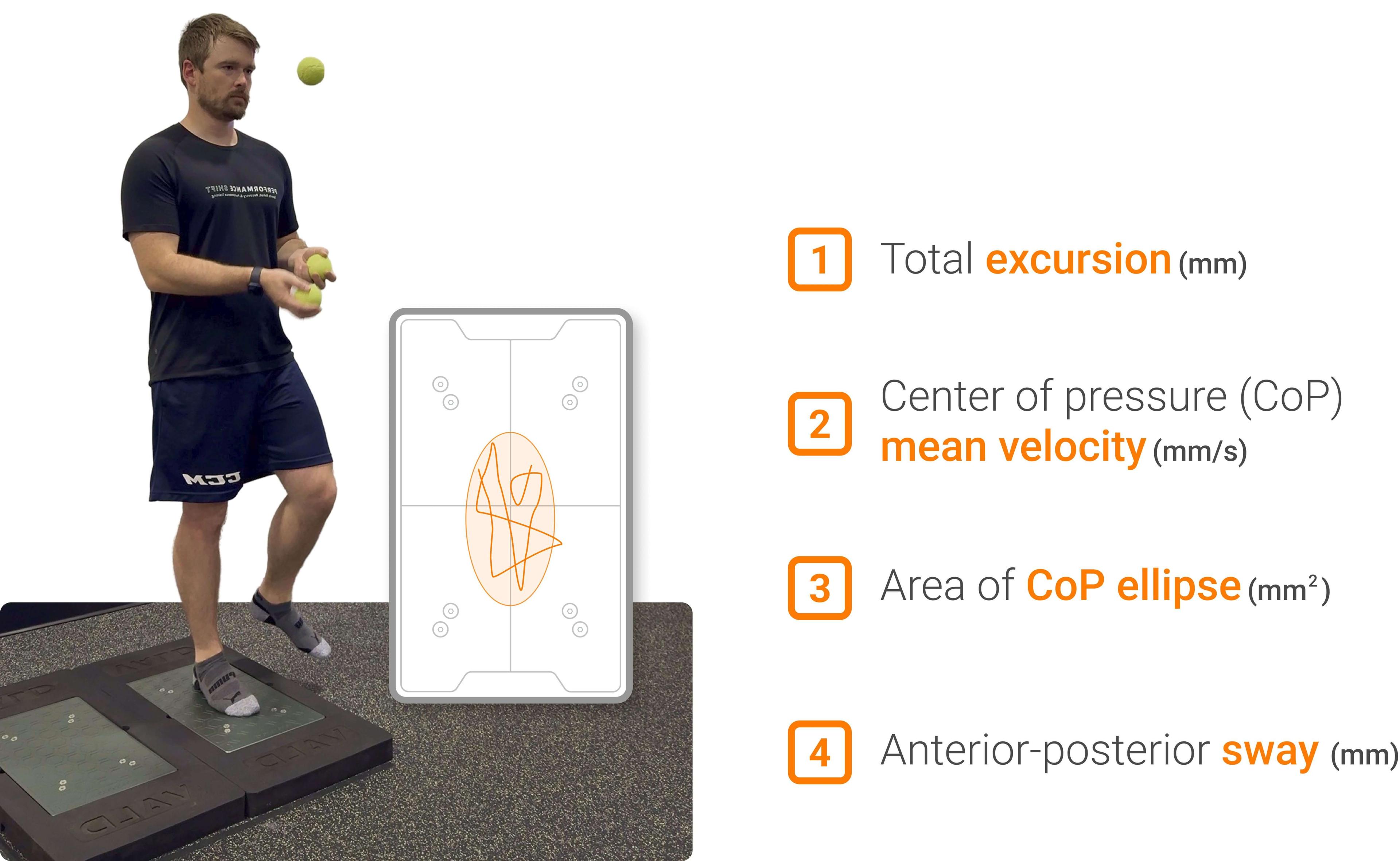
For example, an athlete may report feeling symptom-free four weeks after injury while still demonstrating elevated CoP velocity and increased sway during standing balance tasks. These findings suggest that although symptoms have improved, postural control may still require targeted rehabilitation before progressing to more demanding athletic activities.
Transitioning From Balance to Athletic Movement
As rehabilitation progresses, the questions practitioners ask begin to change. Early rehabilitation focuses on symptom management, cervical function and restoring balance. However, as the athlete moves closer to return to sport, the emphasis shifts toward athletic movement and preparing for the physical demands of competition.
At this stage, ForceDecks becomes valuable for assessing countermovement jumps (CMJs), squat mechanics and other functional tasks that require rapid force production and coordinated movement. CMJ assessments provide insight into:
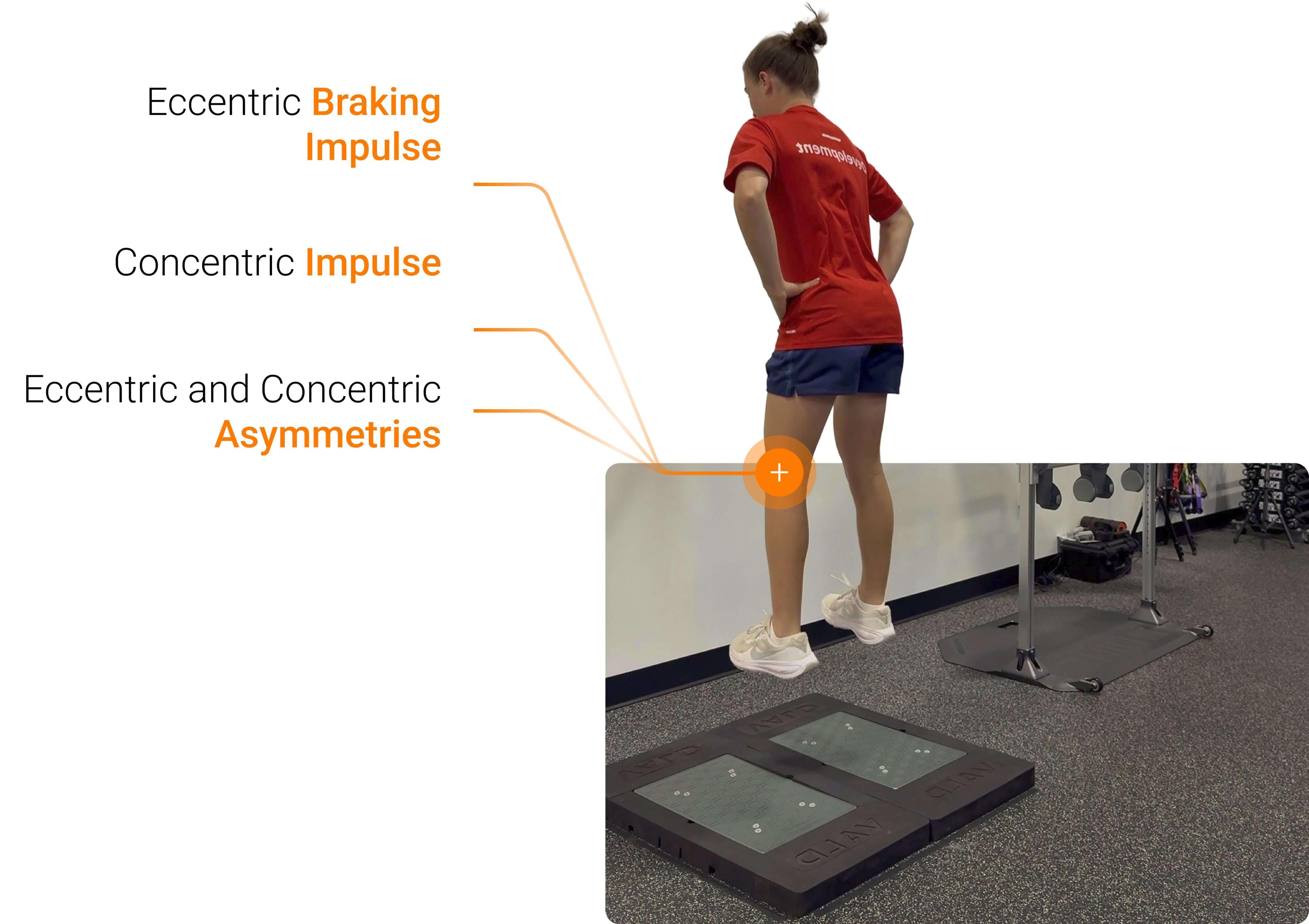
Following concussion, athletes frequently demonstrate slower force production, reduced eccentric control and increased asymmetry despite reporting complete symptom resolution. These deficits are often difficult to identify through visual observation alone but may influence cutting, landing and change-of-direction performance.
Rather than viewing these assessments as concussion-specific tests, we use them as part of a general athletic readiness assessment at The Performance Shift. The closer an athlete gets to returning to unrestricted participation, the less rehabilitation focuses on the concussion itself and the more it considers whether the athlete can safely tolerate the demands of sport.
The closer an athlete gets to returning to [sport], the less rehabilitation focuses on the concussion…and the more it considers…the demands of sport.
Assessing Reactive Strength Before Return to Sport
Reactive tasks such as drop jumps introduce another layer of assessment later in rehabilitation. These movements challenge the athlete’s ability to rapidly absorb and reproduce force through the stretch-shortening cycle, making them valuable for assessing athletic readiness rather than diagnosing concussion.
Metrics including peak landing force asymmetry, eccentric impulse, rate of force development (RFD) and RSI help determine whether athletes can effectively tolerate high-speed loading and rapidly transition between eccentric and concentric muscle actions.
This progression mirrors rehabilitation following other athletic injuries, such as anterior cruciate ligament reconstruction (ACLR), as persistent deficits during these higher-demand tasks may indicate that further rehabilitation is warranted before unrestricted return to competition.
The table below summarizes the systems, tests and key metrics monitored during concussion rehabilitation:
| System | Test Type | Tests | Metrics |
| DynaMo | Neck ROM |
| |
| ForceFrame | Isometric neck strength |
| |
| ForceDecks | Standing balance |
| |
| Functional transfers |
| ||
| Ballistic strength |
| ||
| Reactive strength |
|
Monitoring Does Not End at Return to Sport
Returning to sport does not necessarily mark the end of rehabilitation. Ongoing monitoring allows practitioners to reassess cervical strength, balance and movement quality as athletes continue to train, compete and adapt throughout the season. This is particularly valuable in youth athletes, where growth, training exposure and previous injury may all influence future performance and injury risk.
Objective testing also improves communication between practitioners, athletic trainers, strength coaches and athletes. Platforms such as MoveHealth can help communicate these results by allowing athletes to visualize their progress over time, compare results against normative ranges and better understand why rehabilitation continues beyond symptom resolution. When progress is measurable and easy to interpret, athletes are often more engaged in the rehabilitation process.

Bringing Objective Technology into Concussion Rehabilitation
Concussion rehabilitation has become increasingly individualized, requiring practitioners to integrate information from multiple systems rather than relying on symptoms alone. Objective technologies such as DynaMo, ForceFrame and ForceDecks provide measurable information across the cervical spine, balance, neuromuscular performance and athletic movement, allowing practitioners to monitor recovery with greater precision throughout rehabilitation.
None of these assessments should be interpreted in isolation. Instead, they become part of a broader clinical picture that combines athlete history, physical examination, symptom presentation and functional performance.
When practitioners integrate objective data into this process, they are better equipped to identify persistent deficits, communicate progress with confidence and make more informed return-to-sport decisions that extend beyond symptom resolution.
If you would like to learn more about how VALD’s human measurement technology can support objective concussion rehabilitation, monitor recovery and inform return-to-sport decisions, get in touch with our team.
References
- Kleffelgaard, I., Roe, C., Soberg, H. L., & Bergland, A. (2012). Associations among self-reported balance problems, post-concussion symptoms and performance-based tests: A longitudinal follow-up study. Disability and Rehabilitation, 34(9), 788–794. https://doi.org/10.3109/09638288.2011.619624
